
It’s home to the largest colony of its kind – and locals sometimes throw its residents off cliffs
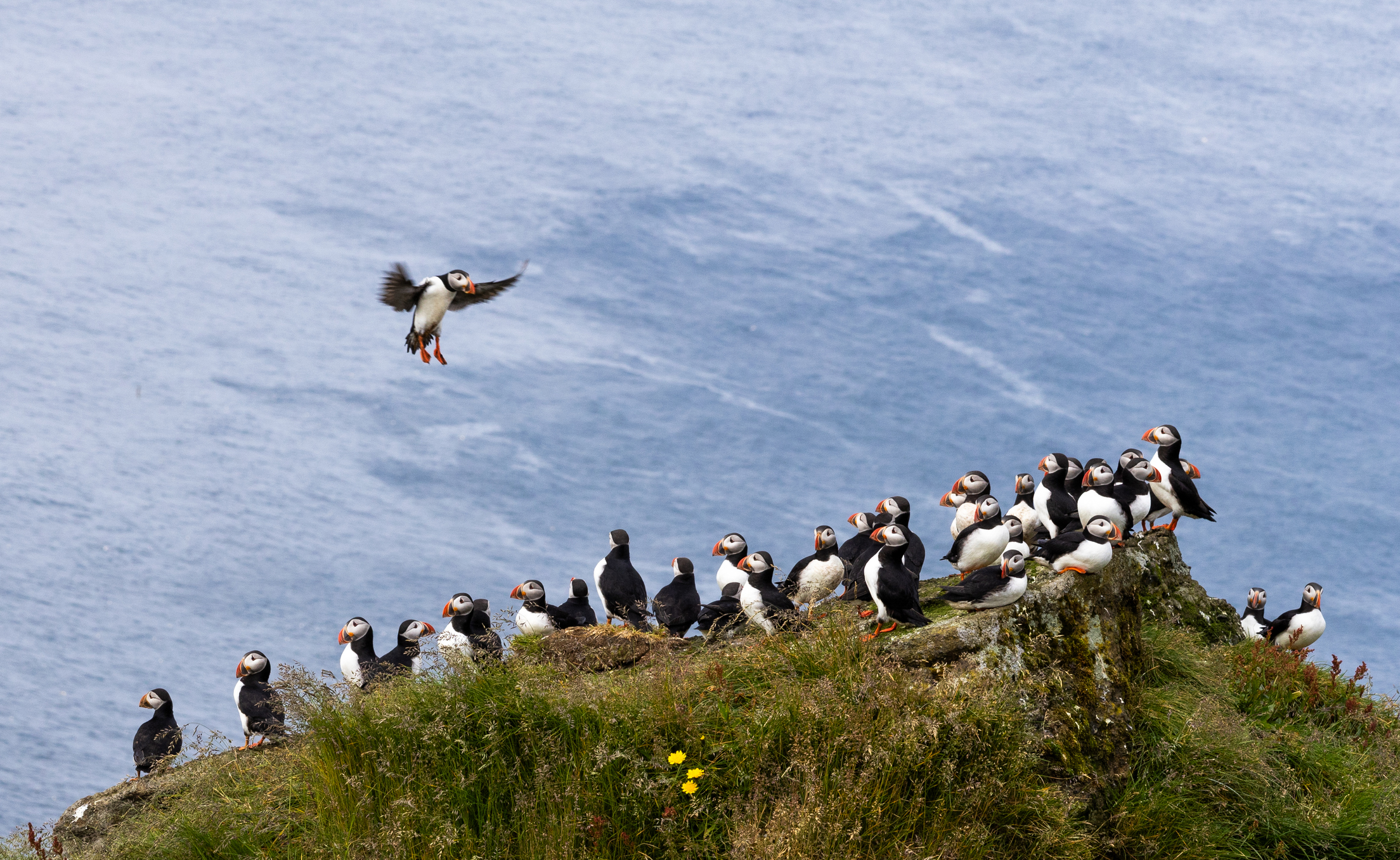
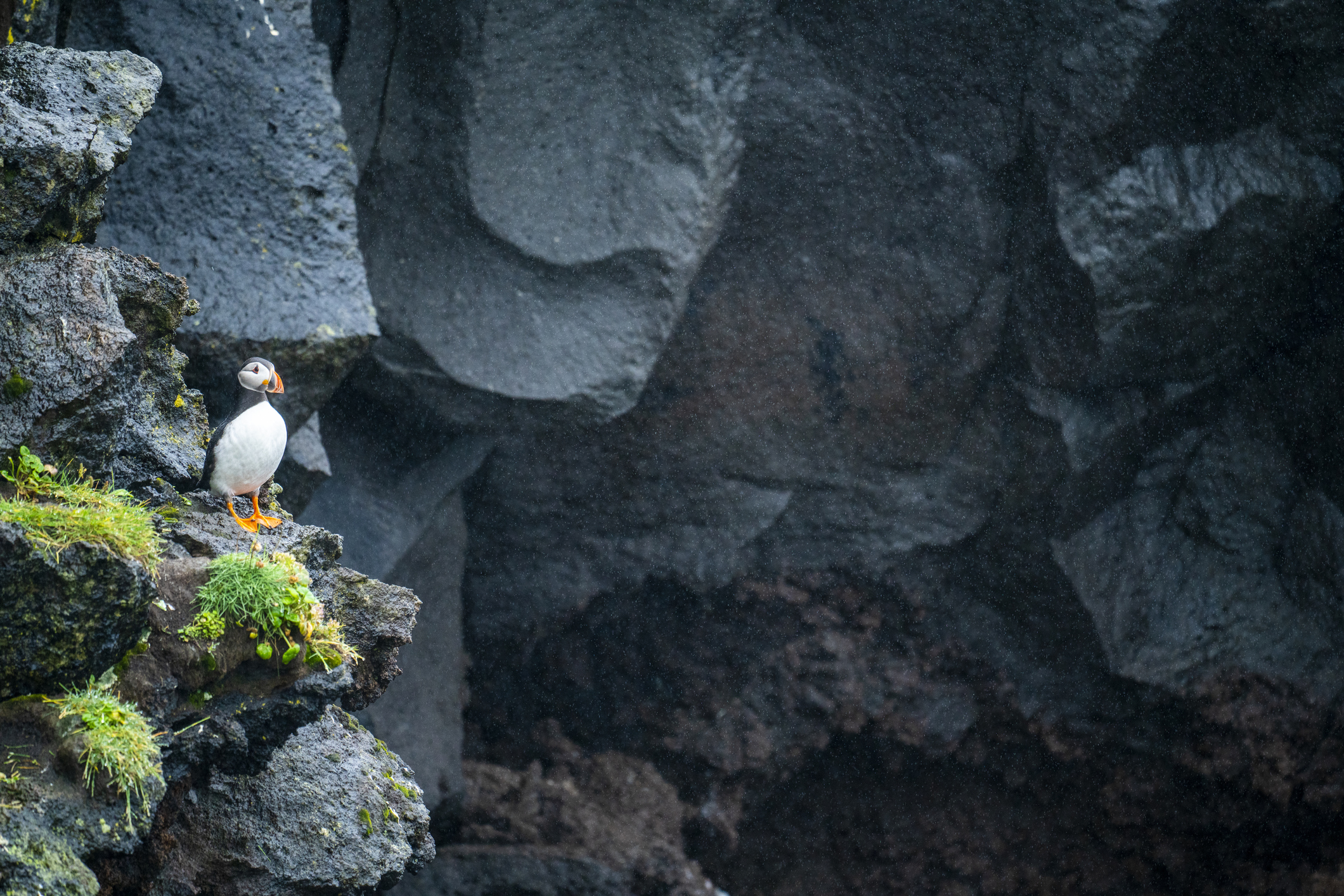
Rising dramatically from the Atlantic Ocean off Iceland’s south coast, the Vestmannaeyjar archipelago is one of the world’s great seabird strongholds. Known in English as the Westman Islands, the group is home to millions of Atlantic puffins, which return each spring to breed among its grassy cliffs and rocky islands.
One of the best locations for puffin watching is Heimaey, the only permanently inhabited island in the archipelago. Famous for its puffin colony, puffins can be seen from coastal viewpoints, on boat trips around the islands and at Stórhöfði, a windswept headland at the southern end of Heimaey – and one of the island’s most accessible puffin-watching sites.
When to see puffins
Atlantic puffins spend much of the year at sea, returning to land in spring to breed. In Iceland, they generally arrive from late April and remain until around mid-August, although exact timings vary with conditions. The main viewing season on Heimaey is roughly May to August, with June and July offering particularly good opportunities to see adults flying between the ocean and their nesting burrows.
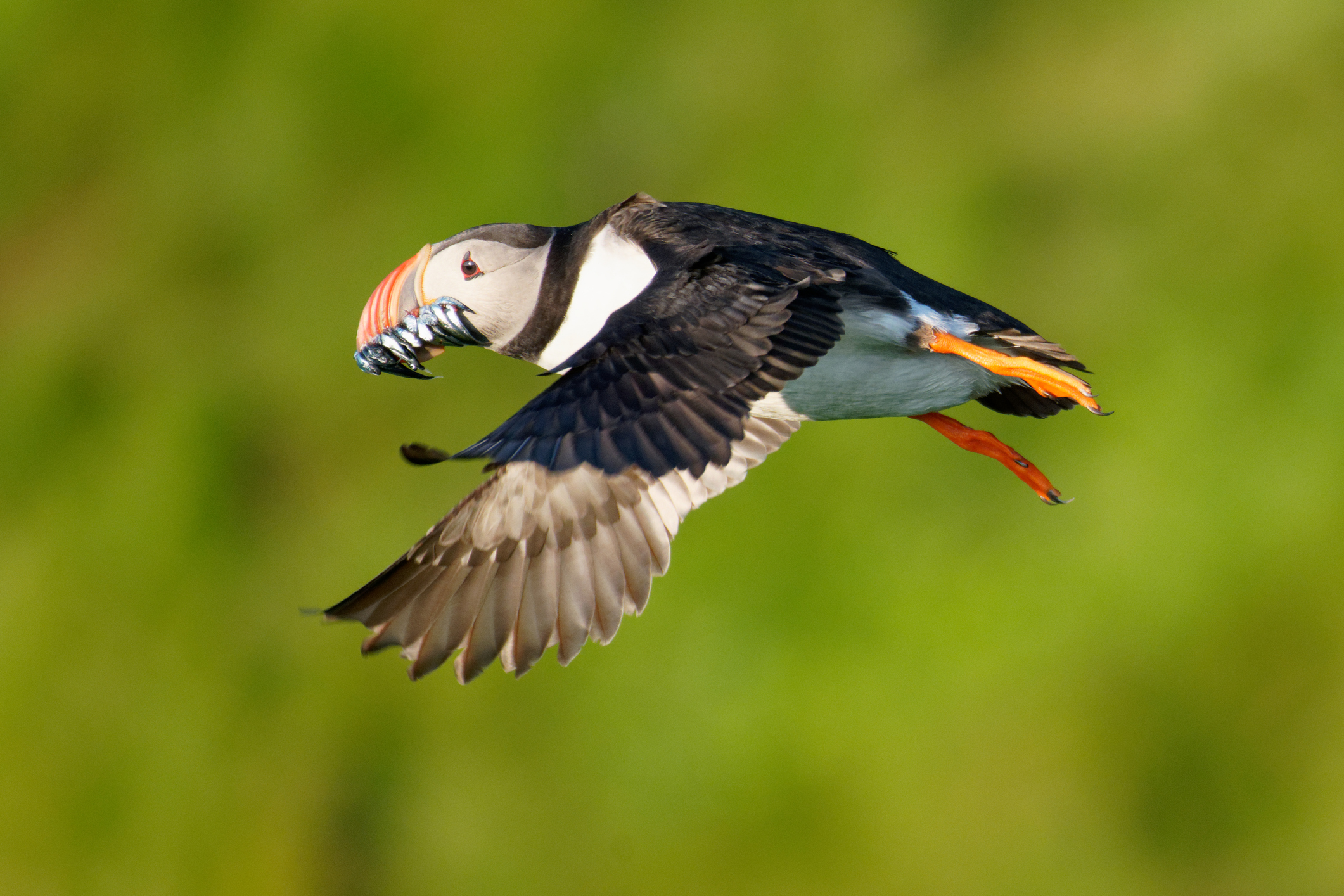
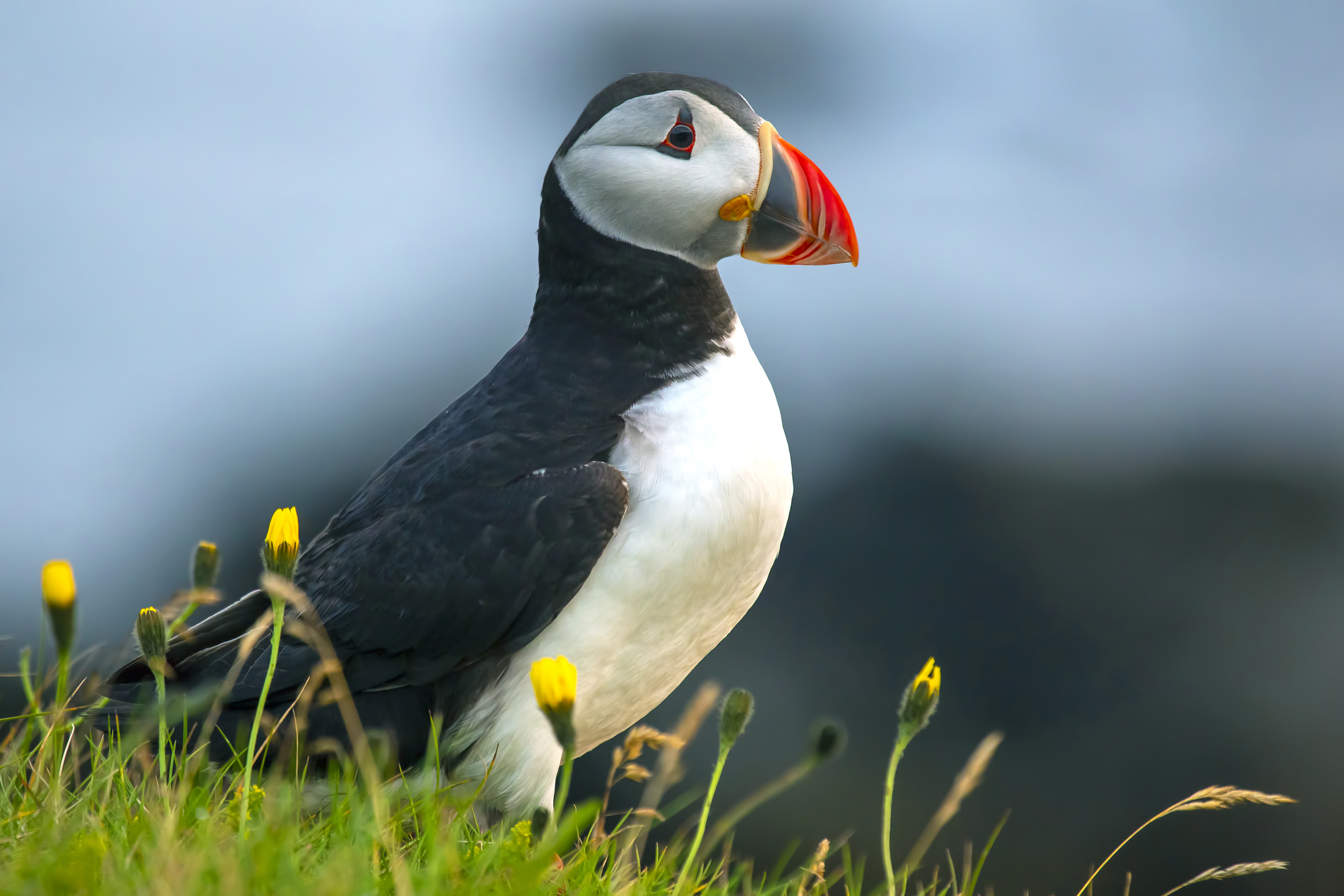
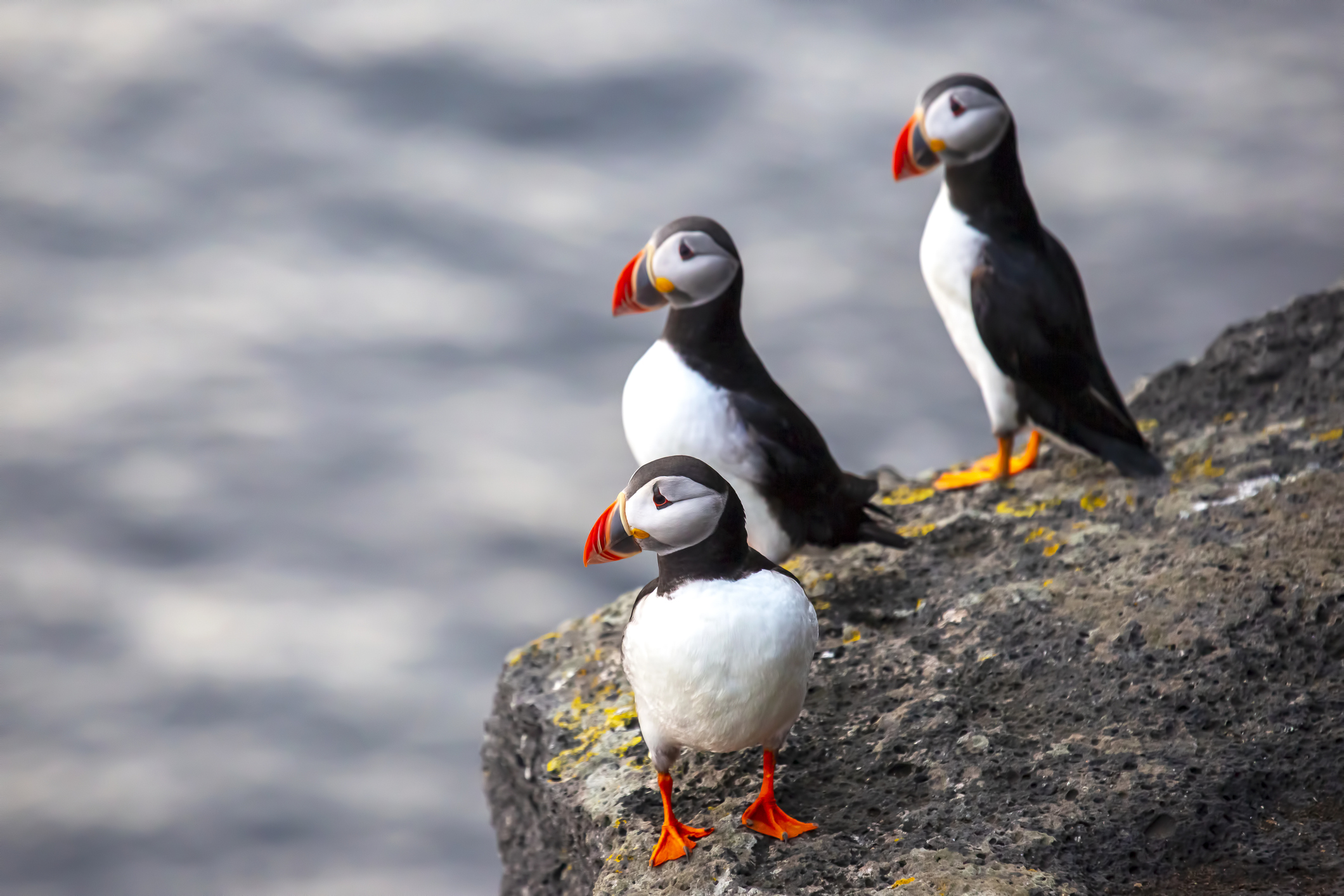
During the breeding season, the cliffs and grassy slopes can become busy with puffins. Look for birds flying low over the water, landing near burrow entrances or disappearing into the turf to tend to their young. Puffins are surprisingly small, around 30cm long, but their colourful bills and bright orange feet make them easy to pick out against the green cliffs.
Stórhöfði puffin colony
Stórhöfði, meaning ‘Great Cape’, lies at the southern tip of Heimaey and is one of the island’s best-known puffin-watching locations, hosting the world’s largest Atlantic puffin colony with around 1.5 to 4 million puffins arriving each May.
The headland is exposed to the Atlantic and conditions can change quickly, so come prepared for strong winds, rain and chilly temperatures even during summer. Several local operators run trips to Stórhöfði, including short transfers and guided walks.
See the puffin colonies from the sea
A boat trip offers a different perspective on the Vestmannaeyjar puffins. Rather than looking down towards burrows from the cliffs, you can see the seabirds flying around the islands and nesting among the steep coastal cliffs.
The surrounding archipelago provides huge areas of suitable nesting habitat, and puffins can be seen around several of the smaller islands. Boat trips also provide an opportunity to appreciate the sheer scale and drama of the landscape, with towering volcanic cliffs rising directly from the Atlantic.
The puffling patrol
One of the most distinctive wildlife experiences associated with Vestmannaeyjar happens towards the end of the breeding season. When young puffins leave their burrows for the first time, they normally head towards the ocean. But artificial lights from Heimaey can confuse some fledglings, causing them to fly towards the town instead.
During the late August and early September fledging period, local residents traditionally search the streets at night for stranded pufflings. The young birds are collected and then released towards the sea, helping them continue their first journey into the North Atlantic. The timing varies from year to year, and the rescue period generally lasts only a few weeks.
Heimaey landscape and wildlife
Although the puffins are the star attraction, Heimaey island is dominated by volcanic landscapes, including Eldfell, the volcano that erupted unexpectedly in 1973. The eruption dramatically changed Heimaey, destroying hundreds of homes and creating new lava fields. Learn about the volcanic landscape and eruption at Eldheimar, a museum built around an excavated house buried beneath the volcanic material.
The island’s dramatic cliffs are also home to numerous other seabirds, while the surrounding waters support a rich marine ecosystem.
Discover more about seabirds:


