The Knepp Rewilding Project comprises 3,500 acres of former farmland in West Sussex. Here, Highland cattle, Tamworth pigs and Exmoor ponies share land with reintroduced beavers and storks, along with many other species that have returned to the land now it’s more hospitable to them.
I walk here on a spring morning, mist loitering around the scrub while birds I don’t know sing out the dawn. As always, when I visit, I feel like I’m stepping back in time.
I stick to the paths so as not to trespass on land dedicated to wildlife, tuning into long-forgotten sounds: storks greeting each other with a clattering of bills, the first nightingales of the year, the first cuckoo. A turtle dove – whose numbers have declined by 99 per cent nationally since the 1960s – purrs in the distance.
At other times of year, I’ll hear the clattering antlers of rutting deer. Last autumn, I caught a glimpse of a male with ivy in his antlers, a sure sign that he’d been thrashing foliage in a show of testosterone-fuelled bravado.
Sometimes there will be pigs feasting on acorns, a squeal of piglets tailing their mother, a herd of ponies in a distant field or cows chewing cud just off the path. In summer, I sit beneath sallows and watch male purple emperor butterflies defending their territory against rival males and other insects, sometimes even birds.
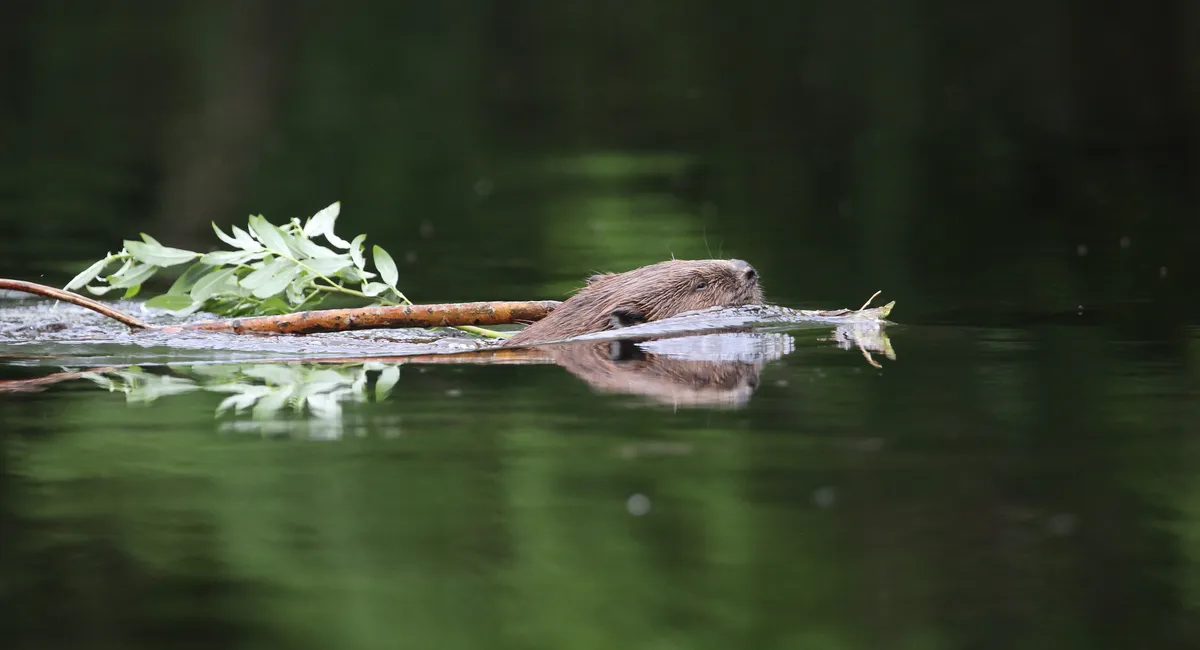
Out of bounds, in a dedicated enclosure, beavers are breeding on this land for the first time in several hundred years. I hope to see signs of them in the wider landscape one day.
Knepp is a place of magic and awe. If I time my visit well, I can walk its paths without bumping into another person or hearing the sound of the nearby A24. I feel a peace here that I rarely feel elsewhere.
But hopefully this might change. As part of its work on wider landscape recovery, Knepp has set up the Weald to Waves project, which aims to encourage neighbouring landowners to commit to rewilding their land to join a corridor that stretches from Climping Gap in West Sussex, right around the urban areas of Brighton, Haywards Heath and Burgess Hill, and back to the coast in Newhaven.
It takes in already wild land: the South Downs National Park, RSPB Pulborough Brooks and Ashdown Forest, but also includes farmland, gardens and other parcels of land whose owners want to return to the wider landscape.
This might just be via the digging of a pond or creation of a ‘hedgehog highway’ (a gap under the fence to you and me), but it serves to create stepping-stone habitats and wider corridors for species to live and breed more easily.
My garden isn’t in the corridor, but I do have passage migrants – whitethroats, chiffchaffs and blackcaps – stopping off in spring and autumn, perhaps on their way to or from Knepp.
It’s a stepping-stone habitat that I hope enables them to fuel up before and after their long migrations. The corridor will mean more space through which wildlife can travel, forage and thrive.
Highland cows, Exmoor ponies and Tamworth pigs won’t be free to roam everywhere anytime soon, but other, smaller species will. With every new sign-up to the corridor, there’ll be more wild space.
I climb the steps into a viewing platform high in an oak tree and gaze for a while at the landscape beyond. I think about how it has changed over the years, and how it may yet evolve.
From wild land to farmland and back to something like it used to be, or perhaps even better.
Top image: free-ranging longhorn cattle at Knepp Wildland. Credit: Matt Ellery, CC BY-SA 2.0 https://creativecommons.org/licenses/by-sa/2.0, via Wikimedia Commons