
Manx shearwaters can experience a form of jet lag that causes them to veer off course when navigating by the sun, a study has found.
Researchers from Oxford University analysed two decades of GPS tracking data from 1,045 Manx shearwaters (Puffinus puffinus), covering 3,688 foraging trips across the Atlantic. The study suggests the birds’ internal clocks can fall out of sync with local solar time, in a similar way to the body-clock disruption that causes jet lag in humans.
- Do all bird migrants fly twice a year?
- 36 extraordinary, astonishing bird facts, including a bird that has killed humans, a bird that likes to get drunk and one that can fly backwards
The birds breed on islands off the western coasts of the UK and Ireland and can travel hundreds of kilometres out to sea in search of food, sometimes reaching feeding grounds around 1,000km west of their colonies.
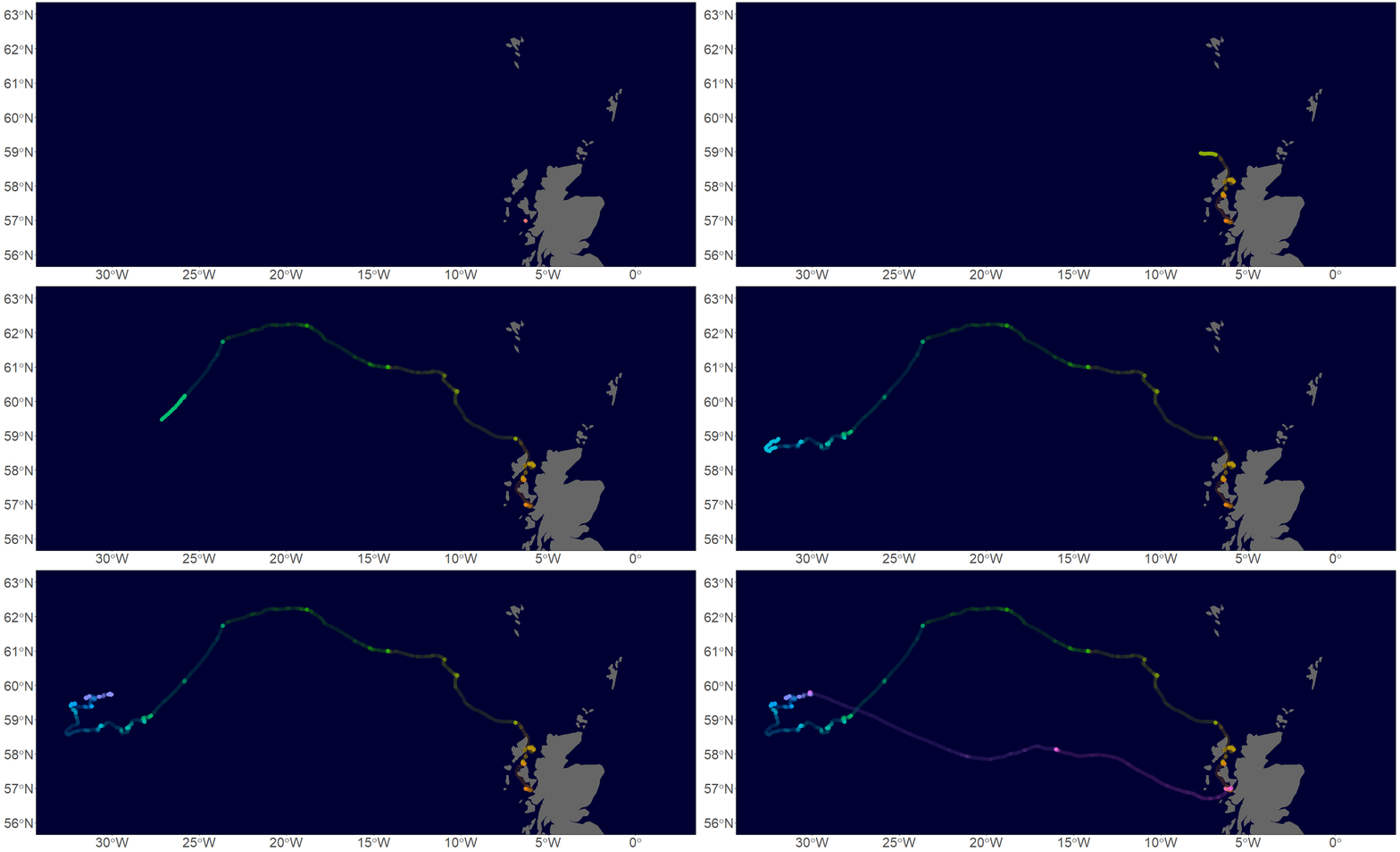
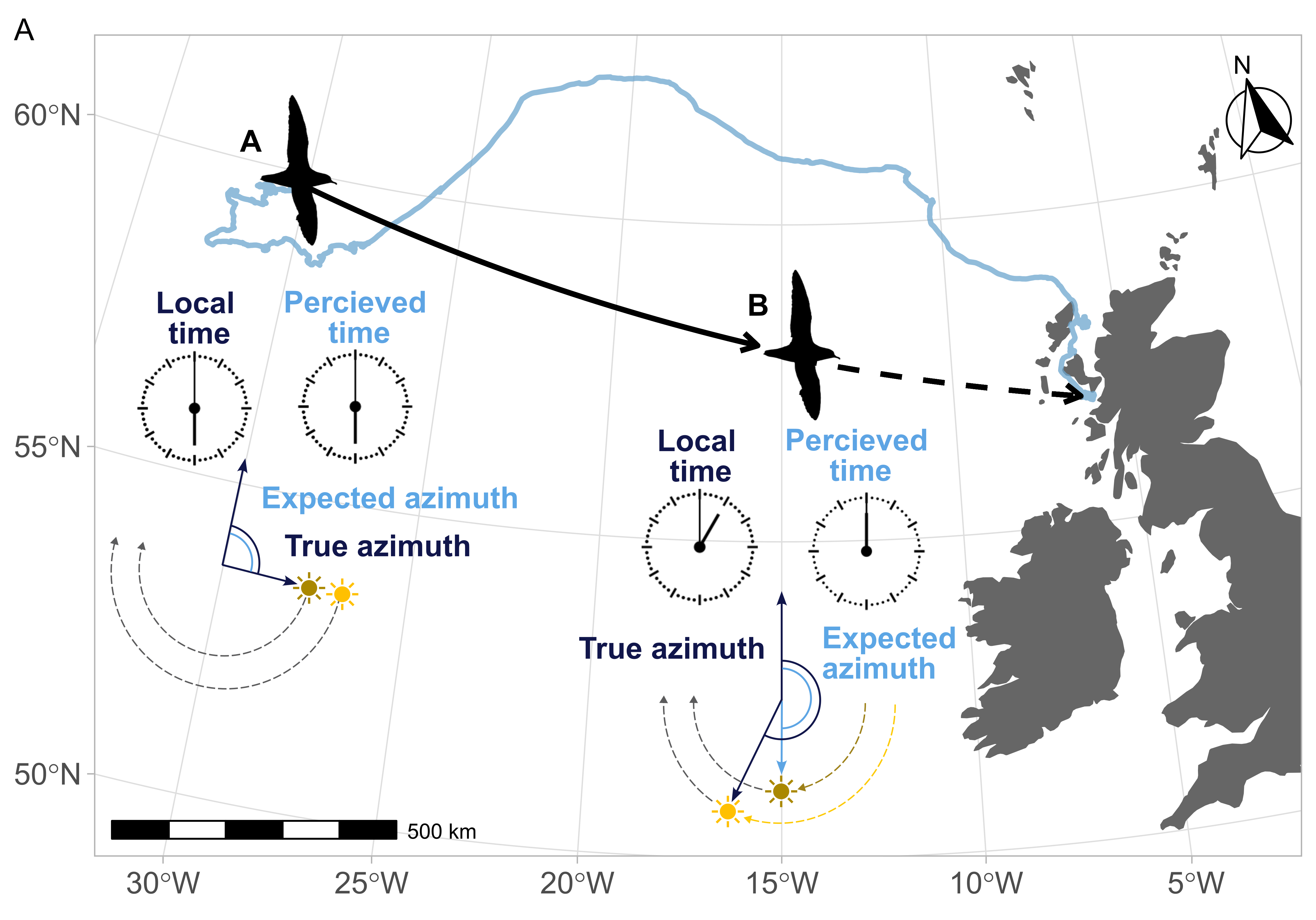
When returning home, the shearwaters may travel rapidly eastwards across lines of longitude, where the sun rises earlier. The study suggests this can leave their internal clocks lagging behind local solar time by up to an hour, causing them to misjudge the sun's position. Birds use cues such as sunrise to synchronise their internal clocks and help them navigate.
The research team, led by ecologist Patrick Lewin, found that eastward-flying birds tended to deviate clockwise from their expected direction, as would be predicted if their internal clocks were running behind local time. Statistical models showed that this pattern was better explained by errors in the birds’ sun compass than by changes in the Earth’s magnetic field.
Interestingly, the navigational errors persisted even when the birds were flying along visible coastlines. When the predicted compass error pointed towards land, the shearwaters tended to fly closer to the coast; when it pointed away, they flew further out to sea. This suggests the birds kept relying on their sun compass even when visual markers were available.
The navigational errors were relatively small, reaching around 15 degrees in the shearwaters studied. And, because these birds seem capable of reassessing their position and adjusting their route, the researchers calculated that a bird returning from 1,000km away with an average compass error of 7 degrees would travel only about 5km further to reach within 5km of its colony.
Discussing the study, Lewin said: “It’s amazing to think that billions of migratory animals look up to the sun for direction, relying on clocks silently ticking away inside them, and that errors in those clocks can cause them to take tiny shifts off course.
“The next step is to understand how that affects them. Do they mistime critical behaviours? Do they experience physiological side effects? Perhaps these birds could help teach us how to cope with and treat jet lag to avoid the really negative effects it can have on our health.”
Top image: a Manx shearwater flying around Skomer Island, Pembrokeshire, Wales. Credit: Dr Joe Wynn


