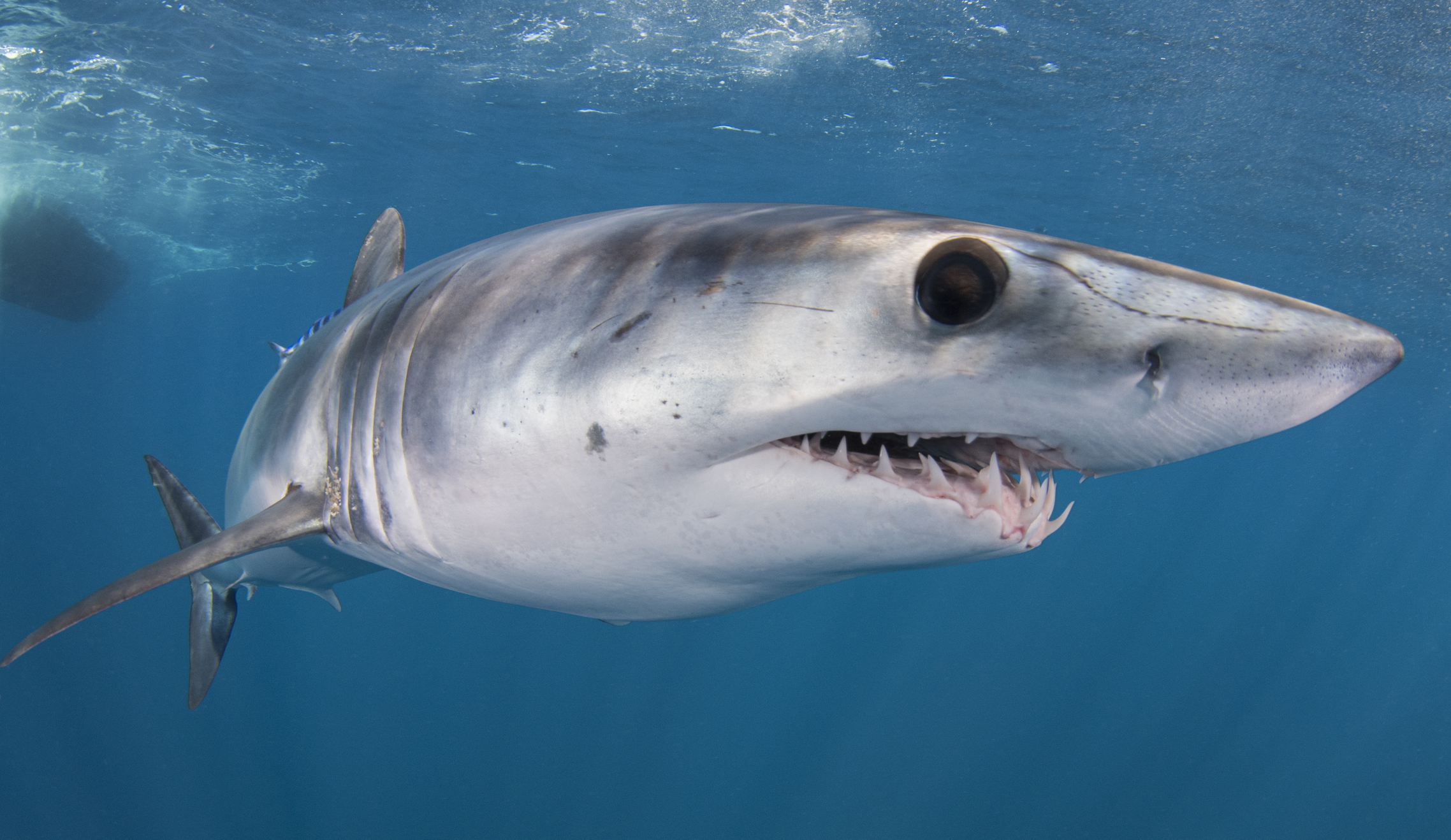
The fastest shark on the planet can dash through the water at impressive speeds: shortfin makos can reach around 43 miles an hour at top speed. Could a human outswim them?
A strong contender might be Olympic swimmer Michael Phelps, famous for his incredible ability in the pool. The Flying Fish – as he’s sometimes known – has won 23 gold medals at the Olympics (and 28 Olympic medals in total), more than any other competitor in history.
His top speed is around six miles per hour so he’s clearly not going to beat a mako if they went in a head-to-head race.
Nor, for that matter, would he get the gold racing a great white sharks. This species tops out around 35 miles per hour.
In 2017, Phelps put this to the test and went up against a great white for a Shark Week TV show. To give Phelps a better chance against the white pointer, experts kitted him up with a shark-skin inspired wetsuit and a mono-fin to give his kicks more power.
These adjustments helped him boost his swimming speed even further. He swam 100m in the open ocean in just 38.1 seconds. The shark swam the same distance 36.1 seconds.
Phelps didn’t get in the water with a real great white (for safety reasons). Instead, he completed the race then producers used CGI to overlay how quickly the shark would complete the course, based on scientific data.
Despite Phelps’ talent, it’s probably not a huge surprise that the shark came out on top. After all, these animals have evolved over millions of years to thrive in the ocean.
But makos and great whites don’t go at full pelt for long. Their top speed is reserved for that urgent dash to snare escaping prey and so lasts for a very brief period. The rest of the time, researchers think they typically swim at around 0.90 metres per second (which equates to around two miles per hour) while cruising.
Meanwhile, great whites have been recorded swimming between 0.8 and 1.35 meters per second (1.8 to 3mph). Scientists think the reason these predators might swim so slowly could be because they’re hanging around waiting for a snack.
So, if Phelps was going full throttle at six miles per hour, he could overtake a mako or great white swimming at an average speed.
Most of us aren’t as swift in the water as Michael Phelps so what chance would we have if we were racing a shark?
The average recreational swimming speed for most humans is around two or three miles per hour (one to two mph for beginners) so stronger swimmers might be able to keep up with or beat these sharks if they were cruising at a leisurely pace.
For a better chance of success, we might want to go up against the slowest species: the Greenland shark. This ancient animal ambles through the water at less than one mile an hour – it makes sense to conserve your energy when you live for hundreds of years like these ancient creatures.
Most human swimmers could catch up to them at these speeds, although whether they could manage it in the icy Arctic waters that Greenland sharks call home is debatable!
- It's 7 metres long, can weigh almost a tonne and can live for 400 years or more – meaning some around today were born in 1625...
- The most incredible shark photos on Earth revealed
Top image: Nautilus Creative / Getty Images