In winter, slugs seek out thermally buffered hibernation sites where temperatures rarely dip below 0°C. These are usually underground and provide protection from the worst winter frosts.
Studies also show that even if slugs are directly exposed to frost crystals, both juveniles and adults of most species are able to withstand the formation of extra-cellular ice in their tissues for a limited time.
- The world's biggest slug is a forest beast the size of a frying pan – with an enormous appendage to match – and swings from trees to mate
- Can any animals survive freezing? How some species stay alive despite having a body temperature of zero or below
Learn more about slugs and snails:
Slug eggs also overwinter in large numbers, probably surviving the chill by ‘supercooling’ – lowering their normal freezing points.
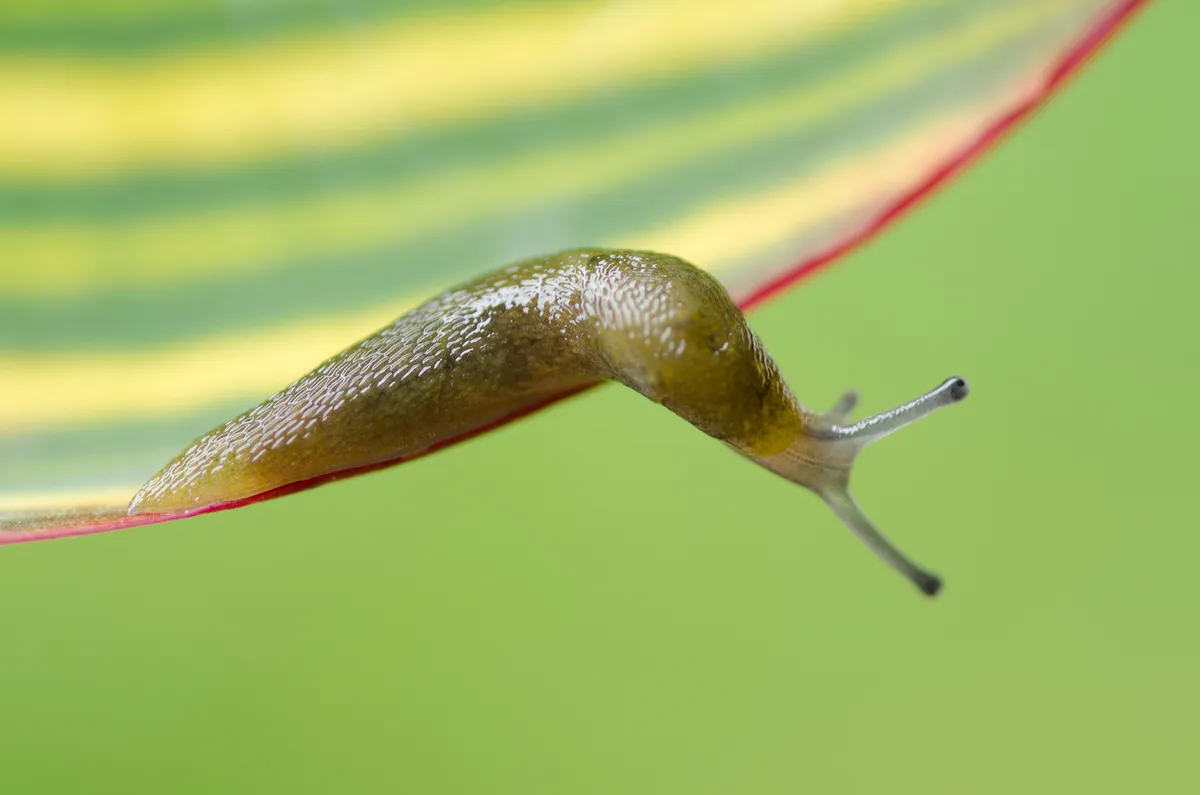
Main image: Slug crawling on a path in a garden. © TT/Getty


