
A whopping 31 million Americans are bitten by ticks each year, and the number is on the rise. A common culprit for several tick-borne diseases is the lone star tick, especially elusive due to its painless bite.
- "Symptoms rapidly worsen, including nausea, vomiting and stomach pain, and can lead to death." 9 most dangerous, deadliest tick diseases for humans
- Ticks guide: where they live, the diseases they carry - and how to avoid being bitten
If you’ve been bitten by a tick, please refer to advice from the CDC.
The lone star tick (Amblyomma americanum) is a type of tick widely distributed across the East, Southeast and Midwest United States. It lives in wooded areas where white-tailed deer – its primary host – resides.
How does the lone star tick attach to its host?
This tick has a nifty way of attaching to a host – it climbs up a blade of grass or the edge of a leaf, stretches its front legs forward and uses stimuli from biochemicals such as carbon dioxide, heat and vibration from movement to mount whoever happens to brush past its legs.
Once it’s along for the ride, the tick moves around and selects a preferred feeding site. What follows is not pretty – this tick bites aggressively, but it’s mostly painless, which means it can go unnoticed. It can remain attached to its host for as long as seven days, until it is fully engorged with blood.
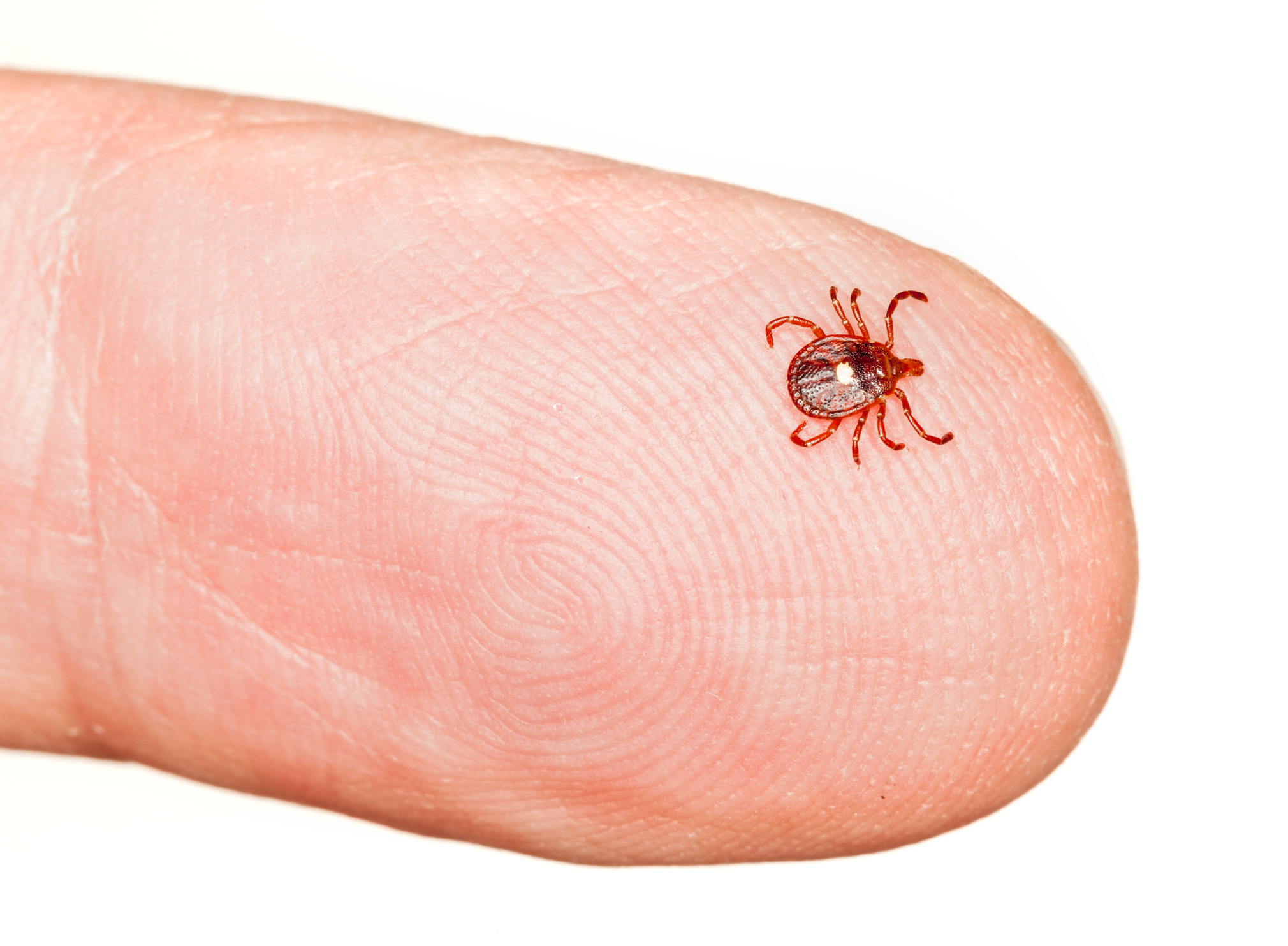
What does the lone star tick look like?
An adult female lone star tick, which is most frequently reported to bite humans, is reddish-brown in colour and can be easily distinguished from other ticks by the single, somewhat star-shaped spot in the centre of its back. The spot is often iridescent and varies in colour from white to cream, or gold to bronze.
Females are also larger than males – they average at 4-6mm unfed, and up to 16mm or more fully fed, while males are between 2-5mm, regardless of whether they’re fully fed.
What diseases can the lone star tick cause?
The lone star tick is the culprit when it comes to several tick diseases. One of them is alpha-gal syndrome, a potentially life-threatening allergy to red meat. The allergic reaction is characterised by constriction of airways and a drop in blood pressure.
Another disease is the Bourbon virus, especially dangerous because of how easily it can slip past diagnosis due to the symptoms being very similar to Lyme disease.
Other diseases transmitted by the lone star tick are ehrlichiosis, heartland virus disease, southern tick-associated rash illness (STARI) and tularaemia.
Top image: lone star tick. Credit: Kasey Decker/Getty Images


