
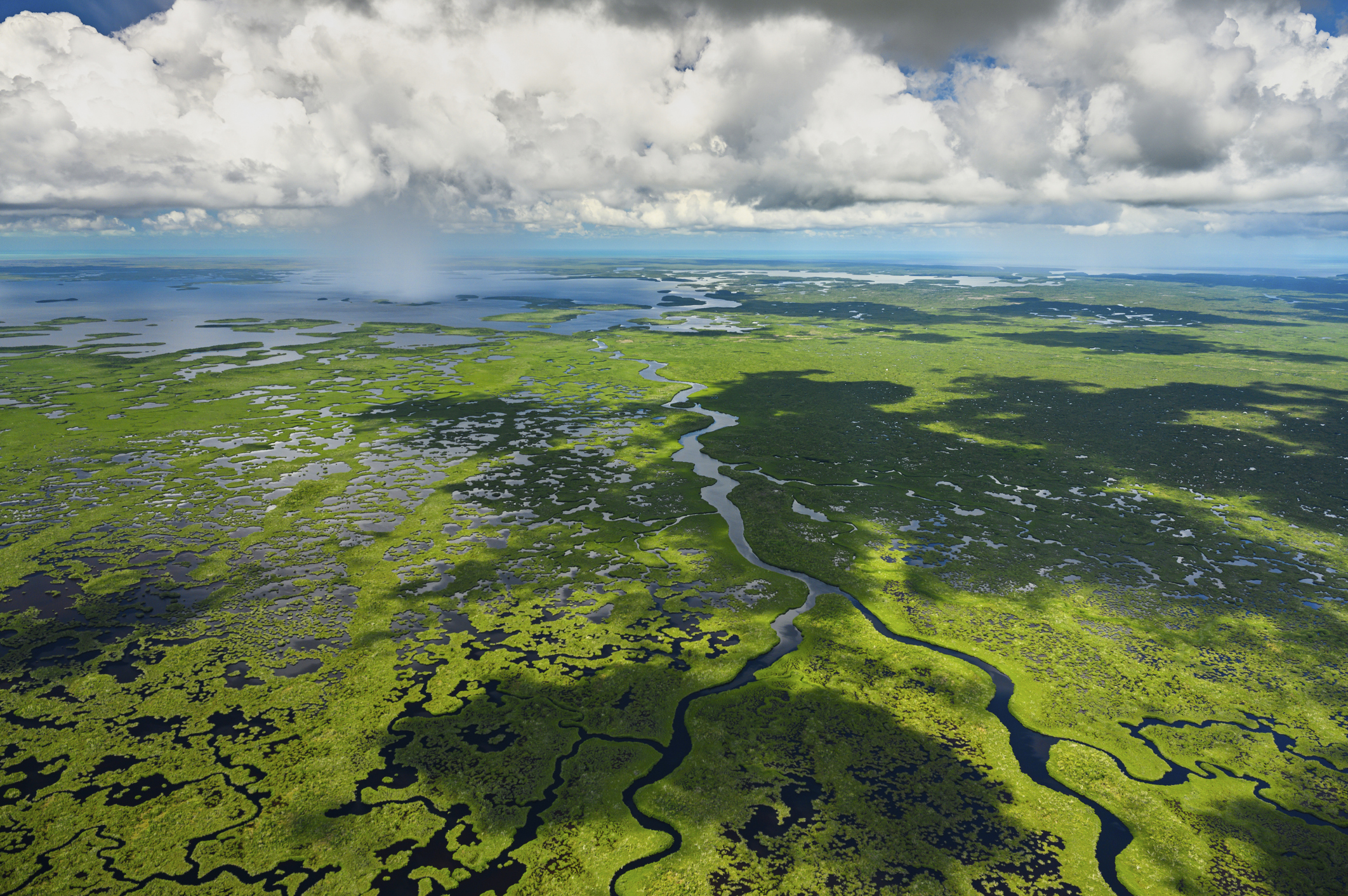
Sometimes referred to as the ‘river of grass’, the Everglades National Park is a subtropical wetland spanning 1.5 million acres across south Florida. The park sits just west of Miami and stretches down to Key West.
Its slow-moving river winds its way through the sawgrass prairies and limestone bedrock, giving rise to habitats such as mangrove, pineland and cypress domes.
- Researchers deploy 120 robots in Everglades National Park. Their mission is to help catch 20ft snakes
- An immense creature is moving through the vast swamps of the Everglades National Park
These ecosystems are why the Everglades was designated World Heritage status in 1979. This refuge for rare, endangered and threatened species is also the largest subtropical wilderness reserve in North America and contains the largest mangrove ecosystem in the Western Hemisphere.
The Everglades contain one of the highest concentrations of species vulnerable to extinction in the United States. Thirty-nine native Florida species found in the Everglades are listed as threatened or endangered, or are candidates for listing under the Endangered Species Act of 1973.
It’s also the only place on Earth where alligators and crocodiles coexist in the wild. Usually separated by their differing habitats (crocodiles live in both marine and freshwater environments whereas alligators are only found in freshwater), the sheer variety of ecosystems found within the Everglades mean there are occasional clashes between these two apex predators.
- There is only one place on Earth where crocodiles and alligators live together in the wild – and it's here
- Can alligators and crocodiles crossbreed?
The Florida panther, an endangered subspecies of mountain lion, can be found in the park. Once common throughout the southeastern United States, fewer than 100 are now estimated to live in the wilds of south Florida.
- Scientists tracked these mountain lions in Los Angeles for seven years – now they've discovered something crucial
- Mountain lions moved into a tiny Californian preserve. What happened next astounded scientists
This UNESCO World Heritage Site is a major corridor for bird migration and provides vital foraging and breeding habitat for more than 400 bird species. The wood stork, a type of wading bird found in the park, is the only stork species to regularly nest in the United States.
However, the Everglades are facing challenges from non-native species – in particular, the Burmese python. The park’s python population is believed to have established from captive pet snakes that have escaped or been released. Now, they have resulted in a decline of mammals in the park.


