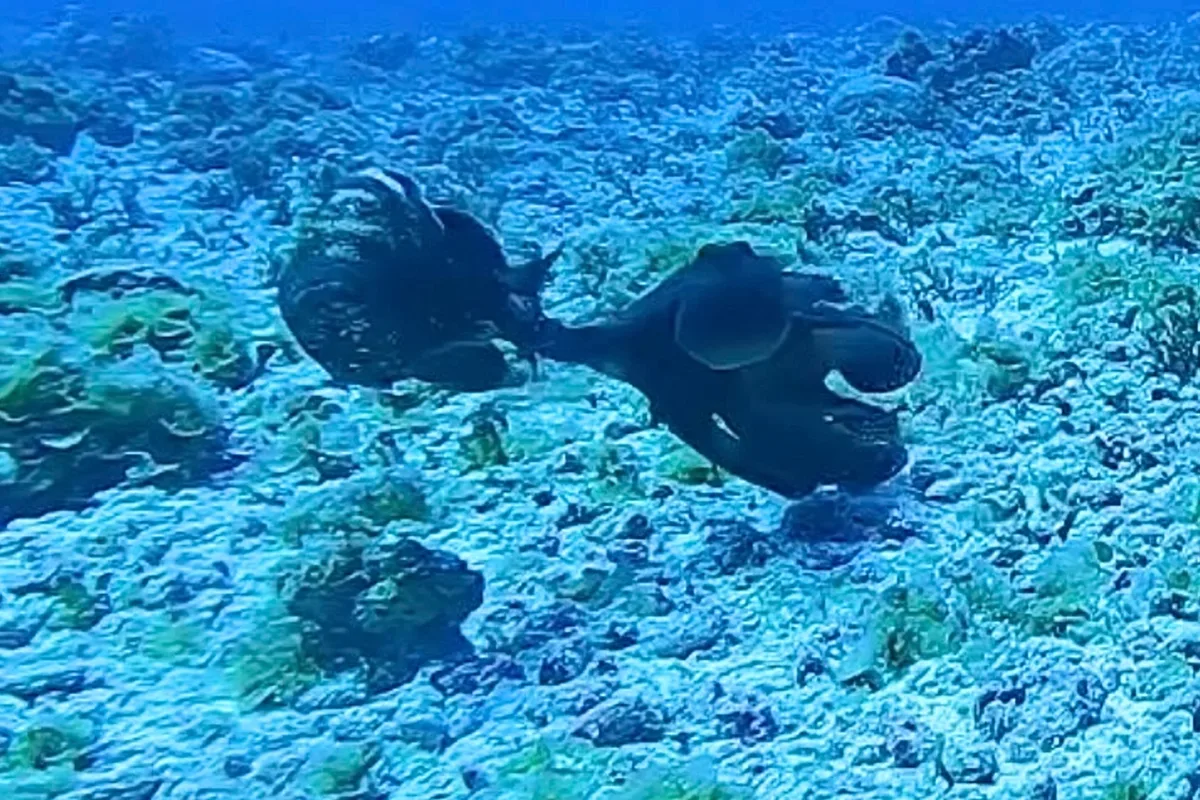
Octopuses are known for their impressive ability to disguise themselves through camouflage and by hiding in tiny crevices but mimic octopuses are the best of the best.
These ingenious cephalopods don’t just change the colour of their skin to blend into the background. By altering their colouring and patterns and throwing different shapes with their arms, they actually pretend to be different marine animals.
- Breathtaking footage shows diver's close encounter with the world's biggest octopus
- Watch this incredible rare video of an octopus changing colour on a Welsh beach
For example, they can flatten their body and whizz along the seafloor in the form of a flatfish or splay out all their limbs to resemble the flamboyant fins of a venomous lionfish. By pretending to be something they’re not, they can make a potential predator think twice about launching an attack.
What are mimic octopuses?
Probably the best way to describe them is masters of disguise. This species is exceptionally talented when it comes to a concealed identity.
To protect themselves when exposed to predators, they can take on the appearance of animals such as lionfish, sea snakes and flatfish (these marine creatures can deliver a toxic venom so other animals try not to get too close). Watching a mimic flit rapidly between these different forms is a rare but incredible sight.
- Squid vs octopus: what's the difference between these multiple-limbed sea creatures?
- Bewitching glass octopus rarely seen alive filmed near remote Pacific islands
These fascinating lifeforms weren’t discovered until 1998 off the coast of Sulawesi, Indonesia. Since then, scientists have studied them to learn more about the clever strategies they use to keep themselves safe.
What do they look like?
What don’t they look like?! When they’re just chilling out, mimic octopuses are typically a boring beige but they can display highly contrasting bands of dark brown and white across their body in an instant.
- Weirdest octopuses: meet 8 strange sea creatures, including one that pretends to be a snake and one with a detachable ‘penis’
- These are the deadliest octopuses in the world – and one has enough venom to kill dozens of humans within minutes
Like other octopuses, they change colour using special pigment cells in their skin called chromatophores. But not content with just switching hue, mimic octopuses level up by transforming their colour, pattern, shape and even the way they move. Each combination in their repertoire is designed to fool other animals into taking them for a different – often more dangerous – species.
Which other species do they impersonate?
These animals are the ultimate masters of deception. Not content with imitating just one species, they can pretend to be a whole bunch of different animals from fishes to reptiles and even crustaceans.
It’s believed they can impersonate up to 13 other species, choosing which one is the most appropriate depending which foes are nearby.
When they want predators to mistake them for a venomous flatfish, they squeeze their body into a thin, oval shape and glide along the seafloor with their arms trailing behind them. When they do this, they even make their eyes bulge on the top of their bodies like a sole or flounder.
If they’re feeling more extravagant, they stretch their limbs out in all directions and exaggerate their bold brown and white stripes – that way, they might be confused for a lionfish.
- Octopuses could help us build robots that rescue people from collapsed buildings. Here's how
- They're 2 metres long, 10,000 times heavier than the males and can even rip off the infamous Portuguese man o’war's tentacles and wield them as weapons
Sometimes, they even don the garb of a sea snake: hiding most of their body in a hole, sticking two striped arms out and wiggling them slowly. This serpentine silhouette helps to keep dangerous animals at bay because most sea snakes are highly toxic. It saves this impersonation for one enemy in particular: the territorial damselfish.
That’s not all: researchers think these animals might also pretend to be cuttlefish, stingrays, crabs, anemones and jellyfish. Their ability to quickly switch from one disguise to another is incredibly rare (although the similar-looking wunderpus octopus boasts this skill too).
Where do they live?
Found in the Indo-Pacific, these animals love shallow, coastal areas and the mouths of rivers. They usually live in sandy or muddy habitats where they can look for prey hidden in the sediment or burrow themselves in the seabed if they need to get out of sight.
What do they eat?
It’s likely that these octopuses like to eat small fish, crabs, shrimp and worms that they find hiding in the sediment.
How do they hunt?
Most octopuses are nocturnal, coming out to hunt at night. But mimics look for food during the daytime. This might be why they need to mask their appearance to look like other animals. When they are in their beige form and staying still, they can easily blend into the seabed but, as soon as they move, they can give themselves away. With no hard shell to protect them, they’re vulnerable to predators when foraging on the seafloor in broad daylight. So, they cloak themselves in the appearance of other off-putting animals. Even fooling a predator for a short while can give them enough time to jet away to safety.
To find food, they swim along the seafloor (veiling their true identity by pretending to be another animal when they need to), sticking their arms into holes to see if they can find a tasty snack.
How do they reproduce?
Like other octopuses, males have a specialised arm called a hectocotylus which is uses like a sperm delivery service. During mating, the male uses this modified arm to place a packet of sperm into the female’s mantle. She hangs onto it for a few months until she’s ready to reproduce. Then, she fertilises and lays her eggs.
Males die once they have mated and females pass away not long after laying their eggs.
Are they dangerous to humans?
No. Although this species (like other octopuses) is venomous, they are typically shy and don’t pose a threat to humans. That said, if you see an octopus of any kind in the wild, give them plenty of space and don’t touch, harass or annoy them – better safe than sorry!
Are they under threat?
This species is listed as ‘of least concern’ by the IUCN Red List, although population numbers are currently unknown.
Like other octopus species, they are feeling the pressure from human activities. Urban development along the shoreline and bottom trawling can destroy their habitat, pollution can make them sick and overfishing and accidental bycatch can impact populations.
- 15 magical photos that show just how uniquely beautiful octopuses can be
- From venomous sex to maternal sacrifice: 7 fascinating facts about octopuses
- It’s 2 miles deep, close to a volcano, the size of 233 soccer fields and home to a whopping 20,000 creatures
- It might look like a clam, but don’t be fooled – this is no clam. It walks on two legs and tucks its home under its arms wherever it goes