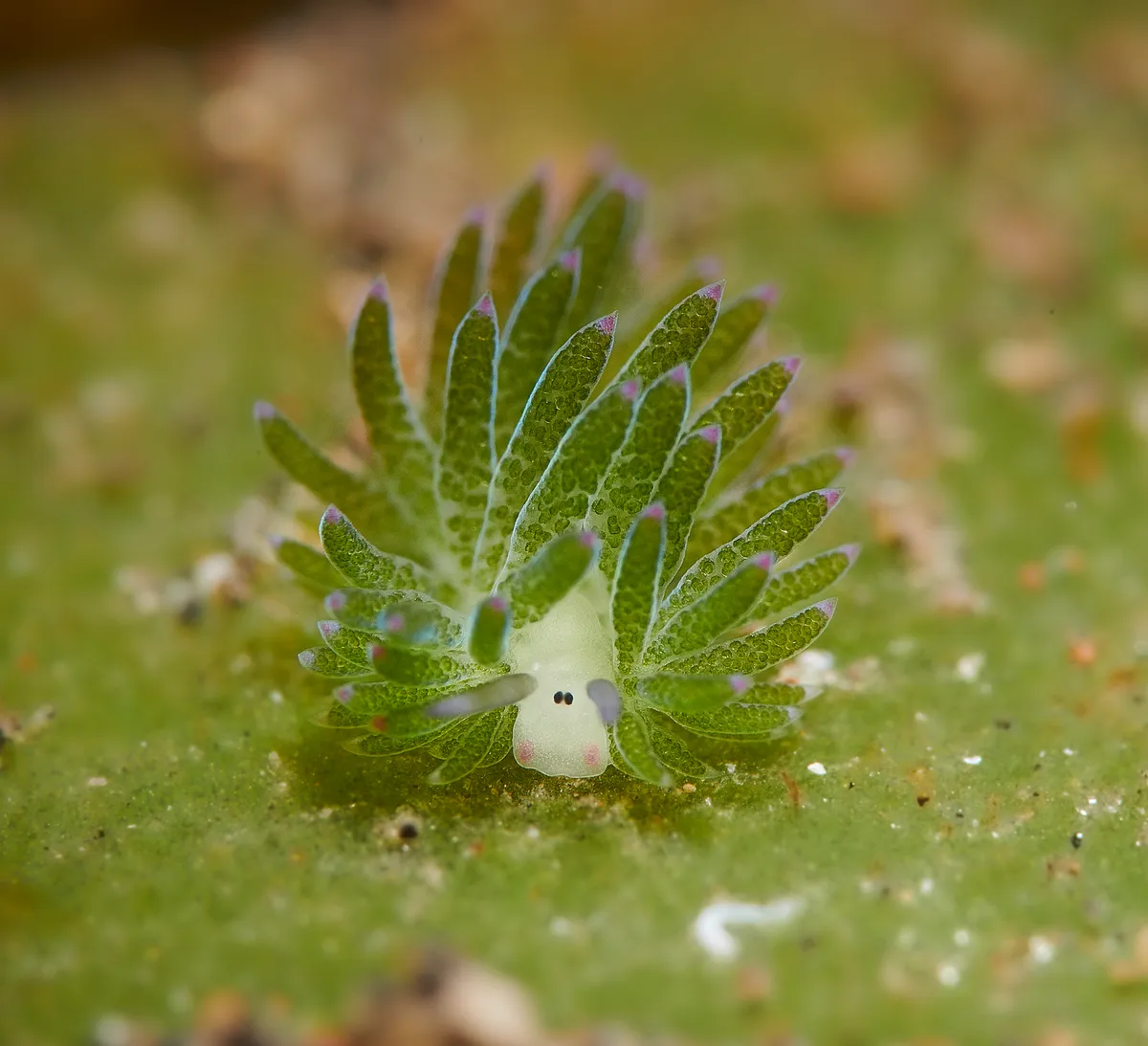
Measuring just three millimetres long, it would be easy to miss Thecacera sesame – a species of sea slug – on the colourful sea floor.
But it’s now been officially named after it was first sighted in the coastal waters of Keelung, northern Taiwan, in 2019.
- Weirdest sea creatures - meet strange ocean animals, including one that's part vegetable and one that resembles a toast rack
- Are nudibranchs the most beautiful animals on the planet? One of them might also be as deadly as it's beautiful...
Researchers from National Taiwan Ocean University, National Museum of Natural Science and National Taipei University of Education named the creature after its tiny size and sesame-like spotted markings.
“Taiwanese divers call it ‘sesame’ in Chinese and it is also small like a sesame seed, hence the name,” explains the research team.
It’s the first formal description of a member of the Thecacera genus in almost three decades – and it happened completely by chance.
“During a recreational dive in the summer during the undergraduate study of Ho-Yeung Chan in 2019, he accidentally discovered Thecacera sesama sp. nov. in northern Taiwan waters”, the team said.
However, Chan didn’t realise that it was a previously-unknown species until he consulted a sea slug expert online.
The discovery is even more extraordinary as diving for nudibranch research is particularly challenging in the region. Seasonal typhoons, strong waves and low water temperatures means there are only four months a year that usually have suitable diving conditions.
- How do sea slugs have sex? Discover their mind-bending mating strategy
- "What a beauty!" First-ever sighting of rainbow sea slug in Devon dazzles underwater photographer
The researchers have discovered that Thecacera sesama exhibits four primary behaviours: feeding, searching, mating and laying eggs.
Thecacera sesame lays its eggs on bryozoans, which are small aquatic invertebrates sometimes known as ‘moss animals’. The researchers say that the specific bryozoan T. sesame interacts with may also be a species new to science.
The Western Pacific region, including the waters around Taiwan, is considered a biodiversity hotspot for marine life. According to the IOC Sub-Commission for the Western Pacific (WESTPAC), the area contains more than 75 per cent of all known coral species, 50 per cent of the world’s coral reefs, the greatest area of mangrove forests and 3,000 fish species.
In contrast, nudibranchs remain poorly documented in the Western Pacific – and the scientists believe that there could be many more species waiting to be discovered in Taiwanese waters.
Read the full research paper here: Thecacera sesama sp. nov. (Nudibranchia, Polyceridae) from Taiwan, evident from morphology and phylogenetic analyses of the 16S rDNA and cytochrome c oxidase I gene
Top image: two individuals of Thecacera sesama feeding on a bryozoan. Credit: Ho-Yeung Chan