
If you happen to wander off to the northern shore of Yttygran Island, located in the Bering Sea, you’ll be greeted with an eerie sight: an alley lined with whale bones.
- Snake Island, Anthrax Island and beyond: 9 deadly Islands you'd be a fool to visit...
- Are elephant graveyards a real thing? Is there any truth in the legend elephants go to a special place to die?
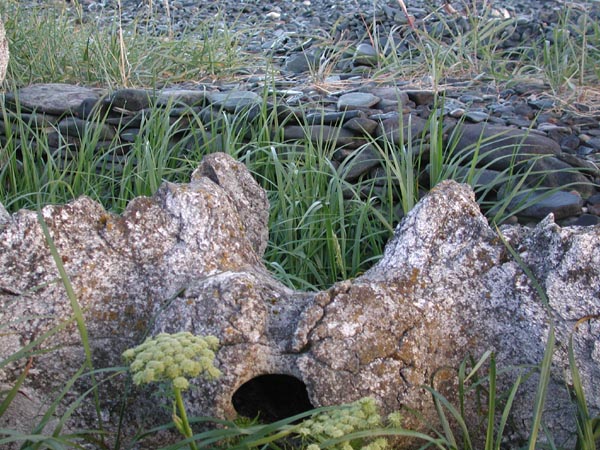
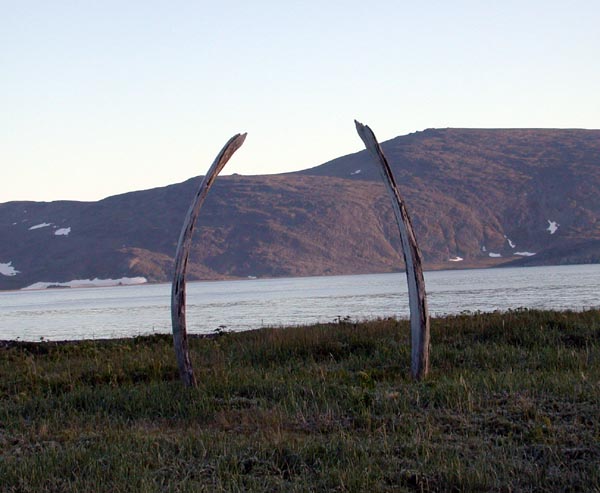
Stretching for roughly 550m, the huge bowhead whale bones are scattered along the coastline, forming what’s been dubbed 'Whale Bone Alley'.
Whale Bone Alley may not be as old as Stonehenge or the Egyptian pyramids, but comparisons with these famous landmarks have been made over the years – mostly because of the mystery surrounding the strange whale graveyard.
The alley contains around 50 whale bones, standing 5m tall and weighing about 300kg each. All the bones belong to bowhead whales, despite other species, such as beluga whales, being common in the surrounding waters.
In addition to the massive bones, the site contains pits used for storing meat, with fossilised whale blubber still inside.
When was Whale Bone Alley discovered?
In the 1970s, an expedition led by the Institute of Ethnography of the Academy of Sciences of the USSR discovered Whale Bone Alley by accident. Scientists were exploring the coast of Chukotka when they spotted the upright whale bones on Yttygran Island, emerging through the fog.
Who built Whale Bone Alley – and why?
Today, no one lives on Yttygran Island, but that wasn’t always the case. According to Arctic Russia Tourism, the island used to be home to an Eskimo village, Siklyuk, inhabited by the Siberian Yupik peoples. In the middle of the 20th century, they moved to the mainland following one of the many Soviet relocation programmes.
Archaeologists suggest the bones date to the 14th century. Around this time, a period of regional cooling known as the Little Ice Age has just started, causing a shortage of food. It’s therefore believed that the construction of the alley was connected to this era, with people having to find ways to find food to survive the harsh winters.
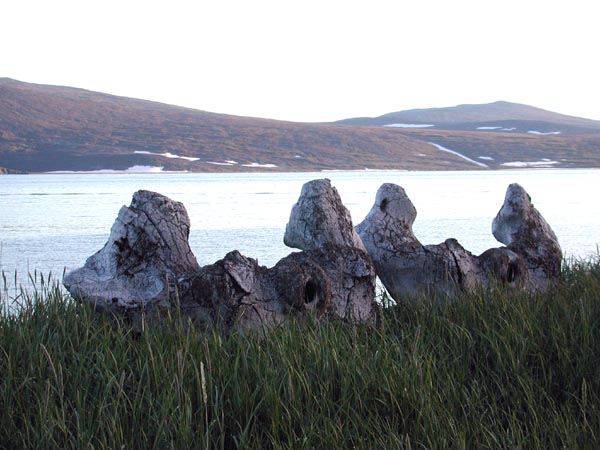
Bowhead whales have been a vital part of the Yupik diet for centuries – they hunted them for food, fuel and other materials. 'Siklyuk' in Yupik language translates to 'meat pit', so many historians think that Whale Bone Alley was simply used as a place to slaughter, store and trade whale meat.
Some researchers also believe that the site might have been a place of worship and ritual for nearby tribes. This is mostly suggested by the remains of what could be a sacred site at the bottom of the alley.
Top image credit: Gerald Corsi/Getty Images
