Male humpback whales are well-known for their loud, haunting song, but in 2017 researchers discovered that mothers and their calves ‘whisper’ to each other.
Recordings found that the calves used quiet grunts and squeaks, usually while swimming.
This suggests that the calls help to keep the mothers and calves together in murky waters.
“We also heard a lot of rubbing sounds, like two balloons being rubbed together, which we think was the calf nudging its mother when it wants to nurse,” said lead author Simone Videsen.
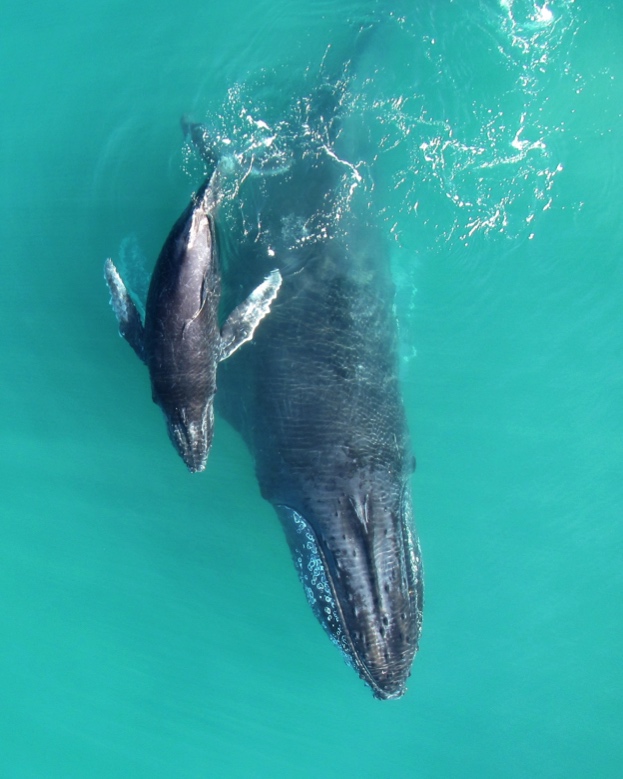
Mother-calf pair in Exmouth Gulf Fredrik Christiansen
It is thought that the quiet communication reduces the risk of being overhead by orcas, which hunt humpback whale calves.
Tags were attached via suction cups to eight calves and two mothers in the Exmouth Gulf off western Australia. They recorded the movements of the cetaceans and the sounds they made.
- Underwater camera records whale song "so powerful researchers could feel the vibrations through their feet”
- "Raw and brutal": whale watchers look on astonished as orcas kill humpback whale in South Africa
The tags remained attached to the whales for up to 48 hours, before detaching and floating to the surface.
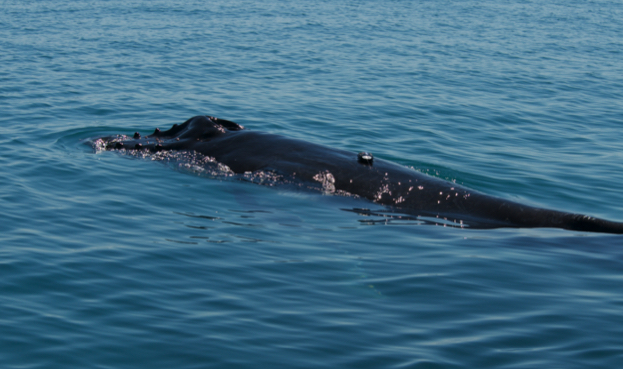
Humpback whale calf wearing a tag in Exmouth Gulf Line Hermannsen
Humpback whales spend summer feeding in the Arctic or Antarctic, and migrate to the tropics to breed and mate.
- "We saw a severely exhausted whale entangled in rope and chain. It was heartbreaking…" Watch heart wrenching video of an incredibly tense rescue
- It's the length of a bus, weighs the same as a tank and can leap 12 metres high – oh and it's one of the world's best singers too...
The Exmouth Gulf is a nursery area for humpback whale calves. The youngsters will stay with their mothers for about a year.