Oak marble galls are strange brown balls that mysteriously appear on the twigs of oak trees, and they’re most noticeable in winter when the last leaves have dropped.
The galls look a bit like tiny cratered planets – and they are, in fact, entire worlds for the insects developing inside them.
The species in question is a minuscule gall wasp, the female of which lays her eggs singly on the oak twigs. When the larvae hatch, they release compounds that cause abnormal growth in the oak trees, resulting in the formation of galls. Safe inside these spheres, the larvae continue their development and finally emerge as adult gall wasps.
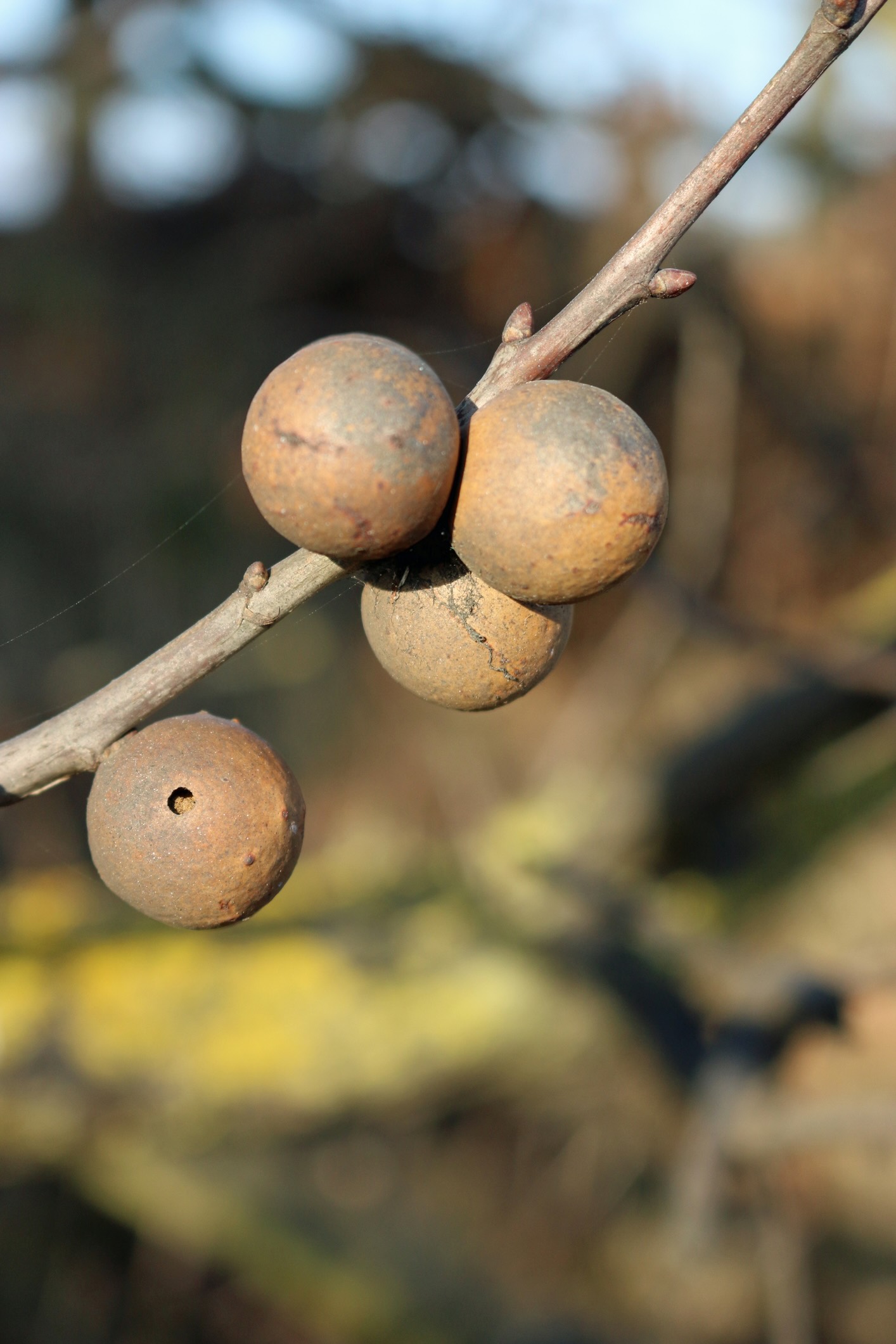
Examine a gall and you’ll often find the little hole where the emerging wasp has drilled its way out.
Gall harvesting used to be an important activity because the woody structures are rich in tannic acid, which was used to tan leather and produce ink. Magna Carta was written in gall ink, medieval monks relied on it, too, and everyone from Leonardo da Vinci to Charles Darwin scribbled notes in it.
Top image credit: Robert Knapp/Getty Images