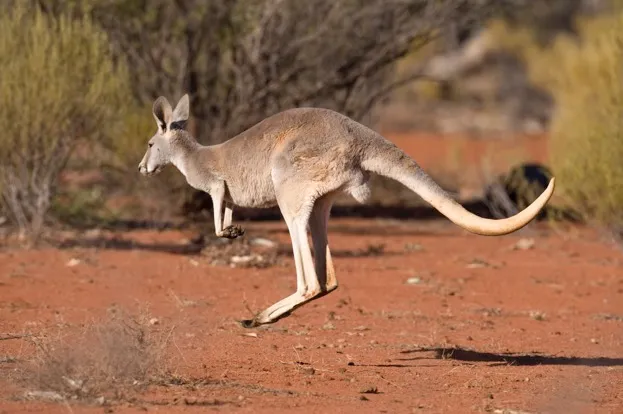
A small marsupial with a little pink nose and a cosy pouch – it's a possum, right? Or maybe it's an opossum? Often people use the two names interchangeably, but the truth is they're different animals. Here, we unpack the difference between a possum and an opossum.
Both possums and opossums are marsupial, which are often characterised by their remarkable way of raising young. Many marsupials have a pouch (marsupium), which offspring must find their way into when they are first born.
What is the difference between a possum and an opossum?
Possum is a common name often used for several different types of animals. The word derives from 'wapathemwa' or 'aposoum', which is an Algonquin word meaning 'white animal'.
What is a possum?
Possum is generally used to describe the marsupial species that live in Australia, New Guinea and Sulawesi. These animals are from the family Phalangeriformes and there are 70 native species, with brushtail possums being the most widespread in Australia and the most well-known.
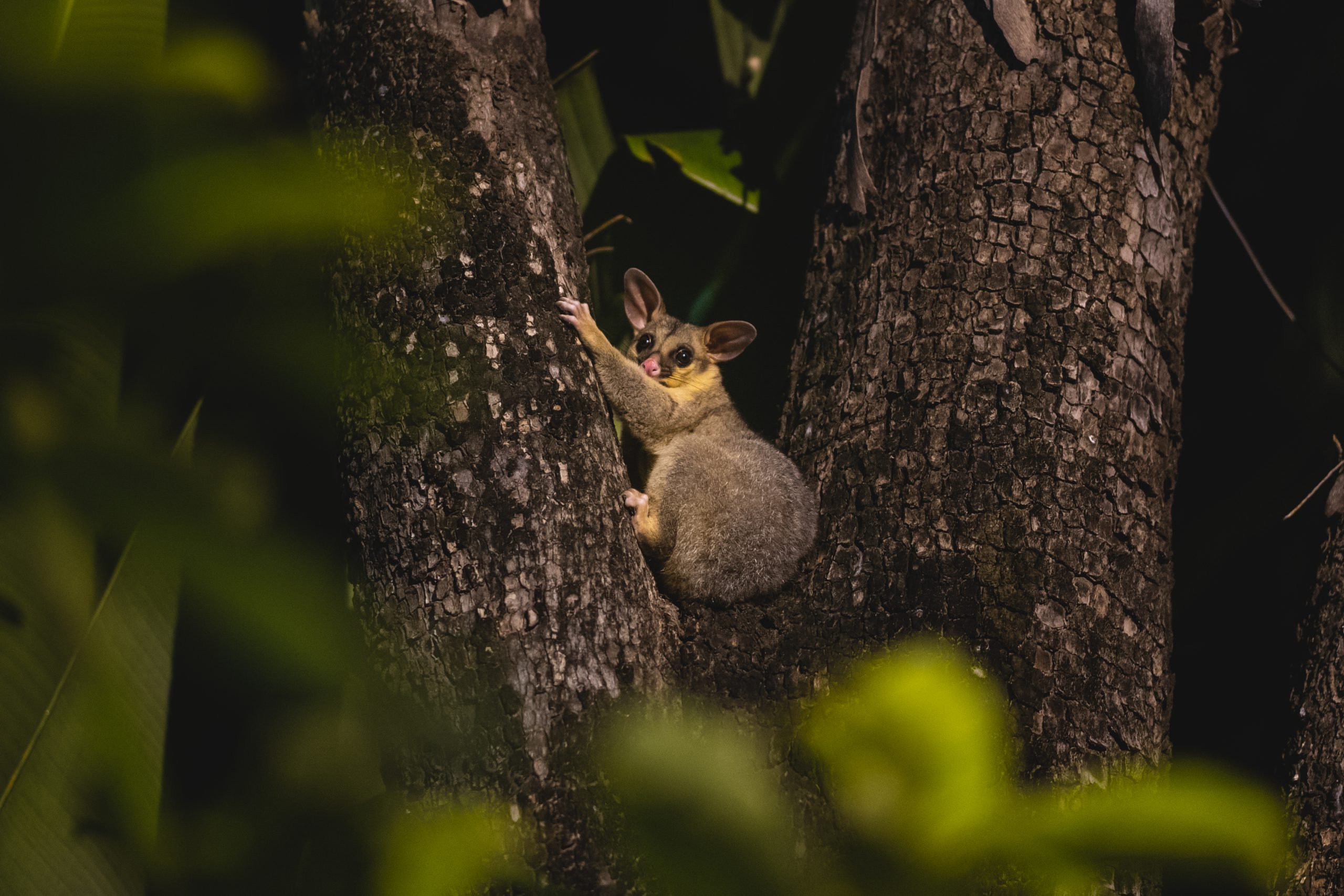
Possums live in trees and are nocturnal. Like many marsupials, they give birth to live young, often no bigger than 1.5cm long, which then have to make their way into the mother's pouch. Once the offspring has made it, it attaches itself to a teat and continues to develop inside the pouch. Generally, many babies are born - sometimes more than there are teats available - and any baby that doesn't find its way onto a teat will perish.
The theory is that the name possum was used to describe the possums found in Australasia and Indonesia because they looked a bit like the opossums from the Americas. But they are in fact different animals.
What is an opossum?
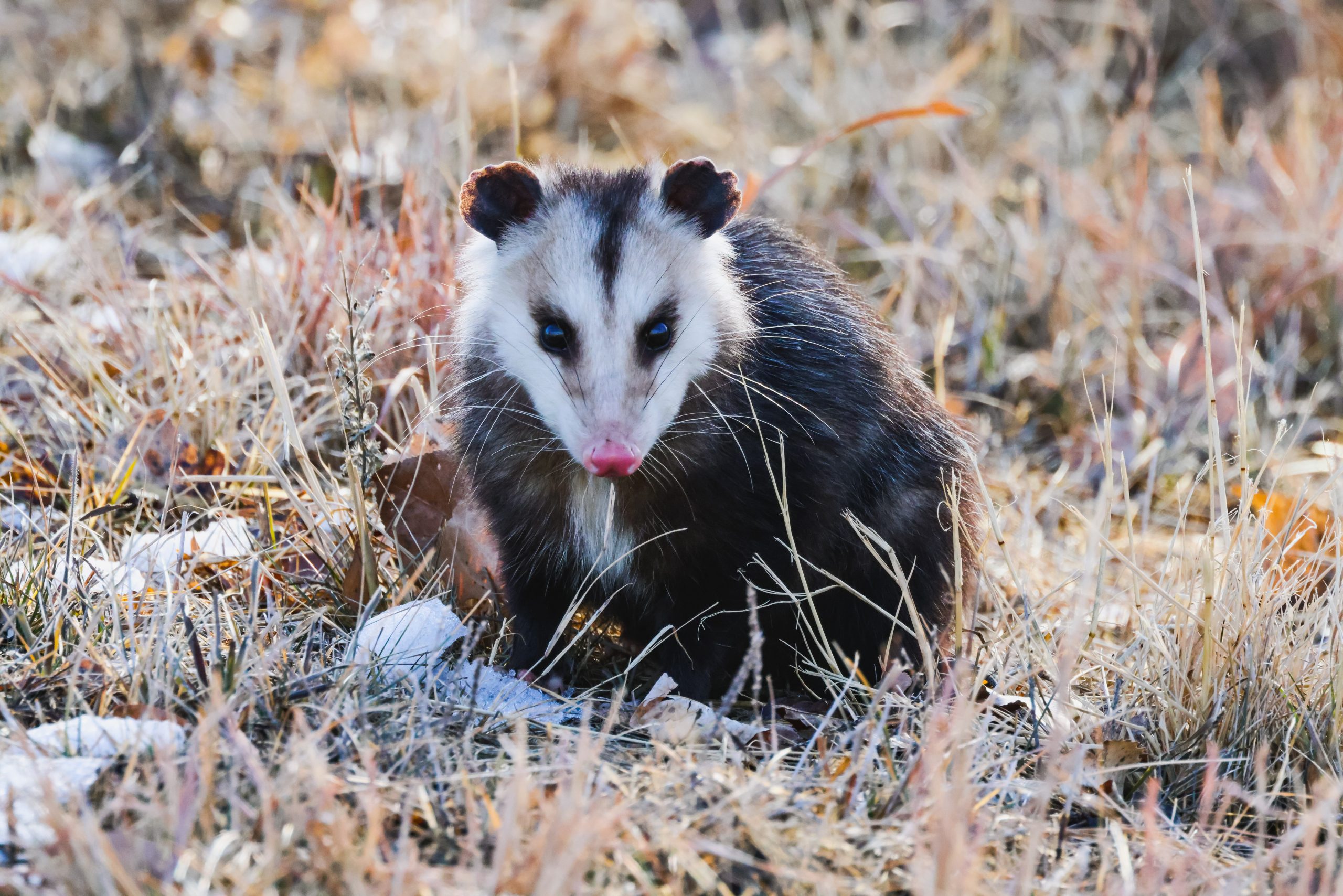
Opossums are also marsupials, with the most well-known being the Virginia opossum, the only marsupial found in the US and Canada. Opossums are from the Didelphidae family and, like possums, give birth to live young and use a pouch as a way of continuing to rear their offspring. Once they are out of the pouch, young opossums will often ride on their mother's backs.
Opossums have prehensile, almost bald tails and are excellent climbers. They eat around 5,000 ticks a year. One remarkable skill that the opossum has is 'faking its own death', where a threatened individual will appear to be sick or dead. Salvia foams from its mouth, smelly liquid comes from its anal glands, and the opossum seems to be entirely out cold. Which, in fact, it is – the act is an involuntary response to danger, a little like fainting.
Opossums have adapted to live near humans. As scavengers, they will often visit human dwellings and have a tendency to raid rubbish bins. There are over 100 different opossum species, with the smallest being the tiny pygmy opossum and the largest being the Virginia opossum.
Not all opossums have pouches, however. One example is the shrew opossum, which hides its babies in its fur and skin folds rather than in a proper pouch.