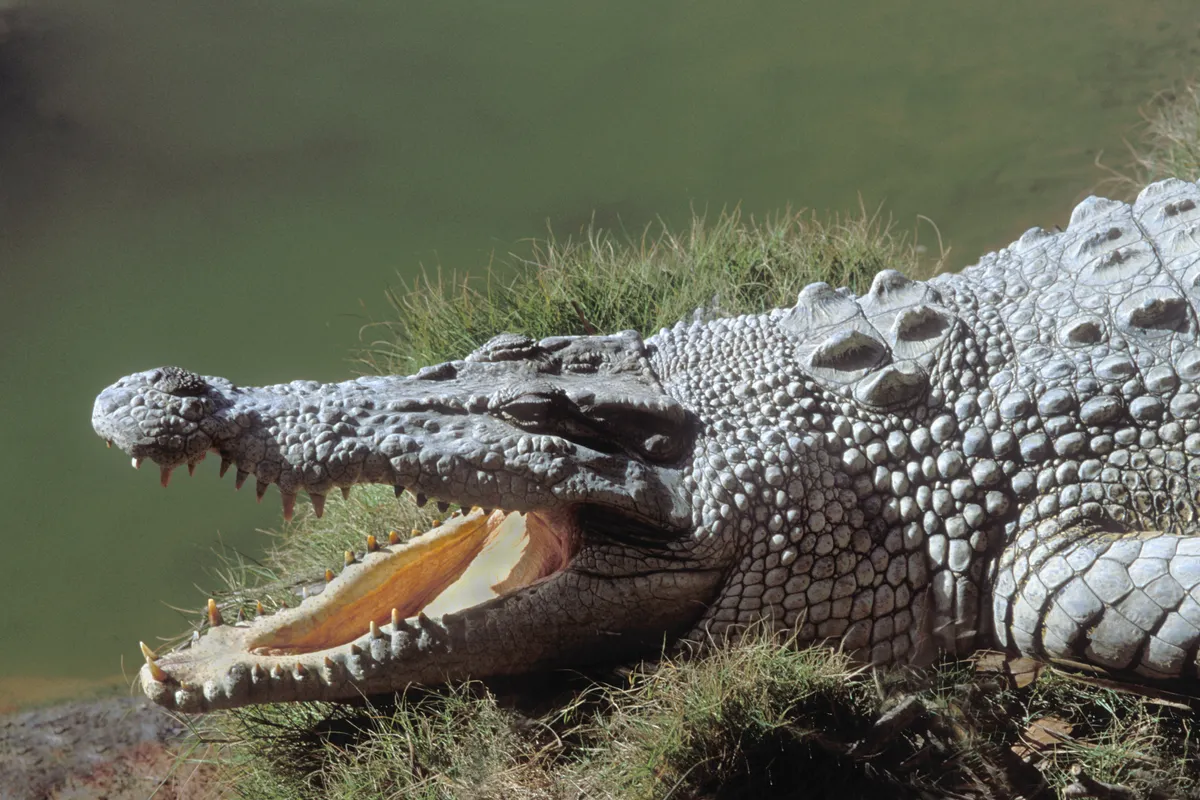
In Lumphini Park, in the heart of Bangkok, huge carnivorous lizards stalk the lawns.
Monitor lizards are the world’s second-largest lizard, after the Komodo dragon that’s endemic to Indonesia. The Asian water monitor can reach more than three metres in lengths and weigh over 50kg.
- 10 brutal photos of the largest lizard on Earth that secretes enough venom to kill a human and has iron-tipped teeth
- This deadly giant lizard can kill a human, yet Indonesian villagers let them roam on school playing fields
It’s estimated that hundreds of these lizards have made the park their home, with thousands of them across the city. Bangkok has thousands of canals, which provide habitat as well as a source of food.
With sharp teeth and germ-laden saliva (it’s still widely debated whether they have venomous glands), water monitors are carnivorous and eat crustaceans, fish, amphibians, birds and small rodents. They also scavenge on food scraps and carcasses – including the remains of smaller monitor lizards.
However, they rarely bite humans. Instead, humans and lizards (mostly) happily exist side by side.
Despite attempts to keep the water monitor populations under control, Lumphini Park remains a popular area to see these creatures. However, it should be worth noting that tourists should keep their distance from them and never feed them.
Top image: a water monitor in Lumphini Park, Bangkok. Credit: Joe Regan/Getty Images