It's one of the largest engineering projects the planet has ever seen, damming Asia's greatest river, the Yangtze, to produce more electricity than any other single power station on Earth. What's more, the energy generated is renewable and, once you take away construction costs, very few greenhouse gases are emitted.
China's Three Gorges Dam, begun in 1994 and becoming fully operational in 2012, appears to be a major win in the battle against climate change while also reducing the chances of catastrophic flooding that have claimed so many lives in the past.
- "The Mass Mortality Event was devastating. In a few short weeks, something strange wiped out more than 60% of the species’ global population"
- Chernobyl Exclusion Zone: When humans fled the worst nuclear incident in history, animals moved in. This is what happened next
And yet, the story of the mighty Three Gorges Dam is not one of pure good news. Indeed, its construction and subsequent operation have had a massive impact on human communities and have altered the nature of the river to such an extent that a number of species have either gone extinct or are on the verge of vanishing from Earth.
Rising in the mountains of China's Qinghai province on the Tibetan plateau, the Yangtze flows for 6300km to each the East China Sea at Shanghai. Some 400 million people live within the river's catchment and it provides about half of all the fish eaten in China and two-thirds of its rice. Industries and farming along the Yangtze contribute about 40% of China's economy.
Its raw power has long been harnessed for energy, the water being channelled through dams to drive electricity generating turbines. Since 1950 more than 50,000 dams have been built within the river's mighty basin. But there is nothing to compare with the Three Gorges Dam, which was constructed at a cost of over $30 billion.
At 2.3km long and 180m high it is the world's largest hydroelectric gravity dam, and the reservoir that formed behind it is 600km long and comprises 39 billion tonnes of water. The hydroelectric power plant has a stated generating capacity of 22.5 gigawatts of electricity, enough power for 4.5 million people and dwarfing the output of a typical modern nuclear power plant.
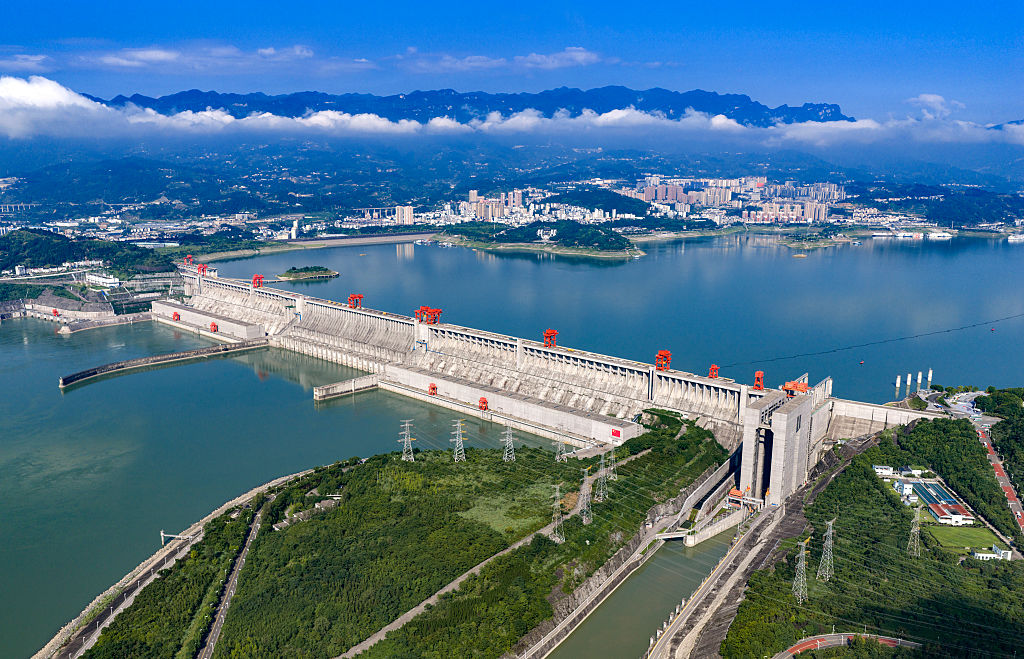
The three gorges in the dam's name are the Qutang, Wu and Xiling gorges, and they lie upstream. Plans to construction a dam here had been mooted as early as 1919. There were several false starts but major disasters, such as the 1931 and 1954 floods that killed tens and possibly hundreds of thousands of people, encouraged further interest and then definitive plans for a dam.
As well as producing power, the proposed dam would moderate the river's flow in monsoon season and drastically reduce the chances of serious flooding. And to a greater degree, the completed dam has achieved these aims, and given the Chinese economy a gigantic boost in the process.
But this progress has come at a cost. The creation of the dam and reservoir meant that 100,000 hectares of farmland and hundreds of villages, towns and even cities were submerged under the rising water. An estimated 1.4 million people were forced to relocate to higher ground and though new accommodation was provided, much of it was poor quality and close-knit communities were uprooted and broken apart.
The dam has also had a huge, and largely negative impact on the wild ecosystems along the river, particularly downstream of the dam. There are regular landslides both above and below the dam that affect human and wildlife communities. The dam has caused major changes to water flows that have removed important habitats, especially breeding areas, for many fish species.
The example of the Yangtze sturgeon is typical. This ancient fish, whose ancestors would have swum when the dinosaurs roamed the land, is now blocked from reaching its spawning grounds. And while the authorities herald a massive restocking project for the species, many experts believe none of these fish are able to breed and the species is living on borrowed time.
According to Yangtze River Fisheries Research Institute, fish populations of four species of carp – a crucial food fish - have declined by close to 90% due to changes in river flows. Many more fish species are under threat and it is already too late for the endemic Chinese paddlefish of the Yangtze and Yellow rivers. This huge fish with its strange snout was last seen in 2003 and has now been officially declared extinct.
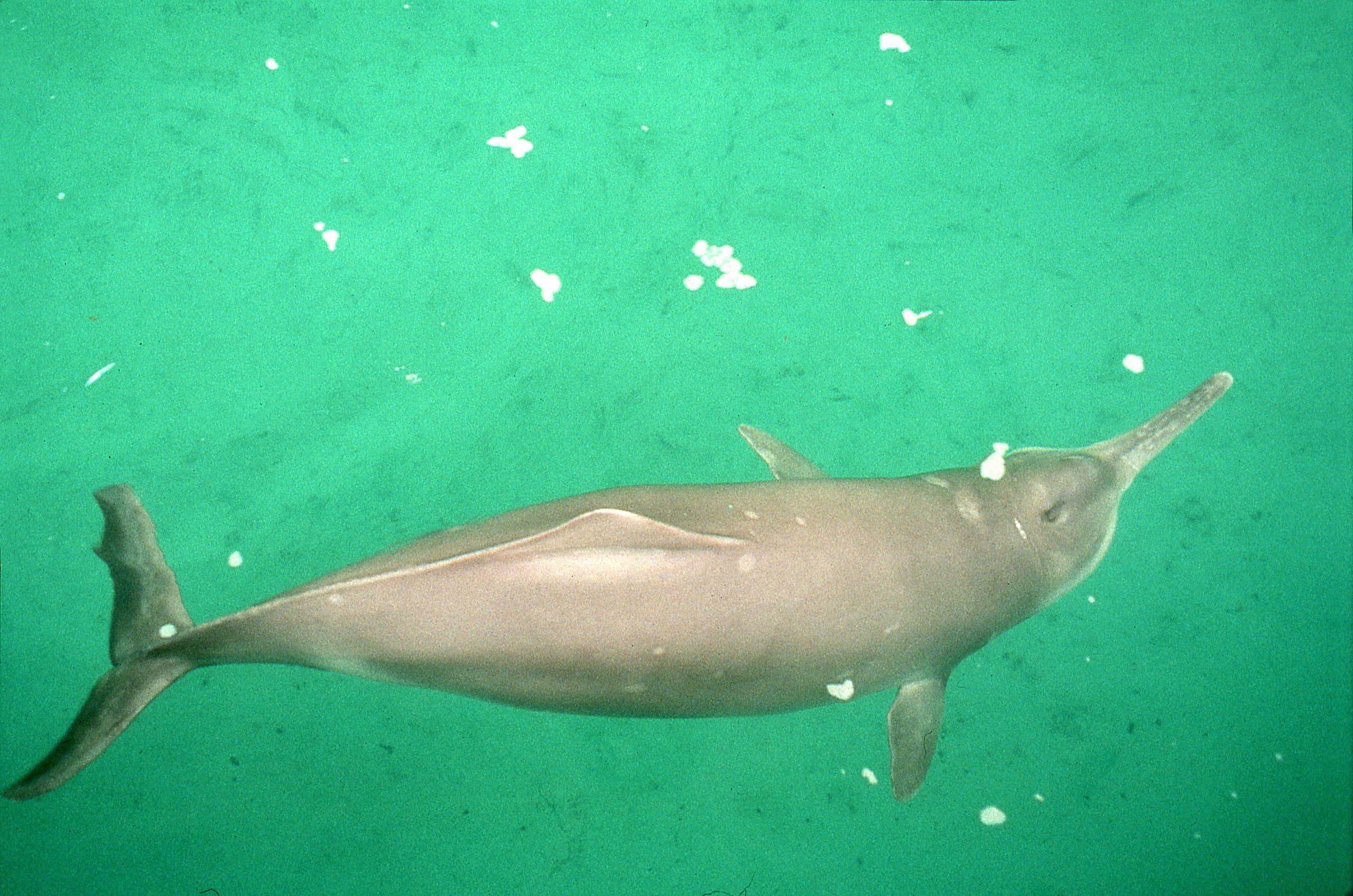
Gone too is the Chinese river dolphin, also known as the baiji. It's thought that, coupled with overfishing, the massive increase in ship traffic due to the dam making the river more navigable has doomed the species.
The noise of the ships is extremely disruptive to the aquatic mammals' ability to hunt and find mates. A similar fate may await the Yangtze finless river porpoise whose numbers have plummeted since the dam was built.
Reptiles and amphibians have fared little better. The Yangtze giant softshell turtle is now extinct while the Chinese alligator and the Chinese giant salamander face uncertain futures, again due to how the dam has changed water flows and altered the river's interaction with flood plains and other riverine habitats crucial for these species.
On the positive side, there are some signs that the authorities, including the Chinese Three Gorges Corporation, have begun acknowledging and attempting to mitigate the impact of the dam, including stocking, and improving “environmental flows”.
Most astonishing still, at face value at least, is the notion that the creation of the dam and the elevation of such a huge amount of water, has slowed the Earth's rotation and even changed the planet's rotational axis. According to NASA calculations, however, the change is completely negligible, harmless, and too small to affect daily life, navigation, or standard timekeeping. Thank goodness for that, at least!
- "It's bigger than a full-size snooker table and has a 40cm-long stinging spine."10 most fearsome, deadly river monsters, including a grisly giant leech
- "They found themselves trapped on ever diminishing islands, facing death by starvation or drowning." How 5,000 animals were saved
- The 'Great Texas Freeze' killed thousands of beloved songbirds. Scientists are worried about what might happen next