
Despite its name, Shark Bay (Gathaagudu-Gutharraguda) is better known for its dugong population, containing around 10% of the global population. The World UNESCO Heritage Site covers 2.2 million hectares in Western Australia and has a coastline that stretches 1,500 kilometres.
Why is it called Shark Bay?
The bay gets its name from the English explorer and pirate William Dampier, who was the first Englishman to explore the region. In around 1699, he wrote about catching sharks in the area – one of which was 11 feet long – leading him to name the region Shark Bay.
Its Aboriginal name, Gathaagudu-Gutharraguda, means the place of two waters.
Are there sharks in Shark Bay?
Sharks can still be found in Shark Bay today, and it contains one of the highest densities of tiger sharks in the world. Other species that inhabit the bay include blacktip sharks, lemon sharks and bull sharks.
Why is Shark Bay a protected site?
Shark Bay is famous for its stromatolites, which are living fossils found in shallow waters. They represent some of the oldest forms of life on Earth, with stromatolite-building organisms dating back billions of years.
Stromatolites are stone-like structures that are formed by colonies of cyanobacteria (a type of bacteria that is the first known organism to produce oxygen through photosynthesis). As sediment in water builds up, the bacteria bind it together to slowly create the rock-like structures we see today.
What wildlife can you find in Shark Bay?
The bay is home to one of the most significant dugong populations in the world, with around 11,000 individuals. They feed on the abundant seagrass that grows in the area. In fact, Shark Bay contains the largest and most diverse seagrass bank in the world – the Wooramel Seagrass Bank. Covering 103,000 hectares, the bank contains 12 seagrass species.
The largest single plant in the world can be found in Shark Bay. A specimen of Poseidon’s ribbon weed seagrass (Posidonia australis) covers an area of approximately 200 square kilometres (77 square miles) – which is more than 450 times larger than Vatican City. In a paper published in 2022, scientists revealed that it spawned from a single seed and is estimated to be around 4,500 years old.
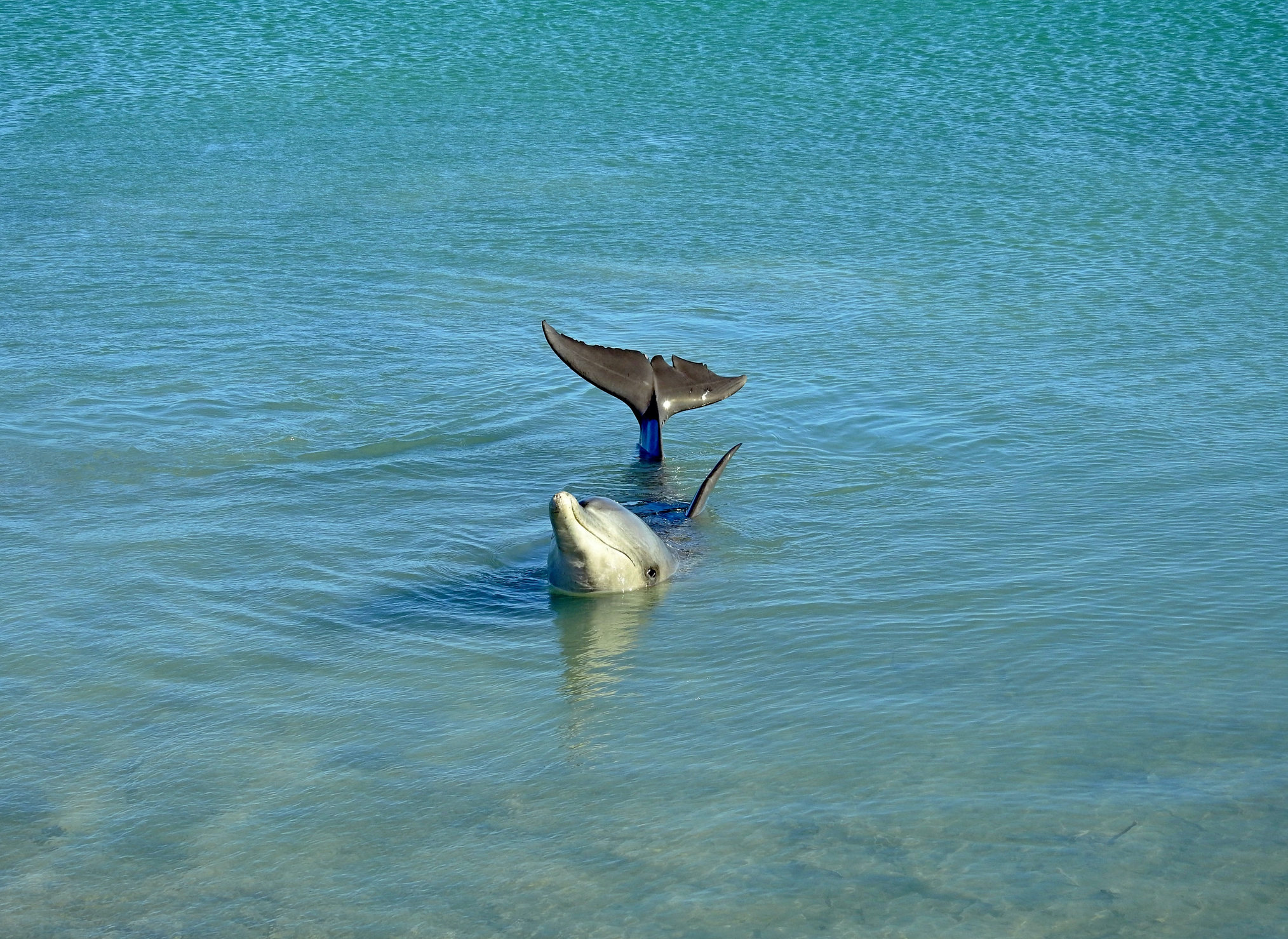
Shark Bay is also home to populations of green and loggerhead sea turtles, whale sharks, and humpback and southern right whales. A population of bottlenose dolphins in Shark Bay exhibits one of the few recorded cases of complex tool use in marine animals.
On land, Shark Bay contains the only remaining or largest populations of five globally threatened mammals: the rufous hare-wallaby; the banded hare-wallaby; the Shark Bay mouse; the western barred bandicoot and the burrowing bettong (now classified as Near Threatened).
Top image: Hamelin Pool is famous for its stromatolites. Credit: Image brought to you through the eye of Andrew Parker/Getty Images


