
Once the world’s fastest ocean liner, the SS United States could be moving to a new home down in Davy Jones' locker. When she arrives on the seabed, she’s set to become the world’s largest artificial reef – but only if she doesn’t run into more stumbling blocks.
The SS United States made waves even before she was built. When she was designed, details of her construction were marked top secret. 100 feet longer than the Titanic, she was so fast (in both directions) that she could almost outstrip "The Unsinkable Ship" while she was in reverse.
She could travel faster than 38 knots (44 miles per hour) going forwards and 20 knots going backwards.
Her maiden voyage took place on 3rd July 1952 and she quickly became popular with passengers. Even celebrities – including Salvadore Dali and Rita Hayworth – travelled onboard.
In the 1960s, her glory days started to wane and the cruise industry started facing financial troubles: oil was expensive and people were starting to think about air travel over travelling by ship.
Her 1969 retirement came as a shock to everyone. “The SS United States’ withdrawal from service in 1969 stunned her officers and crew,” writes SS United States Conservancy. “Some left their equipment and personal items onboard in anticipation of returning to work the next day, only to find the gangway doors sealed shut.”
- In 1941, a massive WWII ship sank off the coast of Albania. Divers just went down there – and found a rare mammal living among the wreck
- Sunken warships fill this eerie lagoon – and they're scattered with gas masks, skulls and bullet casings
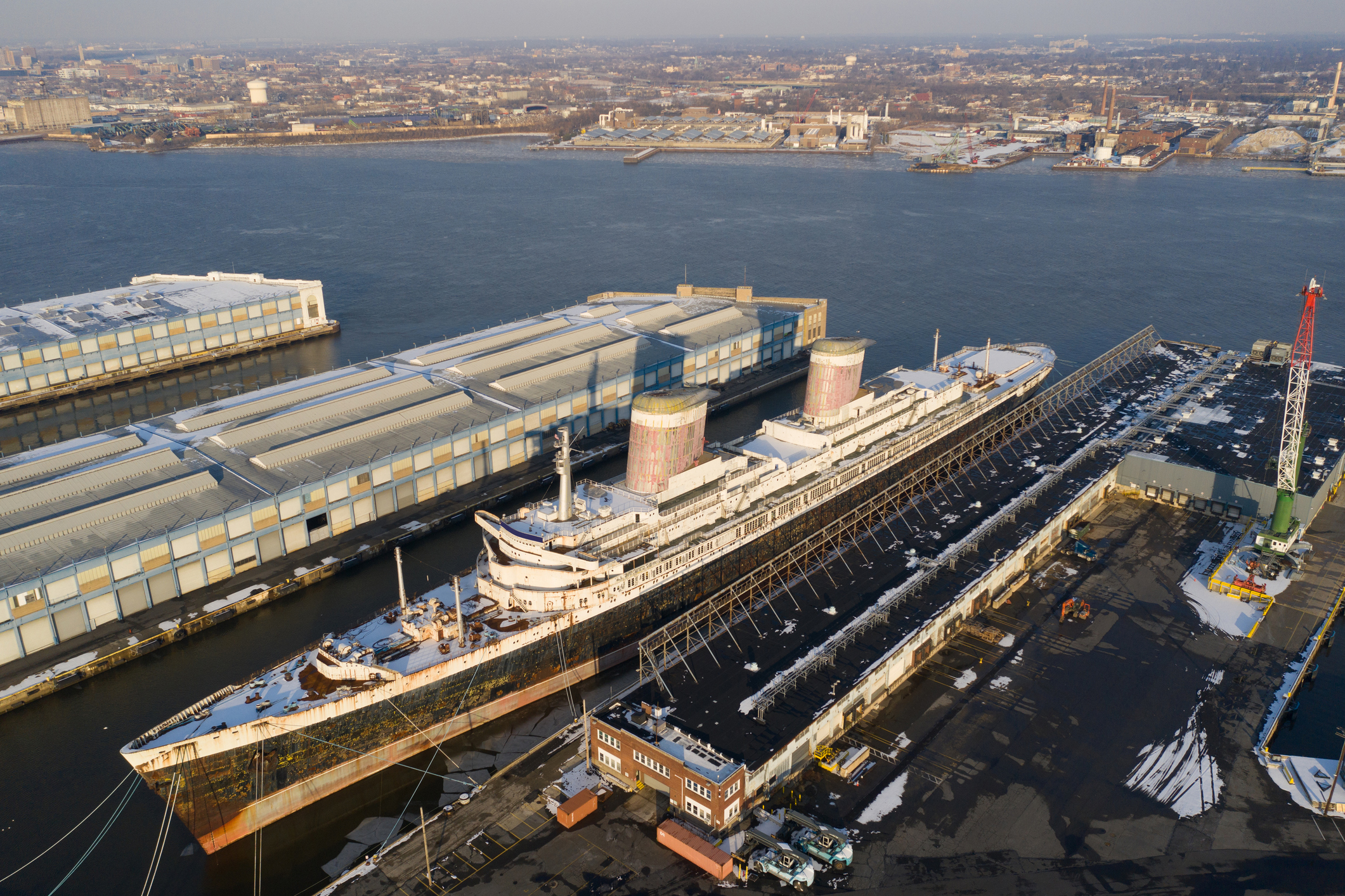
For many years, she was kept as a reserve ship for the US Navy but, despite attempts to bring her back into service, she never sailed again
In 1992, Fred Mayer bought the ship and had any hazardous materials removed. She was towed to Philadelphia and docked at Pier 82 in 1996.
The initial trigger for plans to sink the SS United States and turn her into the world’s largest artificial reef began around 2021 when her rent skyrocketed.
The SS United States Conservancy, which was responsible for looking after the retired ship, had a legal dispute over the fees for her berth but were eventually evicted in September 2024.
Unable to find a suitable new home, they needed a new plan.
- When this WWII seaplane was discovered by a fisherman in 1994, dazzling animals were found hiding in the wreck
- 10 incredible, dramatic shipwrecks around the world that are just teeming with marine life
“We faced the painful but unavoidable choice between scrapping America’s Flagship or converting her into an artificial reef in tandem with a land-based museum,” explains SS United States Conservancy on its website. “We chose the latter as the more dignified path.”
She was acquired by Okaloosa County, Florida, in October 2024 and arrived in Mobile, Alabama, on 3rd March 2025 after a 12-day, 1,800 nautical mile journey.
Plans are now underway to scuttle the ship off the coast of Destin-Fort Walton Beach. Her upper deck is expected to be around 17 metres deep, making it accessible for open water scuba divers to visit. The total depth of the reef will be around 55 metres.
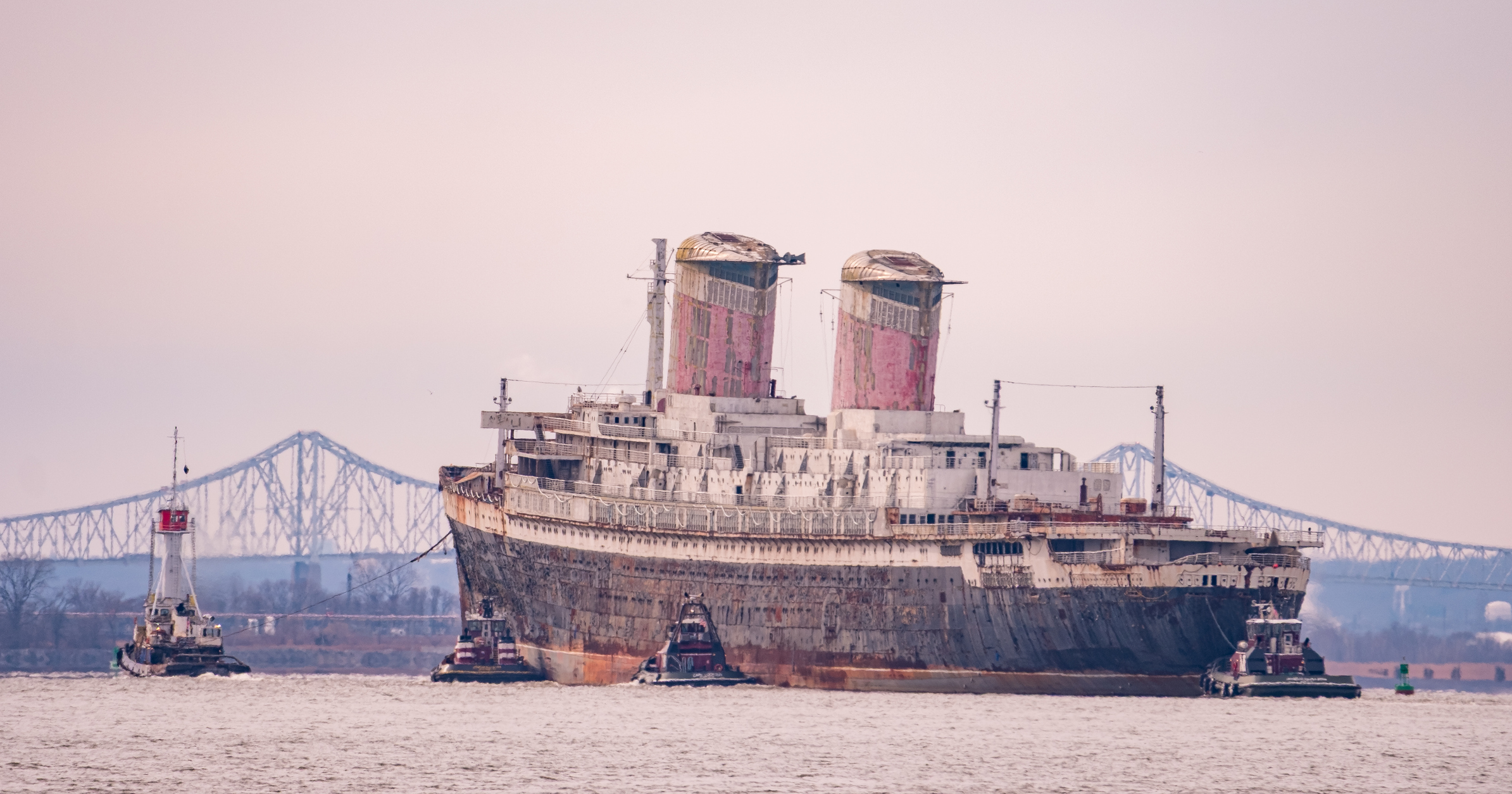
Initial plans suggested the ship would be sunk in early 2026 but this has since been delayed. At the time of writing, the new scuttling date hasn’t been confirmed.
If the SS United States does complete her journey to the bottom of the ocean, the 302-metre ship will overtake the USS Oriskany – a 270-metre aircraft carrier – as the world’s largest artificial reef.
Over time, marine life will hopefully move in and make the ship her new home.
“In addition to the usual reef fish species like red snapper and grouper, the size of the SS United States will also attract the more pelagic species of fish such as amberjack, mackerel and tuna,” writes Okaloosa County. “It will provide much-needed habitat for them to thrive.”
top image: The SS United States. Credit: Claire Gentile/ Getty Images
More Wildlife stories from around the world:
- Why do seahorses look like miniature horses?
- "In the shadow of the Himalayas swims a fish that seems to have developed a taste for human flesh…" 10 most aggressive freshwater fish
- Its 4 to 6 fang-like front teeth deliver the most severe damage – and its snapping jaw reflex can even be triggered after death


