Forget ‘where the wild things are’. This is where the weird things are. Ancient mariners returning from Socotra told tales of trees that oozed dragon’s blood. According to the Greek historian Herodotus, the phoenix came here to be reborn, whilst Venetian explorer Marco Polo was impressed by the island’s powerful sorcerers.
Situated at the entrance to the Gulf of Aden, off the Horn of Africa, this Yemeni island may be rich in mythology, but that’s nothing compared to its flora and fauna. After breaking away from the ancient supercontinent of Gondwana millions of years ago, Socotra followed its own evolutionary trajectory. The result is a remarkable collection of species found nowhere else.
- The terrifying, deadly island off Brazil that only scientists and soldiers can visit
- There's a strange spinning island in Argentina that's a perfect circle – and scientists know why
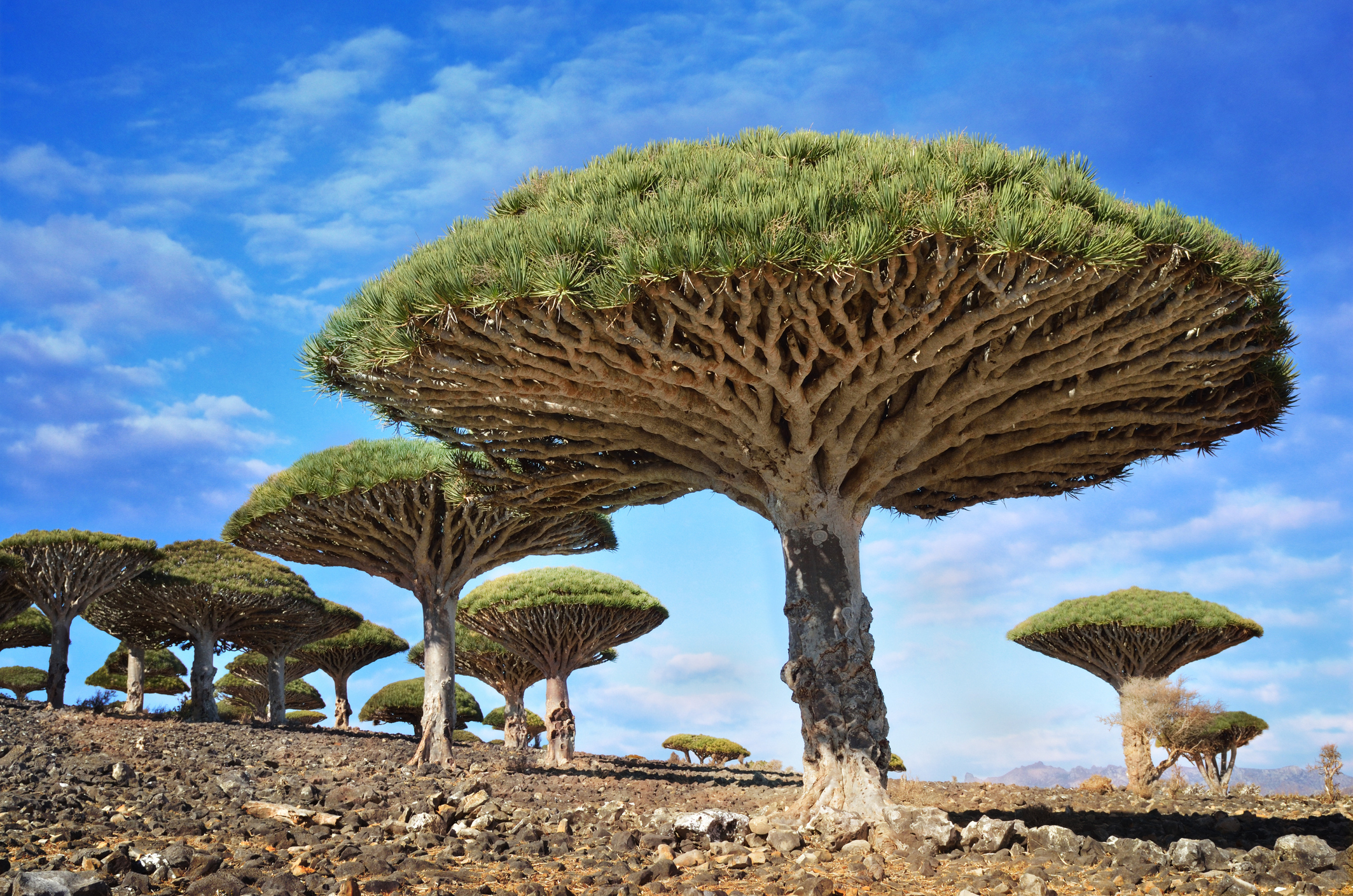
Aptly dubbed the Galápagos of the Indian Ocean, Socotra Island is home to an estimated 825 plant species, of which a third are endemic. There really is a tree that oozes “dragon’s blood”. Cut into the ashen bark of the dragon’s blood tree (Dracaena cinnabari ) and a crimson resin spills out.
The first saplings are said to have sprouted from the blood of a dragon that was killed by an elephant. Now, tens of thousands of these strange upside-down trees grow on the island’s plateaus and mountains. Mature dragon’s blood trees have an umbrella-shaped crown of stiff, densely packed leaves. This is an adaptation to the island’s scorchingly arid climate. While the trees’ roots can “suck up" water from the ground, their canopies can “drink” fog and mist and channel it into the ground.
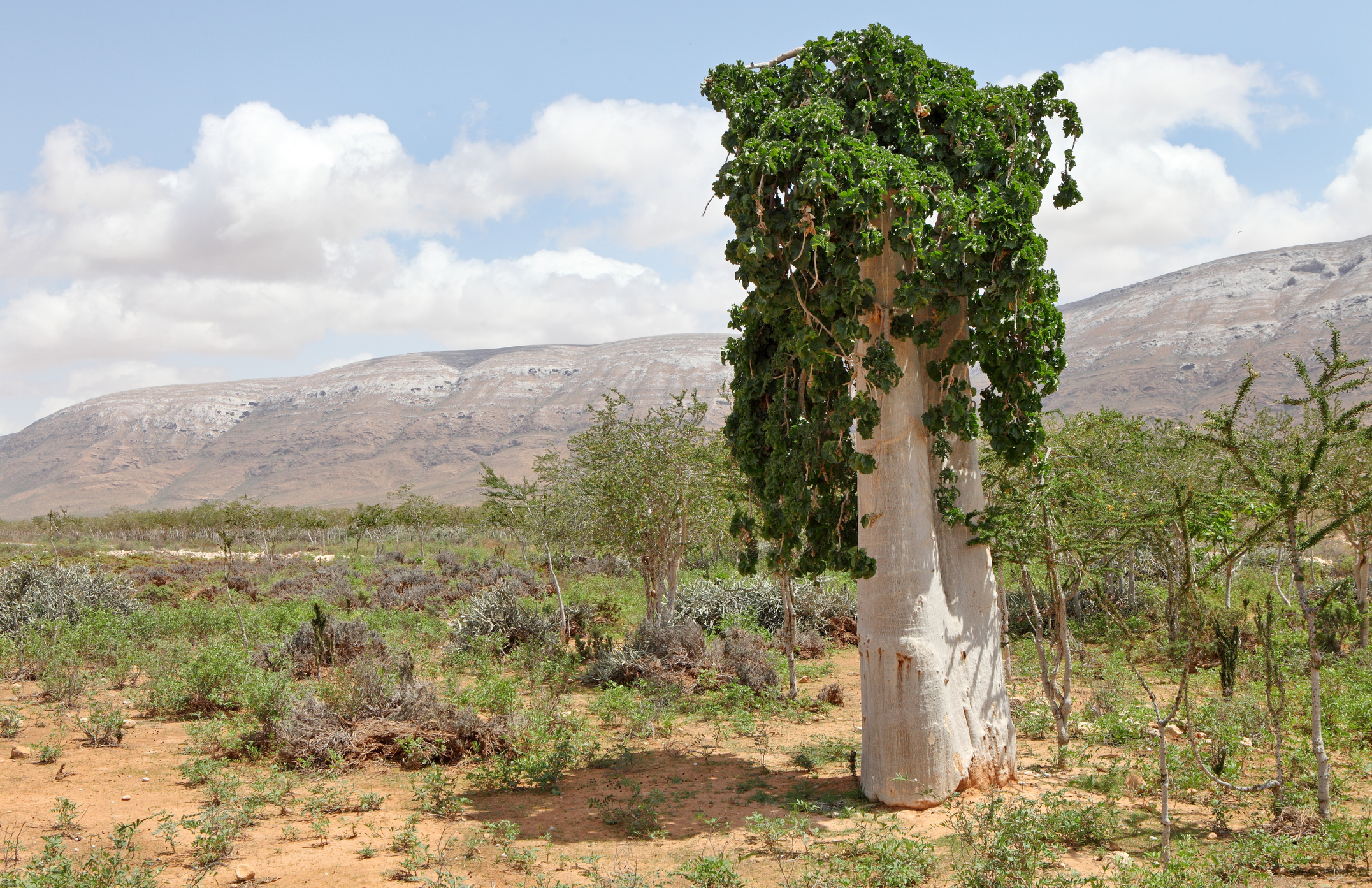
Not to be outdone in the weirdness stakes, the Socotra cucumber tree (Dendrosicyos socotranus) is the only tree in the cucumber family. Instead of producing the familiar scrambling vines of its relatives, it has evolved a thick, bottle-like trunk that helps it to retain water. And instead of long, green salad cucumbers, it produces small, orange berries.
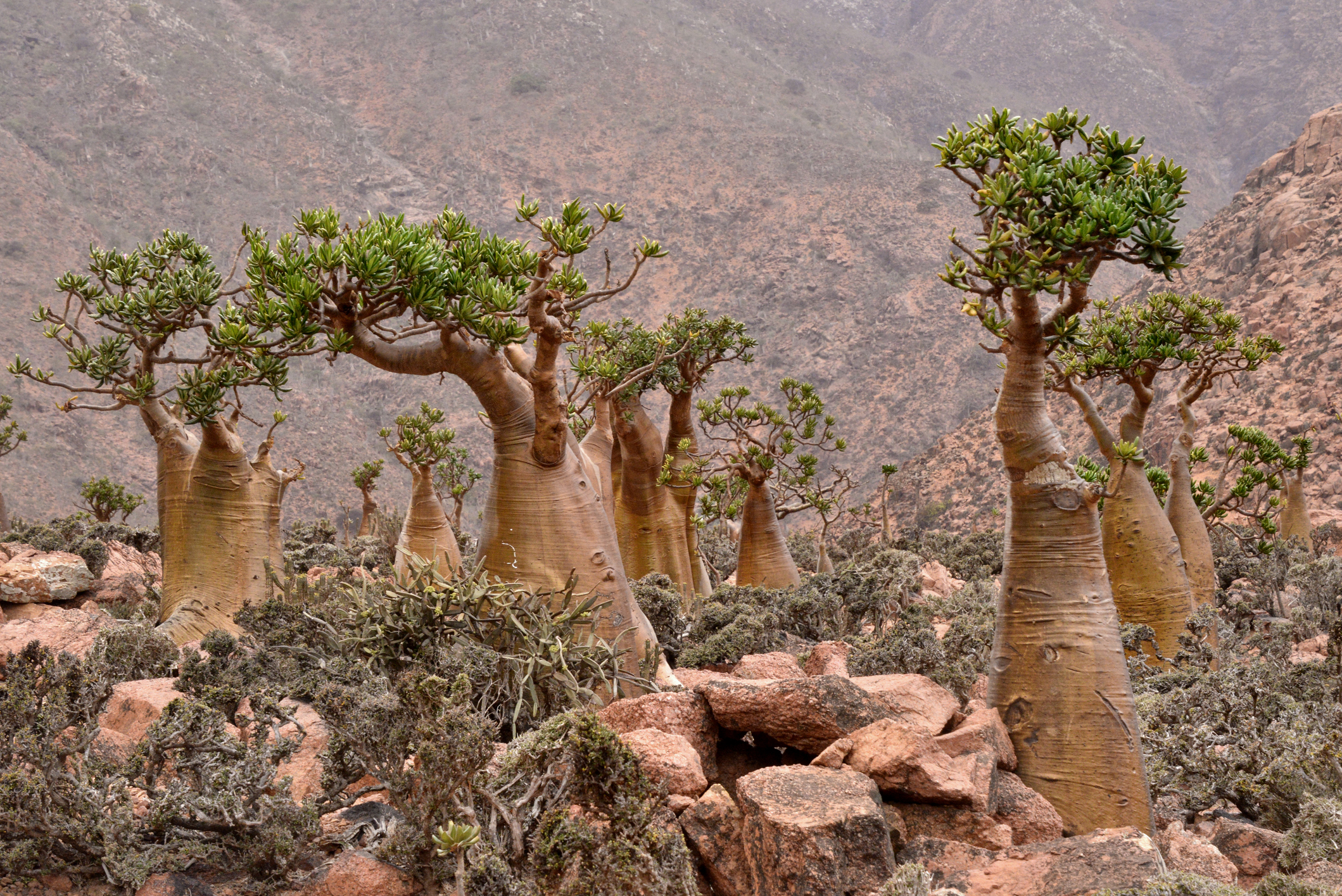
The desert rose (Adenium obesum) also grows as a tree with similarly bulbous bottom. To prevent water loss through transpiration, it routinely sheds its leaves, which grow only at the tips of its branches. Then it relies on its grey bark for photosynthesis.
- "It explodes with a loud bang, flinging toxic seeds at speeds of up to 150MPH." 8 weirdest, wackiest trees on the planet, including one that walks...
- 10 epic photos of the most monumental trees on Earth
No less remarkable, 95% of the island’s land snails, 90% of its reptiles and six of its bird species are also found just here. This includes the Socotra sunbird (Chalcomitra balfouri), which feeds on the tubular blossoms of the island’s endemic succulents, and the Socotra chameleon (Chamaeleo monachus), a hissing reptile once thought to possess magical powers.
Today, Socotra is a UNESCO World Heritage Site, but its future is far from guaranteed. Development, invasive species and climate change are placing growing pressure on the island's fragile ecosystems. If the dragon's blood trees, bottle-trunked cucumbers and spell-casting chameleons are to endure, the island's next chapter will depend less on legend than on conservation.