Ask people for their most memorable sound of the jungle at night, and you’ll get a variety of answers. Some will speak of the chirps and wingbeats as birds return to roosts. Others might remember the droning of cicadas or the resounding shouts of howler monkeys. But the sound that sticks in my memory was not made by wildlife.
- "They will use this claw to rip open the soft bellies of humans to devastating effect..." 6 deadliest, most dangerous jungles on the planet
- "Before I had a chance to shout for help, a monkey jumped on my head and picked out the wasps in my hair one by one"
I was in Periyar National Park, Kerala, which offers something no other Indian national park does – a multi-day walking safari centred around a tented camp deep in the jungle. Keen for such an immersive wildlife experience, I had signed up.
It was the second day, and along with four other tourists, two guides and a guard, I embarked on a hike. The scenery was stunning, and the trail rolled over several thickly forested hills before winding back towards our camp.
We were about to summit the final hill when Sateesh, the head guide, motioned for us to stop. In the valley below was a herd of elephants, ambling around and foraging in the undergrowth. Of course, we were delighted with such an encounter and marvelled at these impressive creatures.
- "He began waving his arms violently up and down while screaming at the top of his voice. I turned and finally saw what was making him so afraid…"
- “We were literally running for our lives. If one of us had tripped, there was nothing we would have been able to do”
After a few minutes, Sateesh seemed to get a bit restless. I wondered if this was something of an everyday encounter for him, but he explained that the elephants were blocking our path. We had to wait for them to move on, but the light was already starting to fade. The idea of walking in the dark made him distinctly uncomfortable.
Nearly 30 minutes later, the herd finally shuffled off down the valley. The canopy was darkening, and Sateesh signalled for us to move in single file. He led from the front, with the other guide in the middle and the guard bringing up the rear, behind me.
We walked swiftly, following the trail past a towering teak and through a clump of bamboo. Then, Sateesh stopped dead. Standing rigid, as if in fear, he pointed to a banyan tree barely 10m away.
I peered into the forest. As my eyes adjusted to the gloom, I could vaguely make out some sort of large boulder. Then, the boulder snorted and flicked its tail.
It was a bison, also known as a gaur. A lone male, two metres tall at the shoulder and crowned with a set of vicious-looking scimitar horns. He stared us in the eye and held his ground, aware that he could knock us over like a row of skittles and then trample us for good measure.
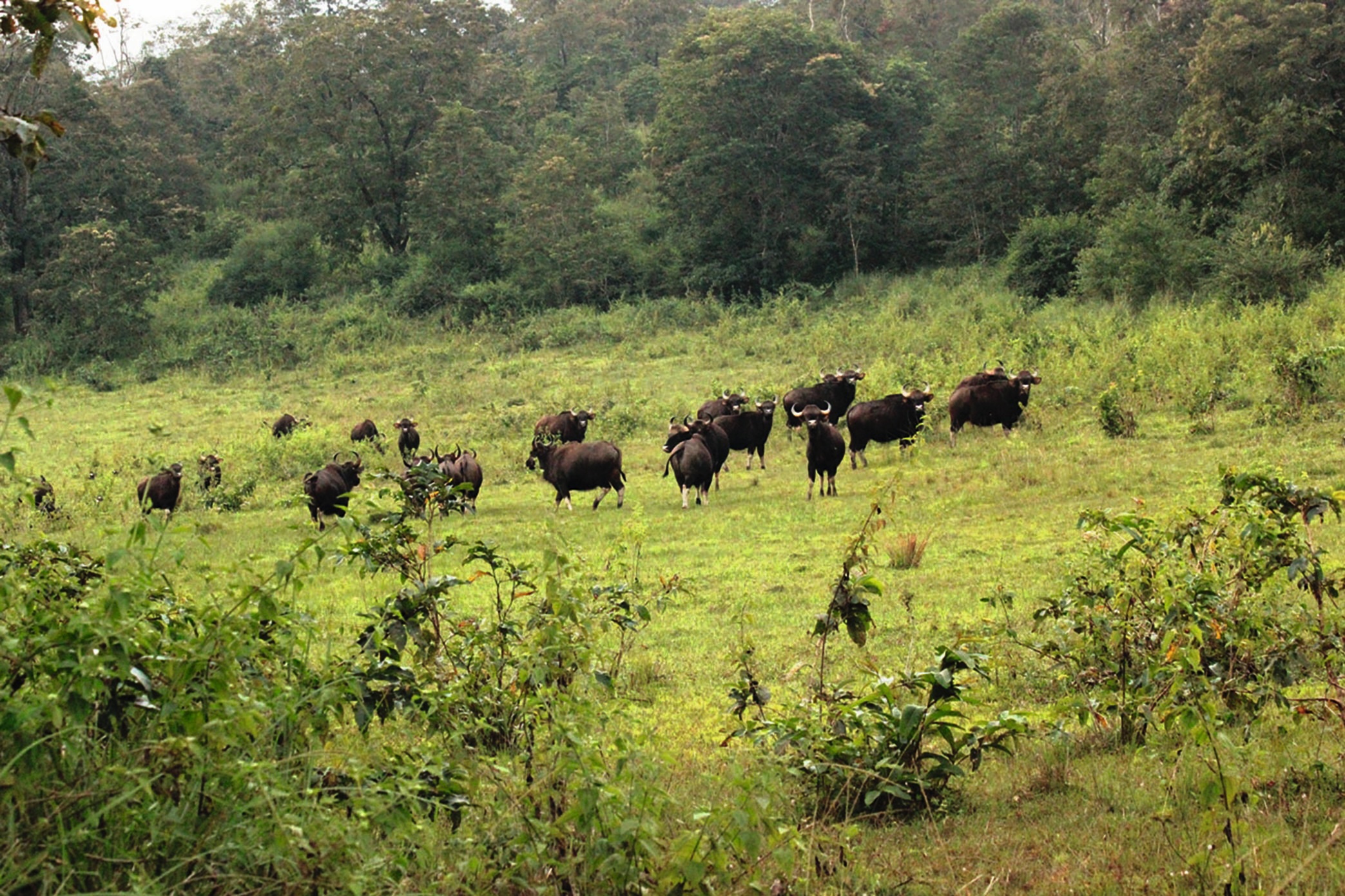
Two lessons from the previous day’s safety briefing replayed in my mind. One, that lone male animals, particularly bison and elephants, tend to be more unpredictable than a herd. And two, that unusual sounds such as coughing can encourage them to scarper.
- Huge size and incredible power of bison revealed in 11 awe-inspiring photos
- Buffalo v bison: Just what is the difference between these massive 1000kg beasts?
Right on cue, Sateesh coughed and cleared his throat. But instead of backing away, the bison walked forwards, causing everyone to gasp. He approached so close that I could smell his bovine musk and hear the hoarse, rapid whispers of his breath.
Then, I heard a sound that sent a wave of terror to my very heart: a soft click as the guard flicked off his rifle’s safety catch. My legs turned to jelly at the prospect of one tonne of pure, angry muscle charging at us.
But Sateesh saved the day. He sneezed. And lo and behold, the bison fled.
I remember many sounds from later that night, as we sat by the campfire. The chirping of crickets, the hoot of an owl and the alarm calls of sambar deer. But nothing echoes in my memory as sharply as the sound of a rifle being put to the ready.
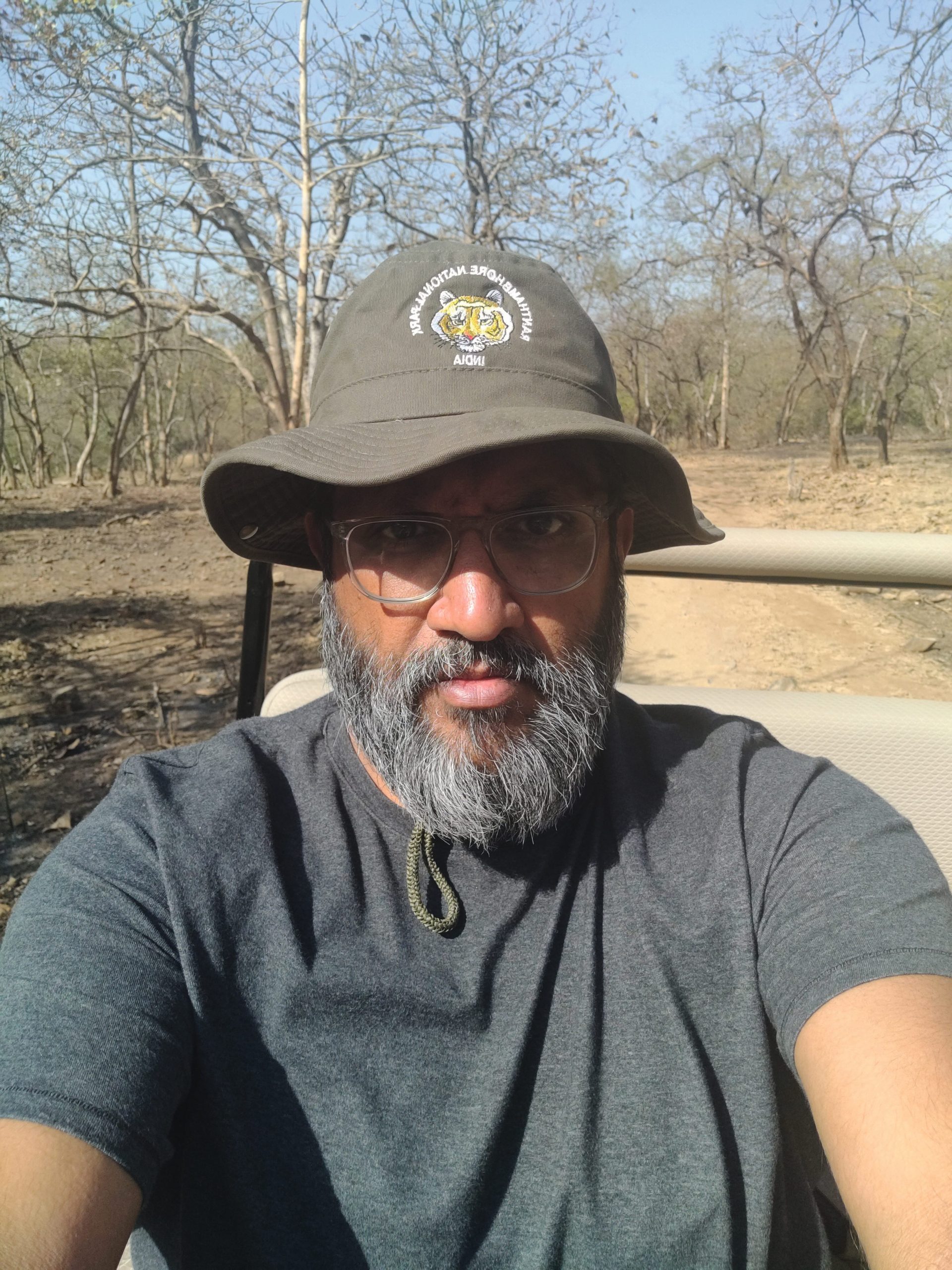
Top image: Sateesh leads the way. Credit: Manan Dhuldhoya
Discover more tales from the bush:
- "Please help – we have a hippo in our swimming pool!"
- The car was stuck in the mud. Then an elephant charged. I still can’t believe what happened next…
- "An enormous male lion emerged from the darkness. His head and mane loomed impossibly large and he grunted and advanced towards us"
- “If she climbed into our canoe, we were guaranteed to capsize, and I was not ready for a wrestling match with an orangutan in deadly crocodile territory…”
- "For one agonising moment, we huddled and dangled at their mercy…"