
Researchers have discovered a new species of flowering plant in Thailand – and have named it the ‘devil flower’.
Botanists from Chulalongkorn University and Prince of Songkla University uncovered it while surveying Thong Pha Phum National Park in western Thailand in 2025.
- "It looks like an extra-terrestrial being that fell to Earth and behaves like a subterranean vampire." 10 weirdest, wackiest plants on the planet...
- Do plants sleep?
The species, named Thismia daemona, has been described in the journal PhytoKeys. It belongs to a genus of plants that are sometimes referred to as ‘fairy lanterns’. The genus cannot photosynthesise and doesn’t contain chlorophyll, so instead relies on underground fungi for nutrients.
It spends almost its entire life hidden in leaf litter on the forest floor, appearing above ground only during the flowering and fruiting season, making the discovery even more extraordinary.
Thismia daemona was found growing at nearly 1,000 metres above sea level in a montane forest – an unusually high (and dry) location for the genus, which is more typically found in humid lowland rainforests.
The new species belongs to the Thismia section (a taxonomic rank) Geomitra, which has previously only been seen in Peninsular Malaysia, Borneo and Sumatra; pushing the known range of Geomitra northwards.
Thismia daemona’s name comes from its dramatic appearance. The flower is mostly black, with patches of orange at its base and horn-like appendages.
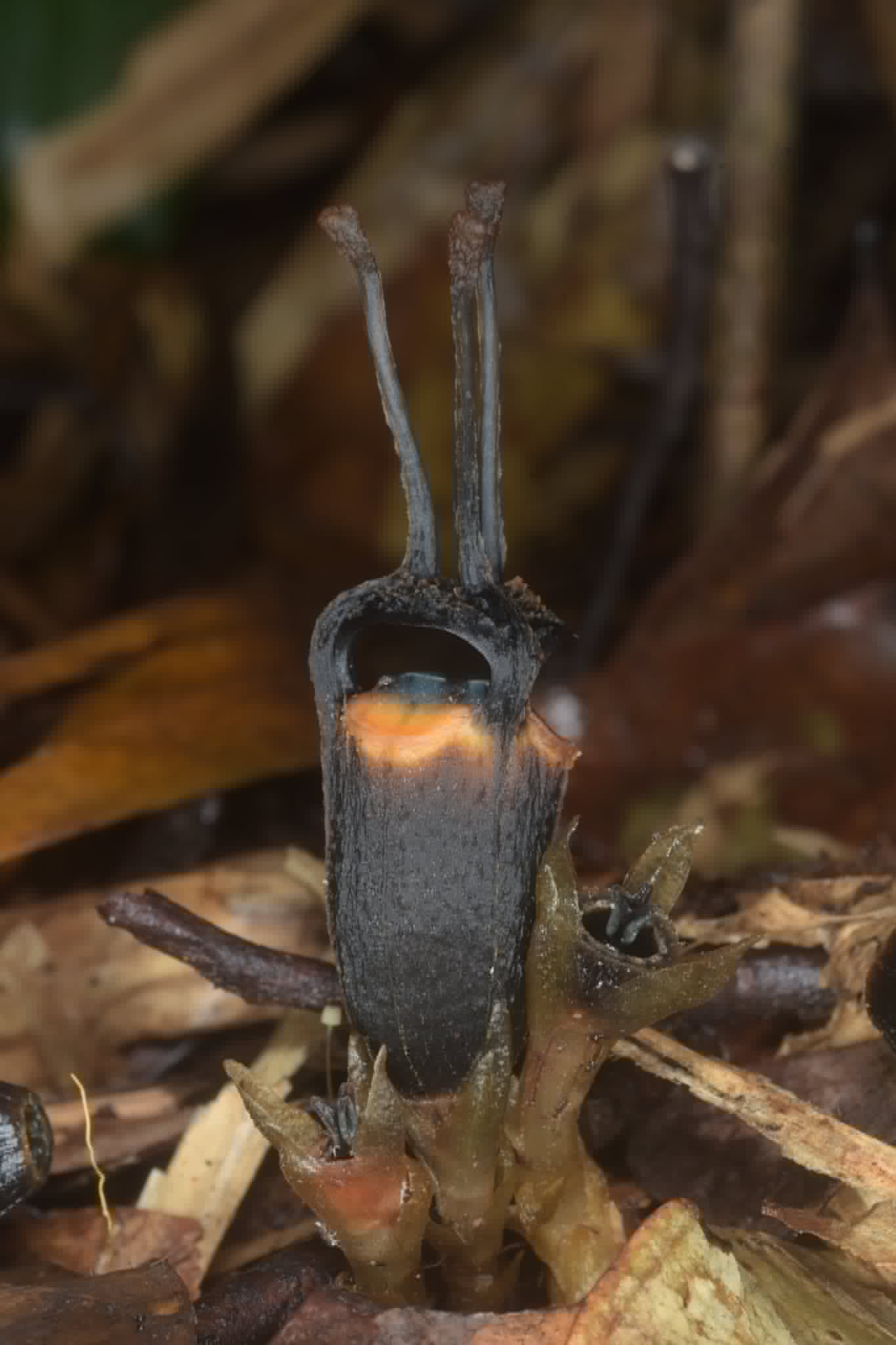
“Combined with its hidden, subterranean and mysterious lifestyle on the forest floor, our team unanimously agreed that naming it Thismia daemona perfectly captured its enigmatic and devil-like essence,” explains Sahut Chantanaorrapint, from the Prince of Songkla University, who helped describe the new species.
The researchers only found a single population of the plant, containing fewer than 50 individuals, in an area smaller than a football pitch. Thismia daemona has therefore been provisionally classed as Critically Endangered – partly due to its habitat within a national park popular with tourists.
There are currently around 120 species of Thismia, mainly distributed in Asia, Australia and Southeast Asia. However, many are at risk of extinction.
Top image:Thismia daemona in its natural habitat in Thong Pha Phum National Park. Credit: Neeranuch Taosiri


