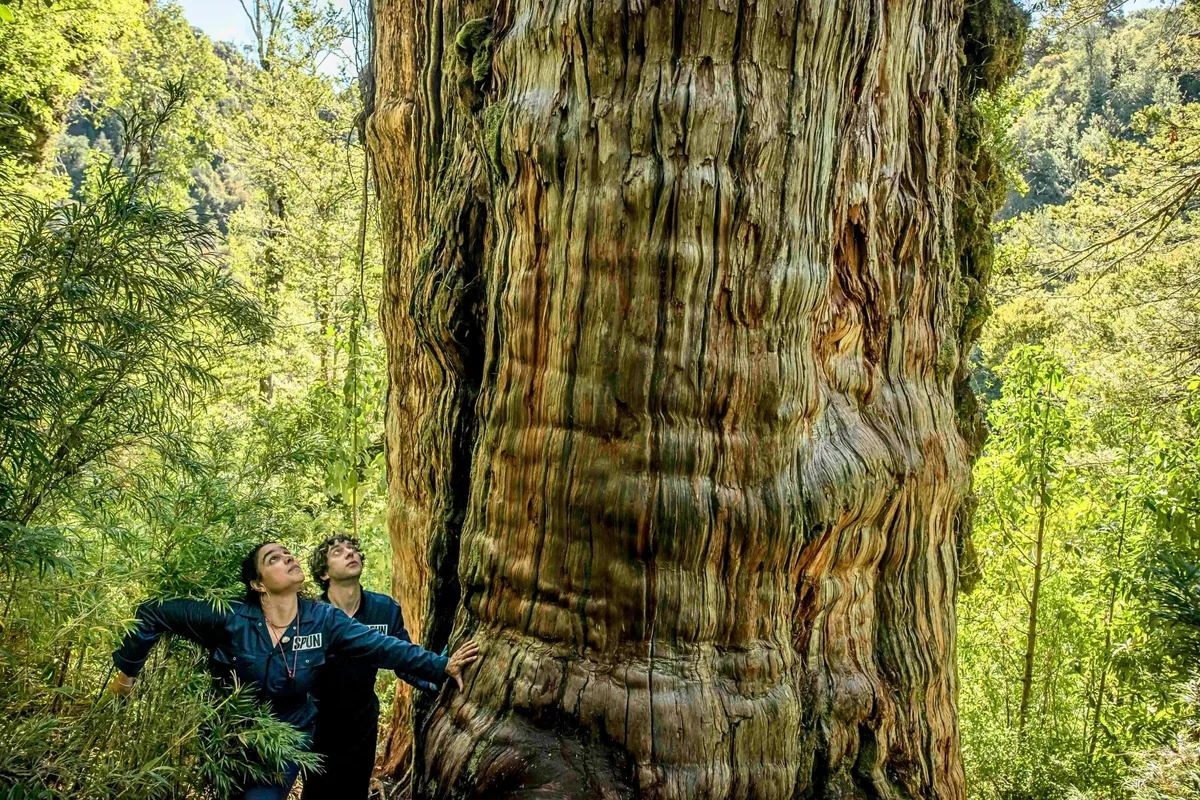
The towering conifers of Chile’s southern rainforests do far more than shape the skyline. Research in Biodiversity and Conservation reveals that these ancient trees are hubs of hidden biodiversity, highlighting their crucial role in the forest ecosystem.
The temperate rainforests of the Chilean Coastal Range are home to many unique and important species, including an endangered conifer known as alerce. These slow-growing trees can grow as tall as the Arc de Triomphe, and as wide as a shipping container. Renowned for their longevity, some individuals have lived for over 3,600 years, making alerce the second-longest-lived tree species on Earth (after the bristlecone pine).
Alerce forests are found along the coasts of Chile and in the foothills of the Andes, but their range has halved, as trees were felled for wood or cleared for pasture. Now, with added pressure from climate change and other threats, researchers worry about the repercussions.
Like many trees, alerce has an intimate relationship with the fungi in the surrounding soil. These mycorrhizal fungi funnel water and nutrients into the tree roots, and help the plants to fight stressors, such as drought and pathogens. In exchange, the trees feed their fungal partners with sugars, fuelling the growth of underground networks that help shunt carbon into the soil.

- What's the world's most poisonous tree?
- The world's most dangerous trees – including the exploding 'dynamite tree'
To find out more about this relationship, researchers collected soil samples from under 31 alerce trees. They also measured the size and biomass of each tree, and found that larger, older alerce interacted with a greater diversity of fungi, than smaller, younger ones.
The soil underneath the oldest, largest tree - a 2,400-year-old individual known as Alerce Abuelo – contained more than 300 species of fungus that were unique to this tree. “All that diversity means resilience,” adds Adriana Correlaes, field science lead at the Society for the Protection of Underground Networks (SPUN).
In addition, the fungal richness under Alerce Abuelo was more than two times greater than in any other sample. The study highlights the importance of protecting these older, bigger trees.
“Not all trees are the same and if you remove a millennial tree, the impact on all the other species is going to be bigger than if you remove a smaller one,” says Camille Truong from the University of Melbourne. Taking out one tree, in other words, can destroy an entire underground community of forest helpers that took thousands of years to assemble.

Top image: Tomás Munita / SPUN
More wildlife stories from around the world
- It’s older than the Roman Empire, taller than the Statue of Liberty and as heavy as 7 blue whales
- In the 1970s, scientists noticed that trees in a US mountain range were migrating. Now they know why
- A tree that grows underneath the ground? Discover the trees that grow trunks, fruit and even flowers below the earth
- Mystery of the weird and wonderful 'upside-down tree' finally solved