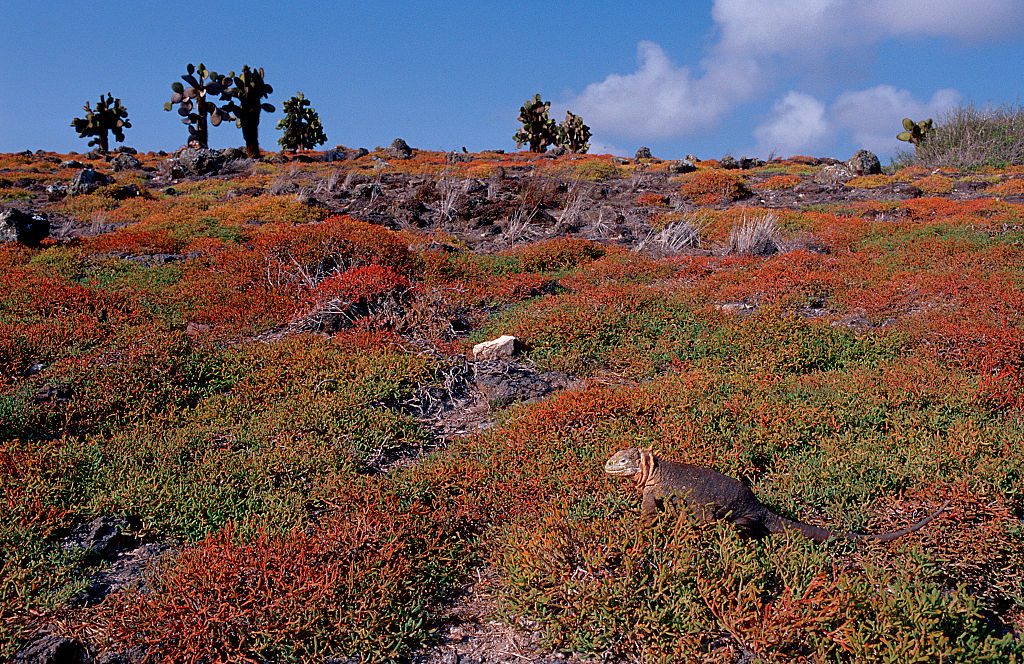
The Galápagos land iguana is one of three species of land iguana found in the Galápagos Islands, a volcanic archipelago in the Pacific Ocean, off the coast of Ecuador. The other two species are the Santa Fe land iguana and the Galápagos pink land iguana.
This large, yellow lizard is endemic to the Galápagos Islands, inhabiting the arid areas of a number of the islands within the archipelago, including Fernandina, Isabela, Santa Cruz and, since a 2019 reintroduction programme, Santiago, among others.
These land iguanas have a surprising mutualistic relationship with finches, which can often be seen sitting on their backs, picking and eating ticks and parasites from between their scales. They have been found to be a vital ‘ecosystem engineer’, helping habitats and other species thrive across the Galápagos archipelago.
How many Galápagos land iguanas are there?
The population of Galápagos land iguanas has dramatically declined over the last 150 years or so. The species is currently classified as Vulnerable on the IUCN Red List.
Until 2019, they were locally extinct on Santiago island, when a reintroduction programme worked to repair Santiago’s damaged ecosystem. The reintroduced land iguanas in Santiago helped thin out dense vegetation, break up soil, and they spread seeds across the island, which helped other species to thrive. More than 5,000 iguanas have been released on Santiago since 2019.
What do Galápagos land iguanas look like?
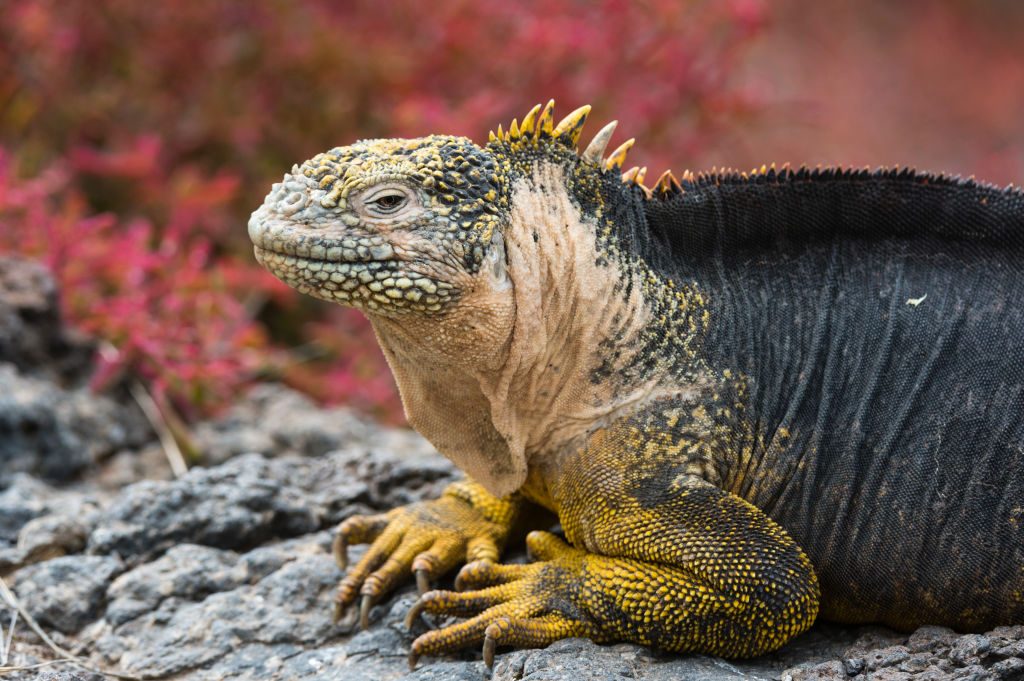
You can identify a Galápagos land iguana by its skin colour, which is generally yellow with white, black and brown patches.
They have powerful back legs and a short head.
What do they eat?
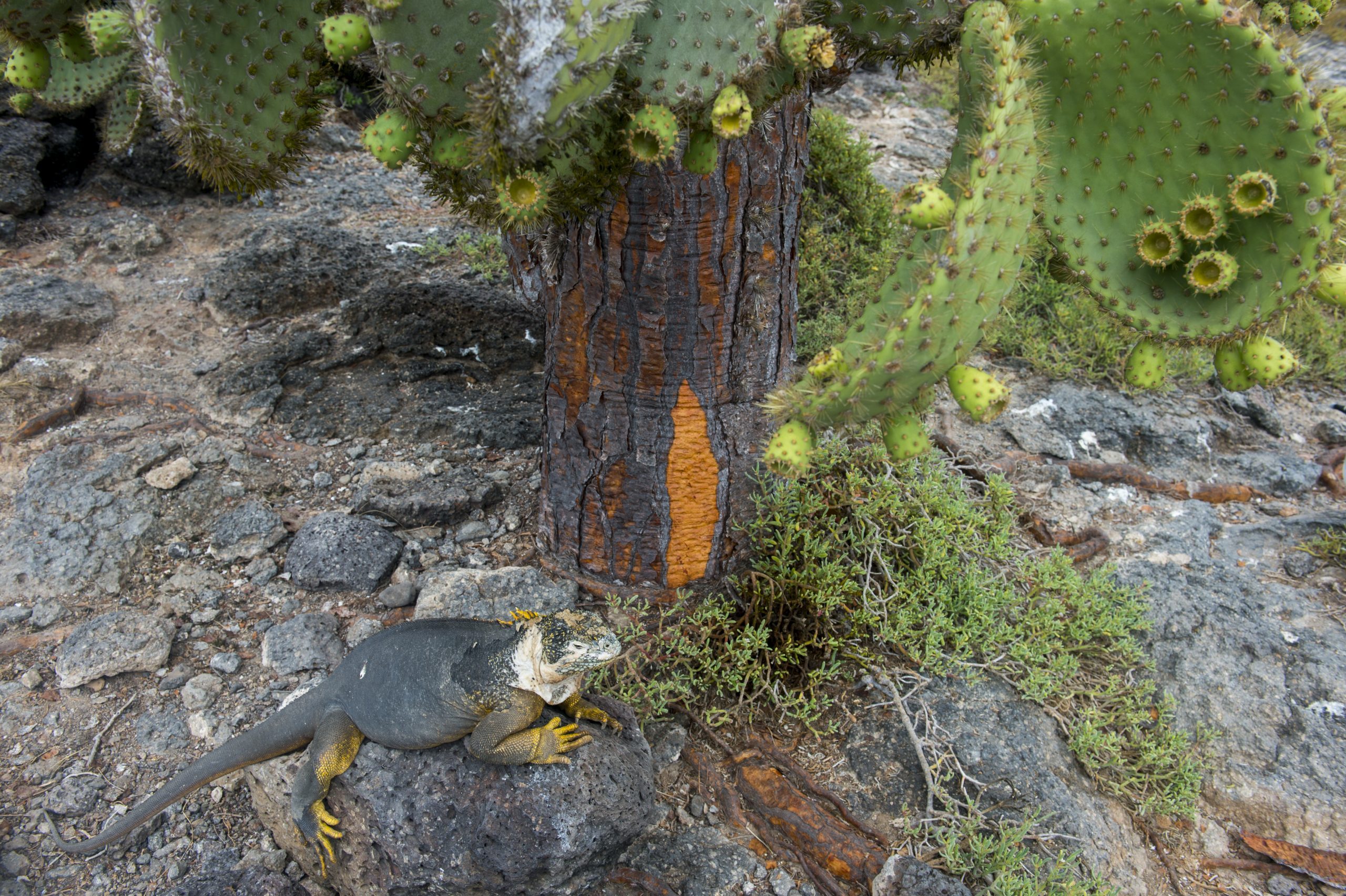
Galápagos land iguanas are primarily herbivores, eating a mix of plants, including the prickly pear cactus. They gain most of their moisture from leaves, as fresh water is scarce on the islands they inhabit.
How do they rear young?
Female land iguanas travel impressive distances to find a suitable nesting place. She will then bury her eggs – which usually number around 20 or so – and guards them.
Eggs will hatch after 85–110 days, at which point the hatchlings take up to a week to dig themselves out of their nest.
They reach maturity between 8 and 15 years of age.
How long do they live?
The average lifespan of a Galápagos land iguana is 55 years – but they can live for up to 60 years.
How big are they?
The average length of a Galápagos land iguana is 1m, but they can grow up to 1.5m. They can grow to weigh up to 11.5kg.