When they leave their burrows in the morning, the sky erupts into a carnival of colour. Most parrots nest in trees, but not this one. The burrowing parrot, otherwise known as the Patagonian conure, carves its nests into the coastal cliffs of El Cóndor, Argentina.
Looming over the Atlantic, a 12-kilometre stretch of sandstone contains 37,000 burrows - the largest parrot breeding colony on Earth. At the start of each nesting season, 74,000 birds descend on El Cóndor to lay their eggs and raise their young. With two-thirds of the world’s burrowing parrots breeding here, no other site is more important to the species.
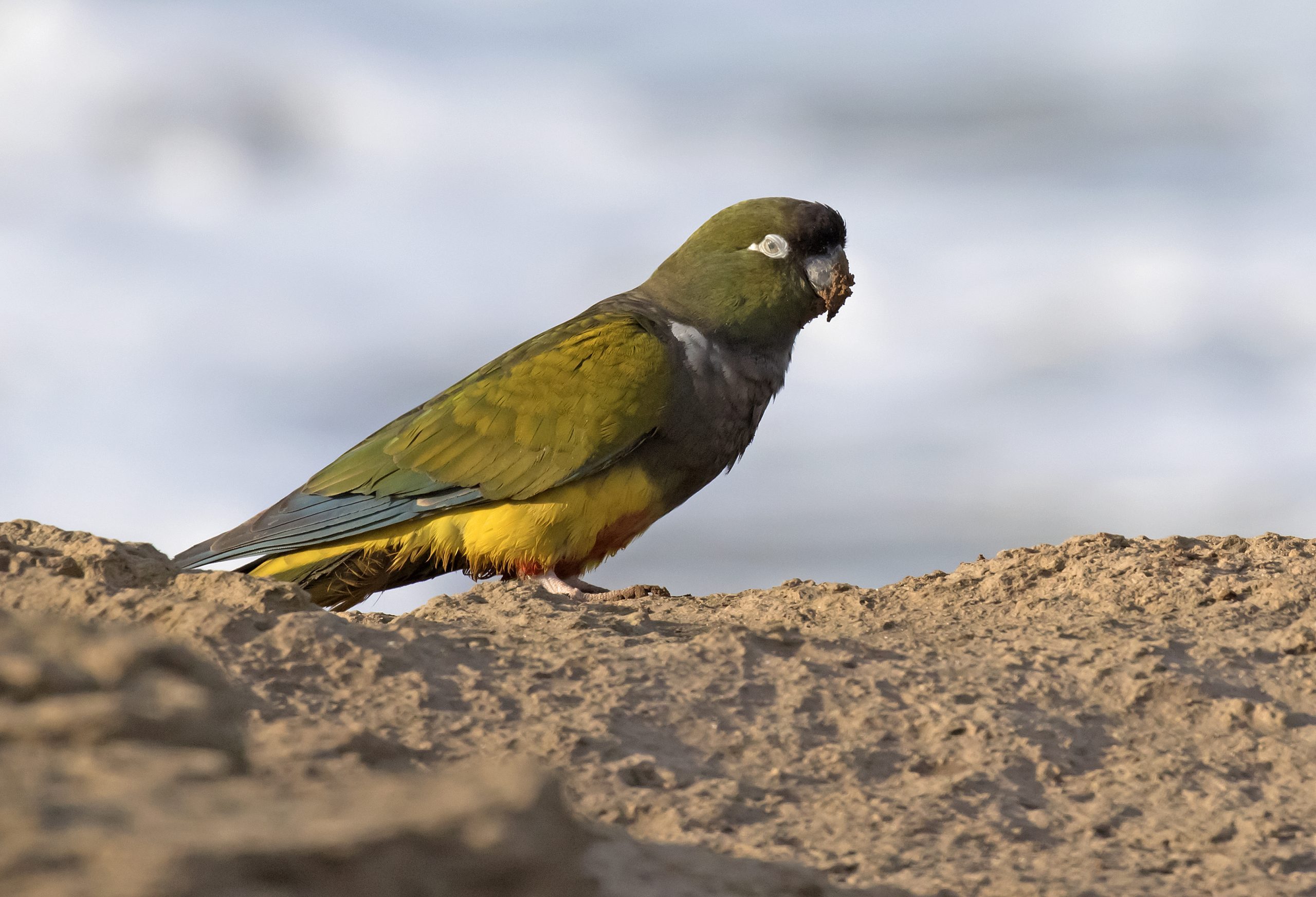
The burrowing parrot is a chatty bird, with olive feathers and white eye rings. When they wheel overhead, bright blue and red feathers blaze against the sky. Native to Argentina and Chile, the species occupies a range of habitats, from the scorching deserts of the north to the windswept steppes of southern Patagonia.
Every September, when spring arrives, the birds are drawn to El Cóndor for the safety of its cliffs, the clemency of its weather and the nearby feeding opportunities. Adults are faithful to their partners and their nest sites, returning to the same burrows each breeding season and gradually extending them over the years. They excavate with their beaks and their claws, a behaviour that is driven by instinct. Nest cameras installed by researchers have revealed that baby parrots practice tunnelling before they leave the nest.
From a distance, the cliffs resemble an enormous slab of alien Swiss cheese, their sand-coloured surface peppered with irregular black holes. Each tunnel extends up to three metres into the rock, ending in a sheltered chamber where the female lays up to five eggs.
- “These parrot apartment blocks can be the size of a small car” – and they’re causing chaos in a city near you
- What's the world's biggest parrot? There are two contenders: one has a massive 1m wingspan and the other weighs a whopping 3kg
When they hatch, around 24 days later, both parents care for their young. They make regular foraging trips to collect berries and seeds, but as scrubland gives way to agriculture, these resources are becoming scarcer. Some birds are estimated to fly up to 164 miles per day while foraging.
Additional threats come from climate change, the wildlife trade and the nearby town, which is steadily encroaching on the colony. The parrots’ ancient nesting cliffs now share their space with hang-glider runways, concrete footpaths and a war memorial. Some burrows have collapsed. Others have fallen silent as human activity drives the parrots away.
Despite these challenges, the parrots return each spring, filling the cliffs with colour and sound. Although the species is listed as ‘Least Concern’, some populations are declining and life at El Cóndor is becoming increasingly precarious. Protecting this extraordinary colony could prove critical to the future of the species.
- It weighs the same as a cat, looks like it's covered with moss and prefers hiking and climbing to flying – meet one of the world's weirdest birds
- The weirdest bird nests on the planet – including a 2-tonne giant and one bound together with spider webs
- Supersized animal homes: From ant megacities and termite towers to giant bird nests we take a tour of nature’s mega mansions