
The dodo may have disappeared more than 350 years ago, in the late 17th century, but its legacy has endured right up until the present day as a symbol of human-induced extinction. These extinct birds are often thought of as fat, fumbling fools, though according to a new study that has scanned several skulls, this reputation may be unfounded.
For several thousand years, dodos lived undisturbed on Mauritius – an island east of Madagascar in the Indian Ocean. After they were discovered by Dutch sailors in 1598, it took just 64 years before they were hunted to extinction; according to sailors’ accounts, dodos gathered in huge flocks and approached humans without alarm, making them incredibly easy to kill.
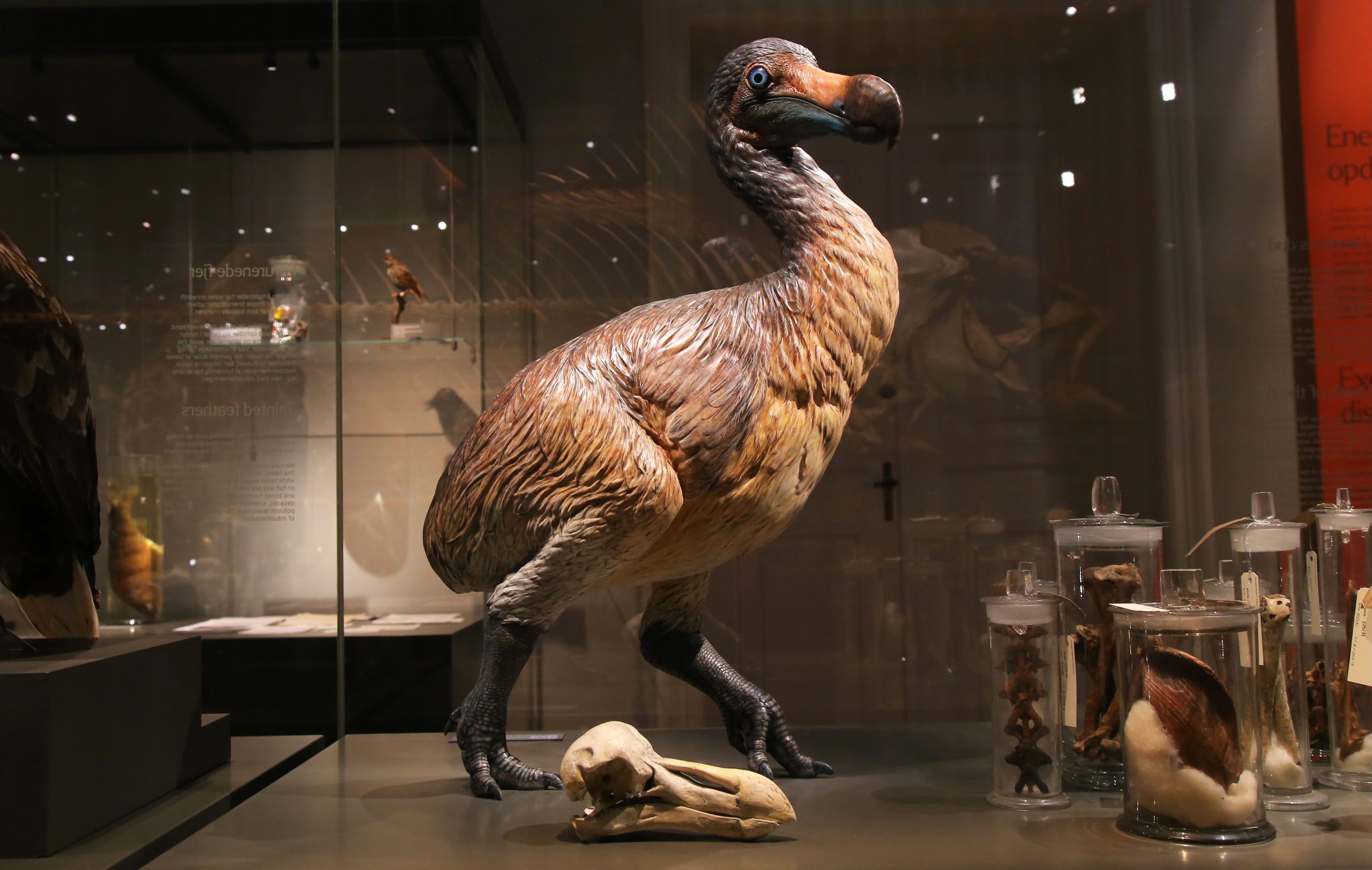
Despite their remains being on display in museums around the world, there are only two complete dodo skulls known to exist: one at the Natural History Museum Denmark and one at the Oxford University Museum of Natural History.
These specimens have been housed in Copenhagen, Denmark, and Oxford, Great Britain, for centuries and have just contributed to a groundbreaking study led by researchers from the University of Lethbridge in Canada. These researchers set out with the aim to investigate how the dodo experienced the world around itself.
Despite their prominence in pop culture, little is actually known about the dodo’s behaviour – save for the tales that have been passed on (and likely embellished) from generation to generation. By X-ray CT scanning the skulls of these birds, the researchers were able to gain new insights into its sensory abilities and, from those, infer behaviours.
“The dodo is one of the world’s most recognisable extinct animals, yet surprisingly little is known about how it actually lived,” said Peter Andrew Hosner, Associate Professor and Curator of Birds at the Natural History Museum Denmark and co-author of the study. “Its behaviour and foraging ecology have been debated for centuries. Having…skulls has given us a unique opportunity to compare the dodo with its closest living relatives.”
The researchers scanned three dodo skulls as part of their study, including the world’s only two known complete specimens and a less complete but still well-preserved specimen from London’s Natural History Museum. From the X-ray CT scans of these specimens, researchers were able to reconstruct endocasts – 3D models of the interior space of the dodo’s braincase.
These endocasts showed researchers the size, shape and surface features of a dodo’s brain and allowed them to compare the specimens directly, providing them a stronger basis for interpreting the dodo’s anatomy. The researchers also X-ray CT scanned skulls of an extinct bird known as the Rodrigues solitaire – a close relative of the dodo that was discovered and hunted to extinction at a similar time.
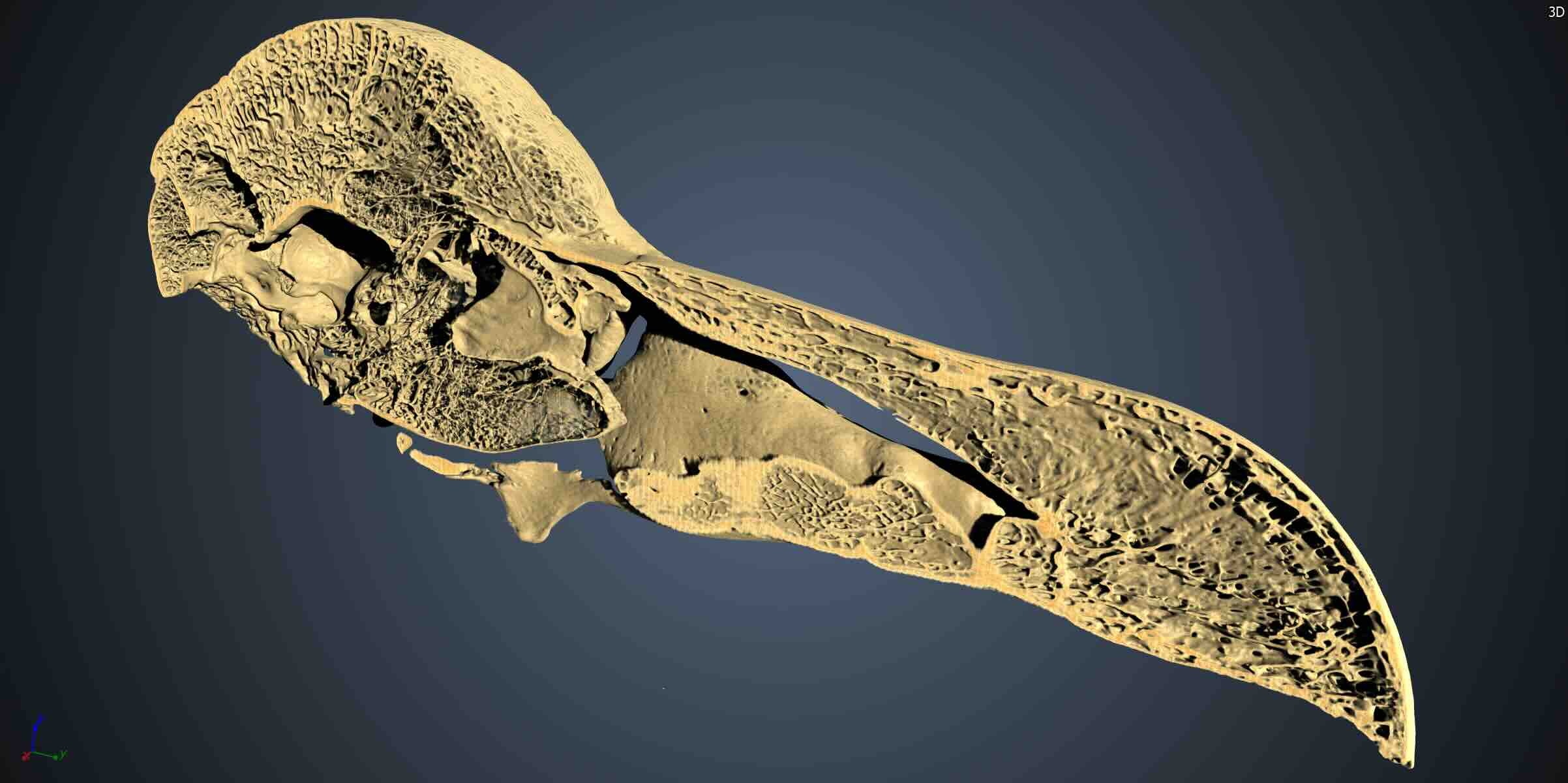
“Studying extinct animals is a bit like detective work. Although the dodo’s brain disappeared centuries ago, it left an imprint on the inside of the skull. By digitally reconstructing those spaces and comparing them with the brains of living birds, we can begin to piece together how the dodo sensed… and behaved,” said Christy Anna Hipsley, Associate Professor at the Natural History Museum Denmark and another co-author of the study.
The researchers compared the digital reconstructions of the dodo’s brain with those of pigeons and doves, its closest living relatives.
These comparisons revealed the dodo may not have been exclusively active during daylight hours and may have also foraged during dawn and dusk. It may have also had a more powerful sense of smell than its living relatives and used its large upper beak to ‘feel out’ its surroundings.
This suggests dodos may have been pretty smart, perhaps smarter even than pigeons, which have been shown to remember human faces and recognise all 26 letters of the English alphabet. They’ve even been taught to spot cancerous cells from mammograms with high accuracy.
“The dodo’s skull is unlike that of any living bird, which makes it both fascinating and difficult to interpret. By comparing digital reconstructions of the world’s only two complete dodo skulls, we now have a much stronger foundation for identifying which features are truly characteristic of the species and what they can tell us about how the dodo lived,” Hipsley adds.
If there’s one thing this study shows, it’s that while the bird may be long gone, research into it is far from ‘as dead as a dodo’...
Find out more about the latest study, published in the Zoological Journal of the Linnean Society.
Top image: Dodo skull preserved in the collection of Natural History Museum Denmark. Credit: Natural History Museum Denmark
More amazing stories about birds


