
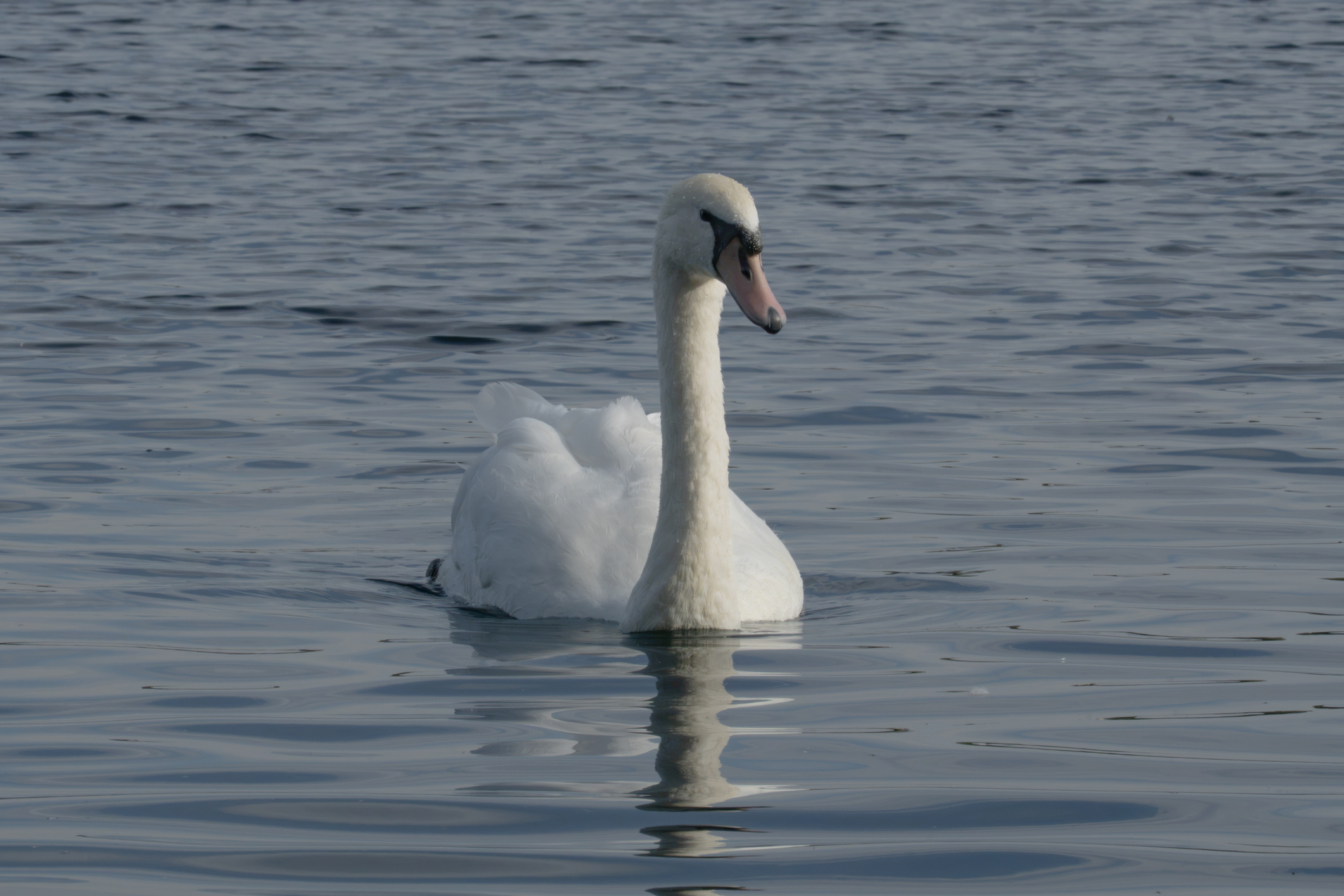
The swan was spotted in Kent, England, on 6 October 2026 and concerned members of the public called the (RSPCA) to help the bird in need, who appeared to not be able to swim properly.
- Drone captures incredible 10-tonne whale rescue in Australia
- Watch heart-stopping footage of rescuers racing to save a sea lion being strangled by plastic before it's too late...
After getting the call, RSPCA animal rescue officers Ben Fitzcosta and Brian Milligan set off for the Botolph’s Bridge area of West Hythe, near West Hide Dam.
“We soon spotted the swan who was clearly very sick, he had his head down and was mobile on the water but clearly finding it very difficult to move,” said Fitzcosta.
“The area was difficult to access so we had to launch our boat and get onto the water to reach the bird who, frightened, managed to flee onto the bank and tuck himself in the brambles.”
Fitzcosta was able to climb ashore, pick up the swan and get him safely in the swan bag and onto the boat.
The swan was then taken to RSPCA’s specialist Mallydams Wildlife Centre in East Sussex, where it received urgent treatment for avian botulism.
“It’s awful to see as it leads to slow, painful deaths for birds,” says Fitzcosta.
Avian botulism outbreaks can last weeks and have been known to result in the deaths of hundreds of birds. The bacteria that causes the disease thrives in hot weather – rotting vegetation and ponds or lakes with very low oxygen levels and poor water quality are especially dangerous.
“Unfortunately, this summer’s extreme heat caused by the climate crisis led to many birds being affected by this awful condition,” says Rebecca Machin, RSPCA wildlife expert.
So far in 2026, the RSPCA water rescue team has had 80 deployments across England and Wales to assess incidents and conduct rescues – most commonly of sick or injured water birds or birds tangled in fishing litter.
- “Something few people ever get to witness." Experts astonished to film incredibly rare creature hunting in Pacific Ocean
- Polar bear pulls seal pup onto ice then backs away. The reason why is extraordinary
Botulism leaves birds unable to use their legs or wings and paralyses their neck muscles – so they’re left unable to fly, walk, or hold their head up.
“Tragically, they can end up drowning or dying from respiratory failure,” adds Fitzcosta.
“We’d like to thank the passersby who spotted this poor swan and raised the alarm promptly which meant we were able to dispatch the specialist teams and get to him in time.”
The swan is now doing well in Mallydams Wildlife Centre, receiving supportive care, plenty of fluids and time to rest and recuperate while he battles the disease.
Members of the public should stay clear of birds showing signs of botulism and keep dogs away from the water in areas with a suspected outbreak. Anyone who comes across a collapsed bird is encouraged to contact the RSPCA on 0300 1234 999 for advice, or contact the Department for Environment, Food and Rural Affairs (DEFRA) on 0345 933 5577.
Top image: an animal rescue officer approaching the sick swan on water boat. Credit: RSPCA


