
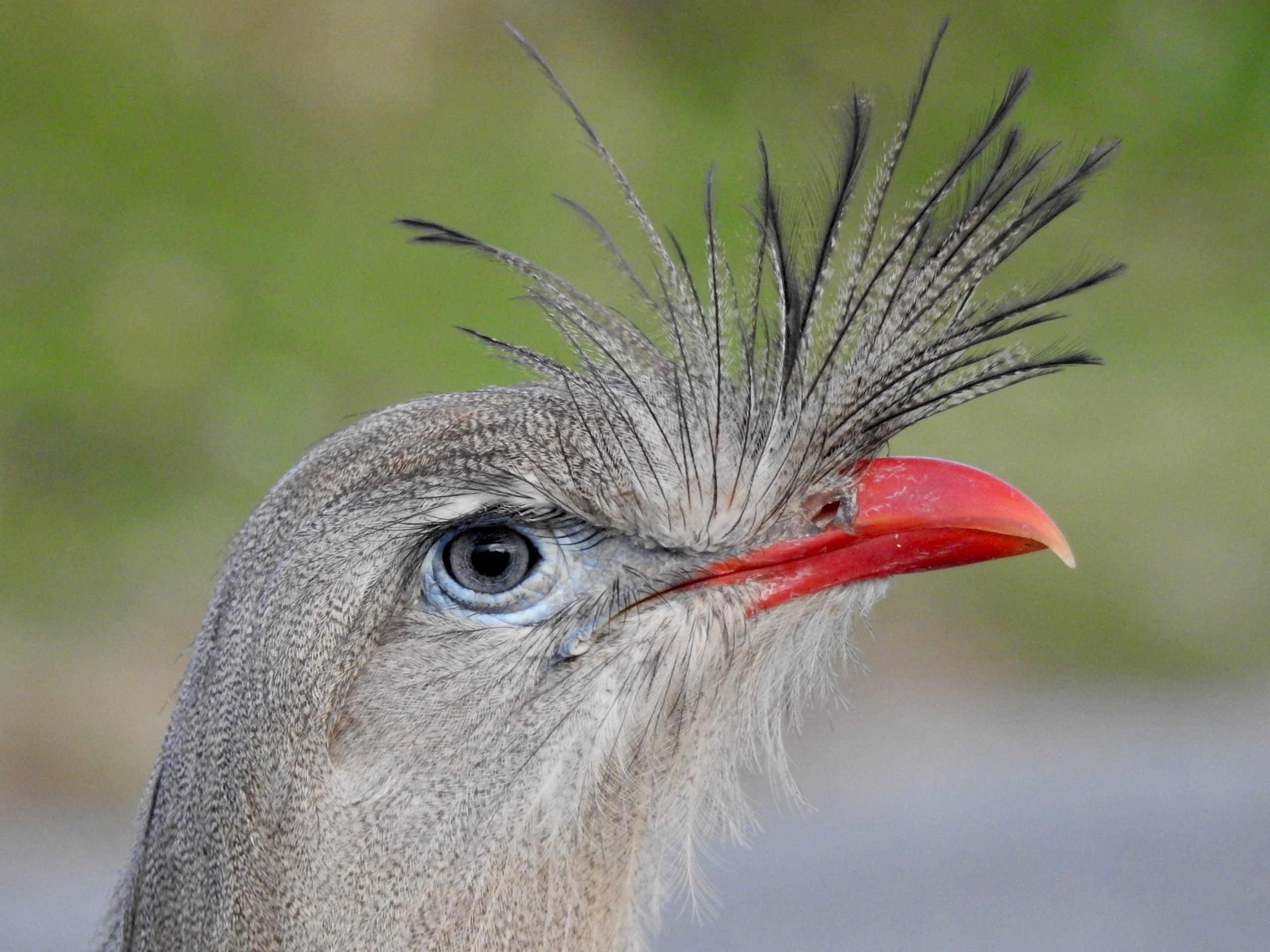
Two researchers have identified two more contenders for the title of world’s loudest bird: the bare-throated bellbird and the red-legged seriema. But they made the discovery while researching the evolutionary reasons behind loud bird calls.
The study, published in the journal Evolution, analysed the vocal amplitude of 123 bird species. Vocal amplitude is what the human ear perceives as loudness and is measured in decibels (dB).
The researchers, from the University of Massachusetts Amherst (UMass Amherst) in the USA, aimed to find out whether a bird’s physical characteristics can predict how loud its call will be, and whether loudness is related to the bird’s unique role in an ecosystem or specific social organisation.
- Buzzing chainsaws, clattering machine guns and metallic hammering: 7 of the weirdest bird noises on Earth
- This bird’s song sounds exactly like dripping water. Scientists just worked out how it does it
To measure vocal amplitude accurately, Professor Jeff Podos and his former graduate student João Menezes recorded bird calls around Amherst, Massachusetts and across Brazil. They used new technology that can measure both a bird’s vocal amplitude and the distance from the bird to the recording equipment, providing more reliable data than from previous recordings. Of the 123 species recorded, 113 species had never had their volume catalogued before.
“We’ve been able to vastly increase the number of species for which there is amplitude data,” says Podos. “This is basic, foundational research that no one else has managed to do on this scale, and it points to all sorts of other questions that would be fun to follow up.”
One of the study’s significant findings was the vast 58dB range in the volume of bird calls. The quietest recorded call (from a hummingbird) measured 64dB – around the range of a human conversation. Calls from bare-throated bellbirds and red-legged seriema exceeded 120dB at their peak, making them louder than jackhammers.
The current world record holder for the title of world’s loudest bird is the male white bellbird, whose calls reached 125.4dB: louder than standing next to a revving chainsaw. Podos also co-authored the paper that reported this finding in 2019. However, the researchers’ recent recordings, made with newer technology, could challenge that record.
Beyond volume
As hypothesised, the researchers found that species with larger bodies and wider beak openings produced louder calls. They suggest that bulkier muscles allow a build-up of air pressure that produces explosive volume, while the beak helps to amplify this.
However, the data didn’t support any significant predictions about how amplitude might serve an ecological or evolutionary purpose when considering factors such as habitat density or polygamy.
- Dawn chorus guide: how to hear it and when International Dawn Chorus Day is celebrated
- What's the difference between a song and a call?
“We now know some of the hows, such as bigger bodies and wider beaks,” explains Menezes. “But we’ve yet to discover the whys, and we probably need much more data from many more species to be able to tease out what’s happening on the ecological and evolutionary front.”
The scientists suggest that further research is needed for this, as current research cannot explain how birds are able to produce louder sounds than larger animals such as elephants and lions.
“You can’t do this kind of work in the lab, or by scraping data from the internet,” says Podos. “You have to get out into the world, you have to pay careful attention to what you’re seeing and hearing, and anything you do in the field that forces you to observe more carefully is really fun – it takes you back to the roots of why we do science in the first place.”
Top image: a bare throated bellbird. Credit: João Menezes


