
From a South American caterpillar whose venom can interfere with blood clotting to a North American species capable of delivering an intensely painful sting, discover the world's most dangerous caterpillars.
- Deadly, toxic caterpillars on the move pose health threat to animals – particularly dogs – and humans
- How does a caterpillar turn into a butterfly? A guide to nature’s greatest transformation
Most dangerous caterpillars
Fire taturana
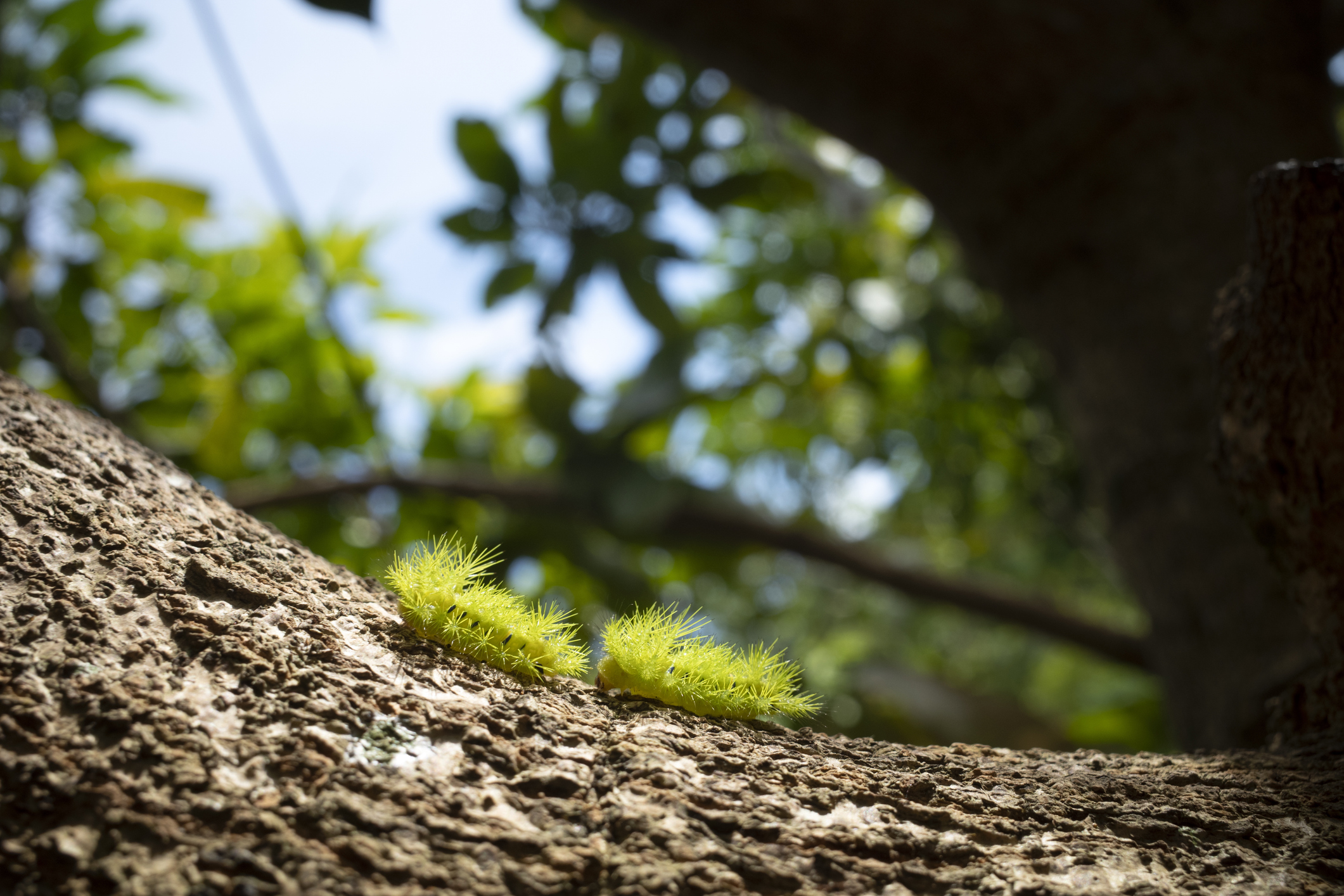
Nicknamed the assassin caterpillar, Lonomia obliqua (also known as a fire taturana or giant silkworm) is among the few caterpillars capable of causing fatal poisoning in humans and is the most deadly in the world. Found in Southern Brazil and neighbouring parts of South America, it has a camouflaged, spiny body, which it uses to blend into tree trunks, making it easy to brush against accidentally.
The caterpillar's venom contains compounds that interfere with the body's blood-clotting system and contact can trigger a potentially life-threatening haemorrhagic syndrome, causing widespread bleeding, kidney damage and, in severe cases, death. Unlike many stinging caterpillars, which mainly cause painful skin reactions, a study published in the US National Library of Medicine found that Lonomia obliqua can cause internal bleeding, blood-clotting disorders and inflammation. A specific antivenom is available in Brazil, highlighting the seriousness of envenomation by this species.
Brazilian caterpillar
Another member of the medically significant Lonomia genus, Lomonia achelous (also known as the Brazilian caterpillar or giant silkworm moth) has been associated with severe haemorrhagic syndromes following contact with its venomous spines. Found in northern South America, including Venezuela, the caterpillar's venom disrupts regular haemostasis – the process that stops bleeding – and can cause serious complications.
Victims may develop abnormal bleeding and severe cases can involve damage to internal organs. The danger is compounded by the caterpillar's habit of gathering in groups on tree trunks. Someone leaning against a tree or brushing against a colony could come into contact with numerous venomous spines at once.
Puss caterpillar
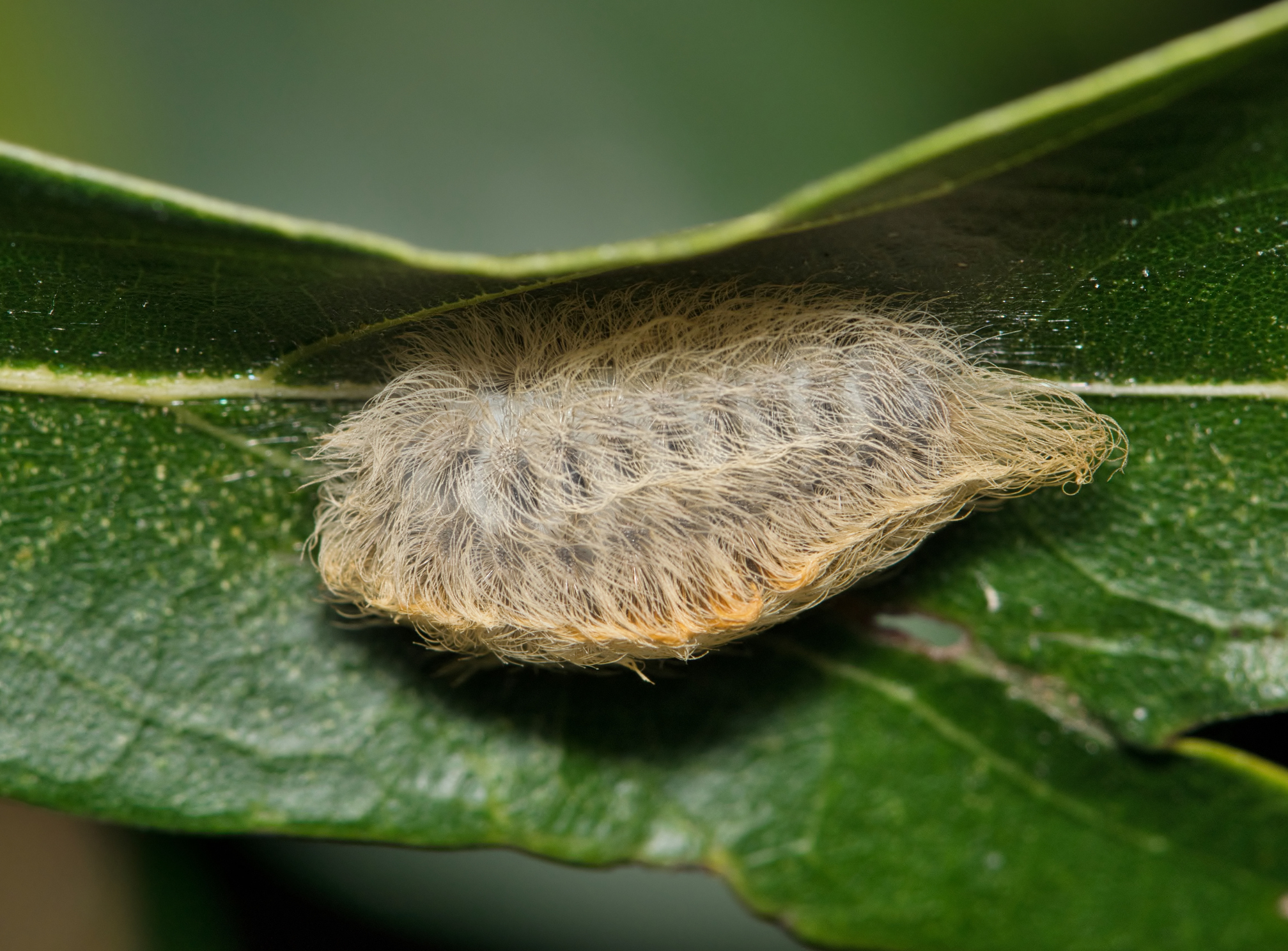
With its silky, fur-like coat, the puss caterpillar (Megalopyge opercularis) – also known as the asp caterpillar or flannel moth caterpillar – is considered one of the most venomous caterpillars in North America.
It looks more like a tiny furry animal than a venomous insect larva, making it particularly tempting for curious children to touch – a potentially painful mistake. But hidden beneath those soft-looking hairs are venomous spines capable of delivering an intensely painful sting.
Contact can cause immediate burning pain, redness, swelling and a distinctive rash. Pain may radiate away from the sting site, sometimes extending along a limb, while more severe reactions can include nausea and other systemic symptoms.
Saddleback caterpillar
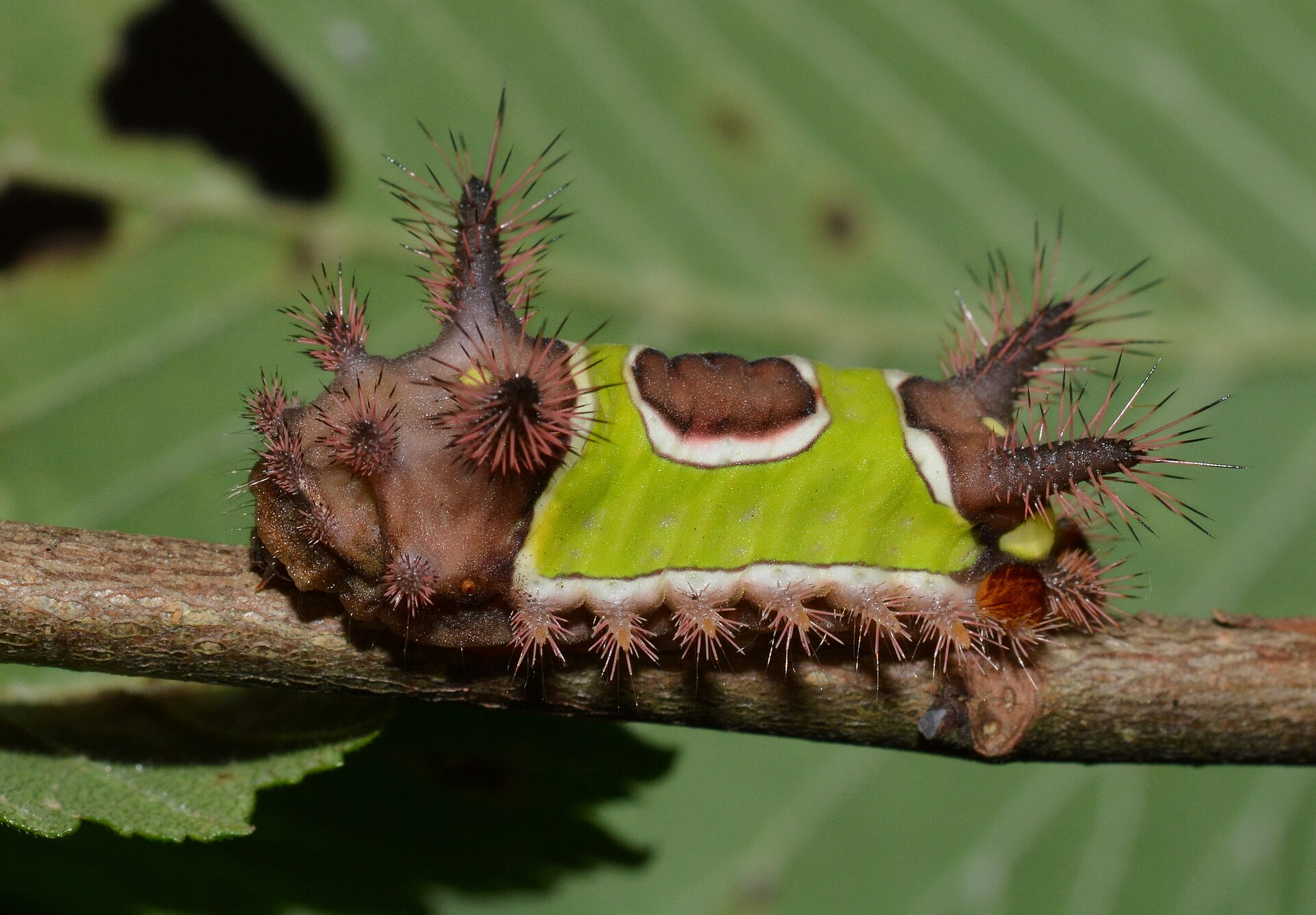
Found in Eastern North America, particularly the eastern United States, the saddleback caterpillar is instantly recognisable thanks to its bright green body, brown saddle-shaped marking and prominent spines at either end.
Those spines are more than decorative as they contain venom that can be released when they break against the skin, producing an immediate burning sensation, redness and swelling. Some people develop itchy, raised welts, and more severe reactions may require medical attention.
The caterpillar feeds on a variety of plants, including maples, hibiscus and palms, so it can turn up in gardens as well as woodland habitats.
Io moth caterpillar
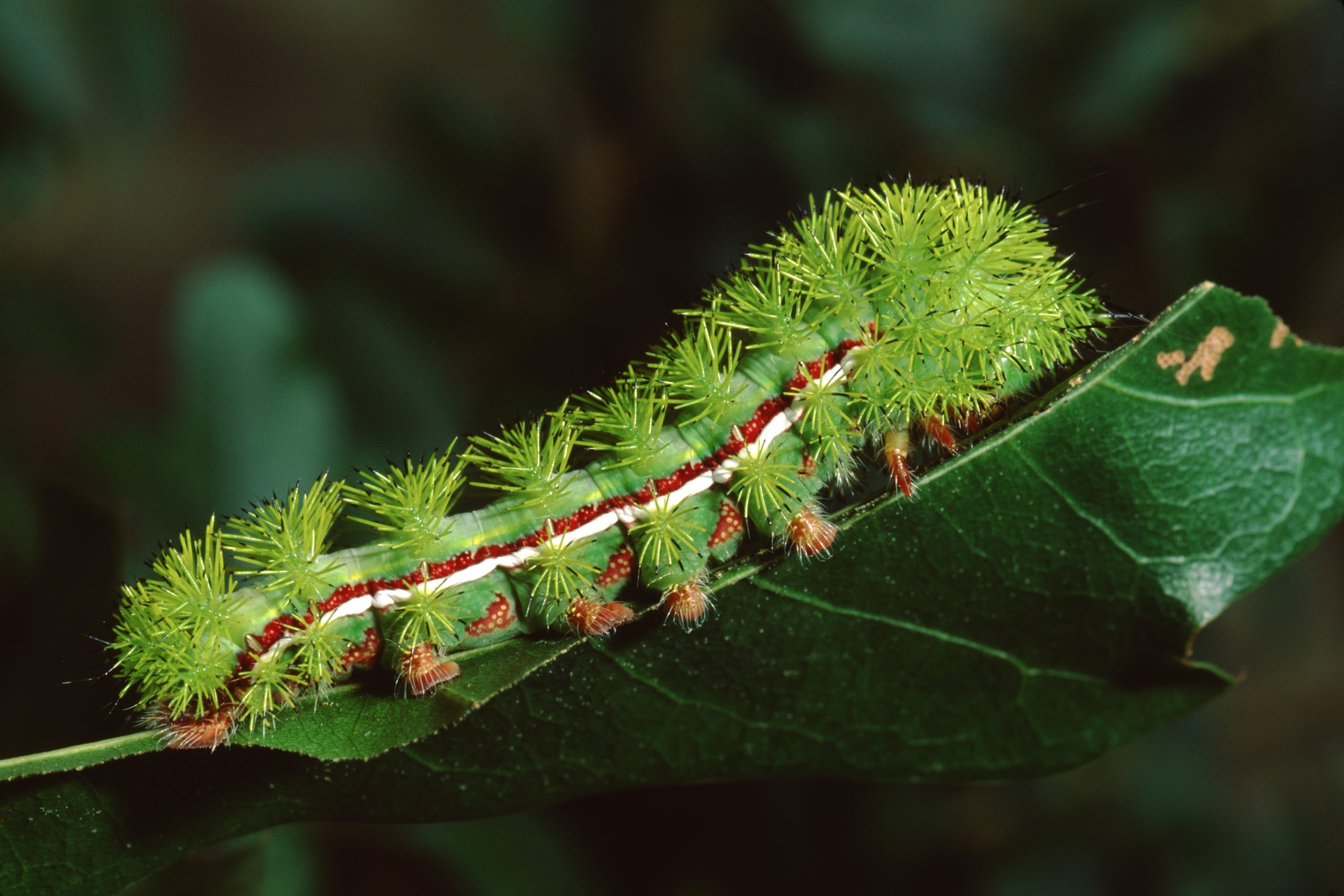
The Io moth caterpillar (Automeris io) is a bright green larva with a red-and-white stripe running along each side. A distinctive-looking species, its body is covered in clusters of branched spines, which can inject venom when they come into contact with skin. A sting can cause immediate pain, burning, redness and swelling and the discomfort can be considerable, according to research.
Found in eastern and southern North America, the caterpillars feed on a wide range of plants, including willow, oak, apple and rose. As a result of their habit of feeding on familiar garden plants, it is common to encounter them while gardening or enjoying the outdoors. Although its sting is not usually associated with the life-threatening complications seen in Lonomia obliqua, the Io moth caterpillar is a species best avoided.
Hag moth caterpillar
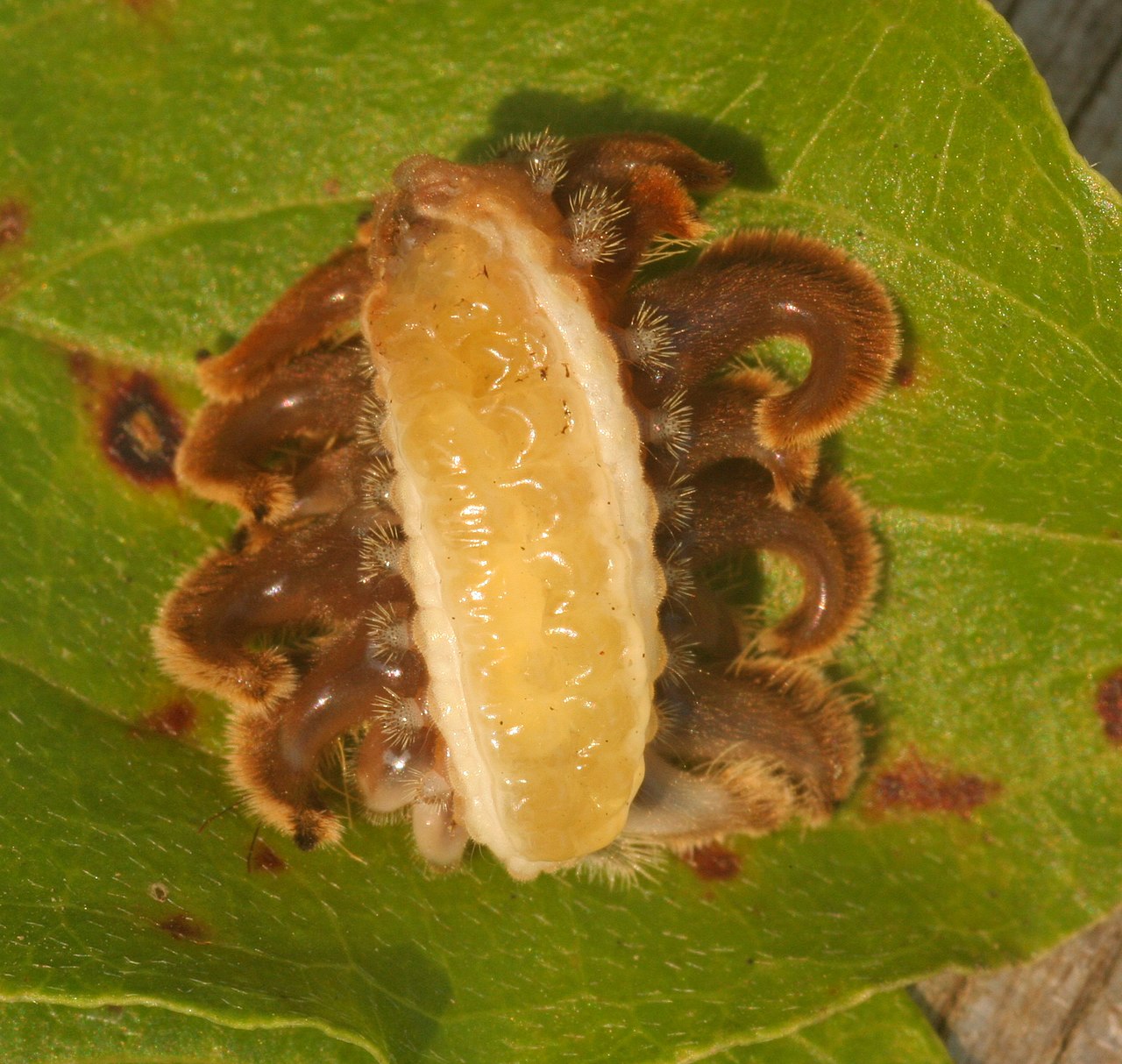
With its unusual, flattened body and long, curling appendages, the hag moth caterpillar, also known as the monkey slug, (Phobetron pithecium) looks almost alien because of its distinctive shape. But its strange appearance is not its only defence. Like other stinging slug caterpillars, it has irritating hairs and spines that can cause a painful reaction if touched.
Found in North America, contact can lead to localised pain, redness and swelling. Its unusual outline can make it difficult to recognise as a caterpillar, potentially increasing the risk of an accidental encounter.
Buck moth caterpillar
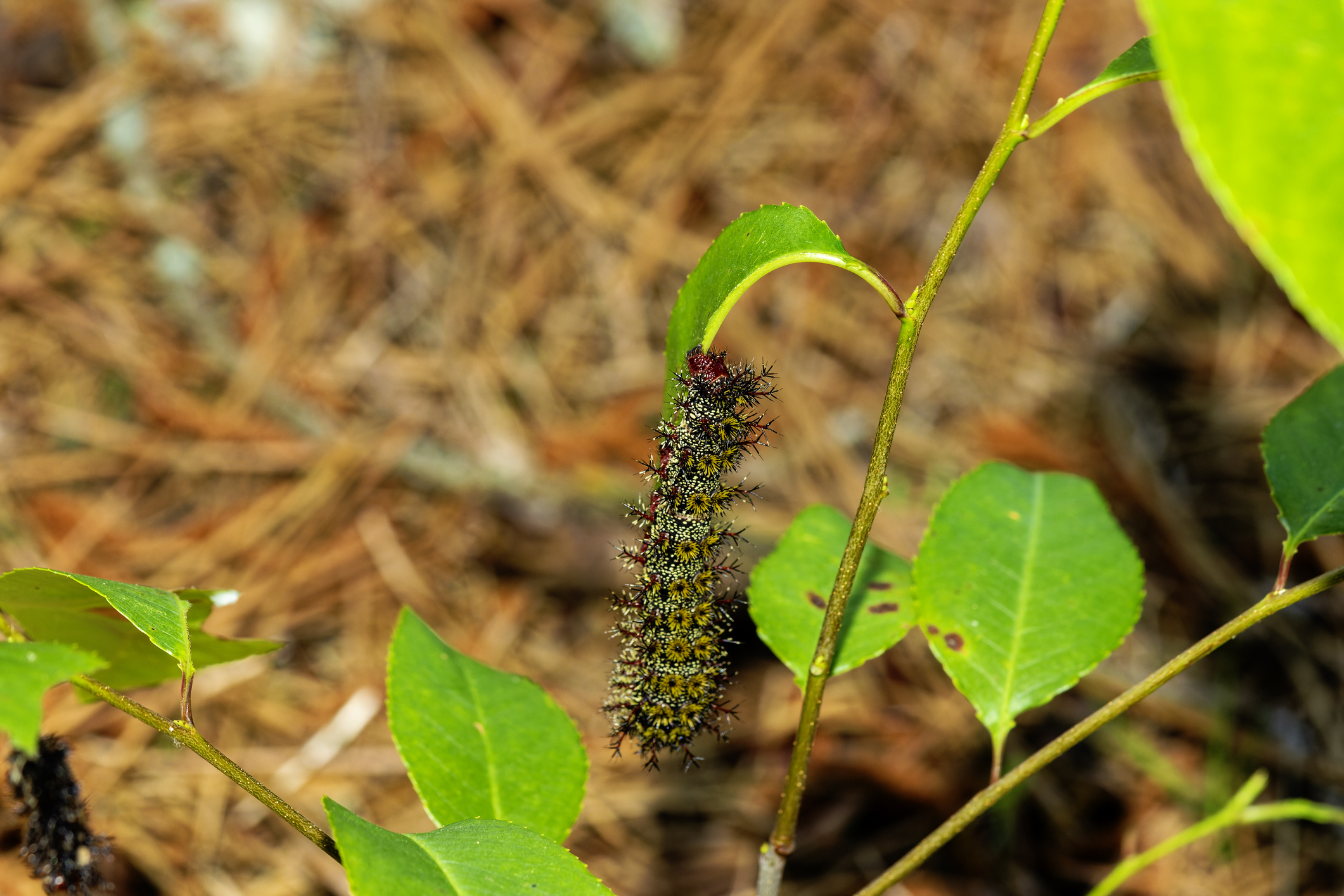
The buck moth caterpillar (Hemileuca maia) is covered in branching spines that can deliver a painful sting. Its dark body and clusters of bristles make it look formidable, but the real danger lies in the irritating substances associated with its spines as brushing against the caterpillar can cause burning pain, redness and swelling.
Mostly found in eastern and southern America, Buck moth larvae feed on plants including oak and willow, and may be encountered in areas where their food plants grow. As with other stinging caterpillars, the reaction is a defensive consequence of contact rather than an intentional attack.
Browntail moth caterpillar
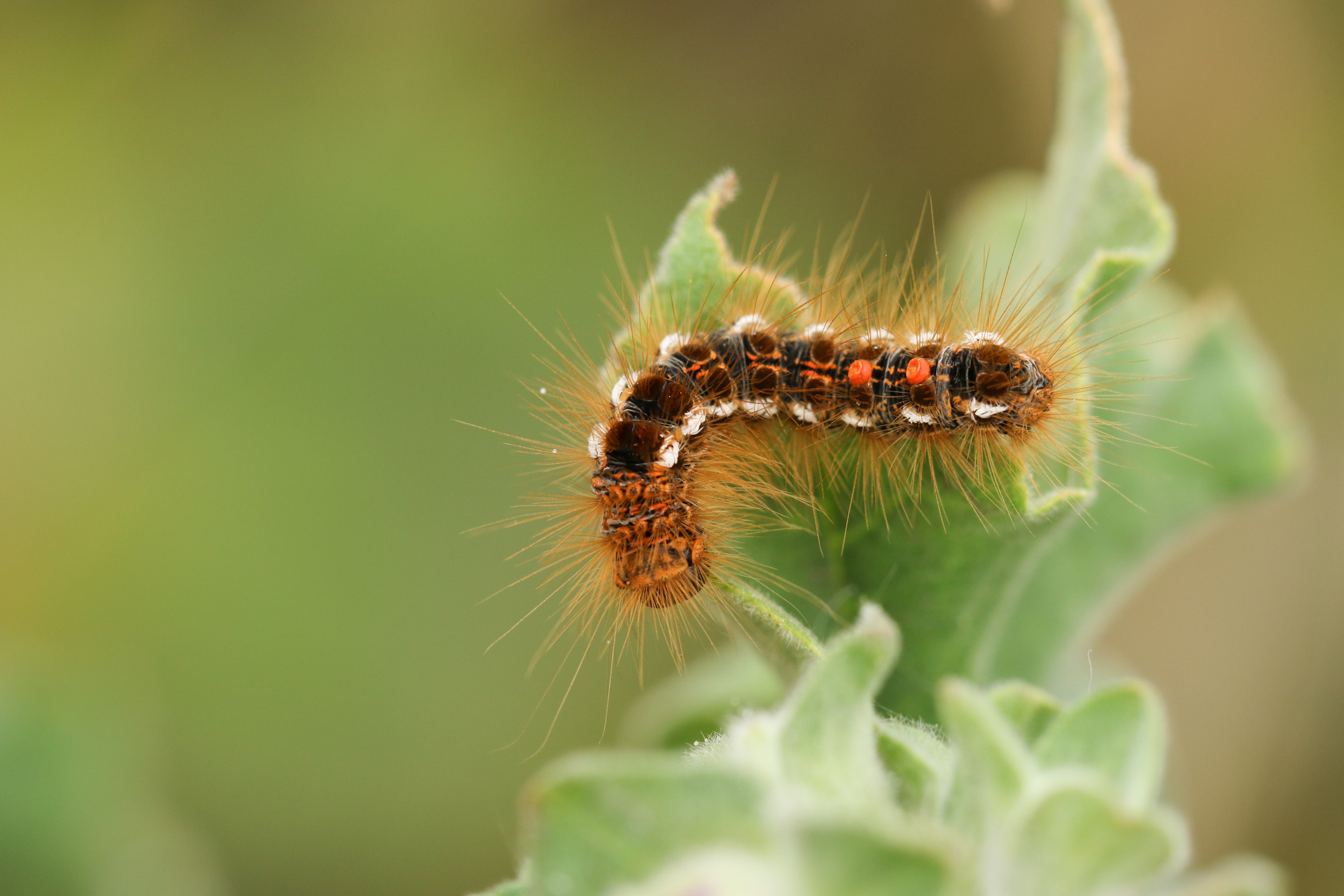
The browntail moth caterpillar (Euproctis chrysorrhoea) presents a different kind of hazard as rather than relying solely on a sting from direct contact, its tiny irritating hairs can cause skin reactions, and detached hairs may become airborne. Contact with the hairs can trigger an itchy rash, sometimes accompanied by raised welts. In areas where caterpillars are abundant, people may be exposed without directly touching a larva.
Found in parts of Europe, including the UK, the hairs can also remain on vegetation, in nests and in the surrounding environment – meaning the risk is not necessarily limited to the caterpillar itself as the hairs can still irritate the skin.
Pine processionary caterpillar
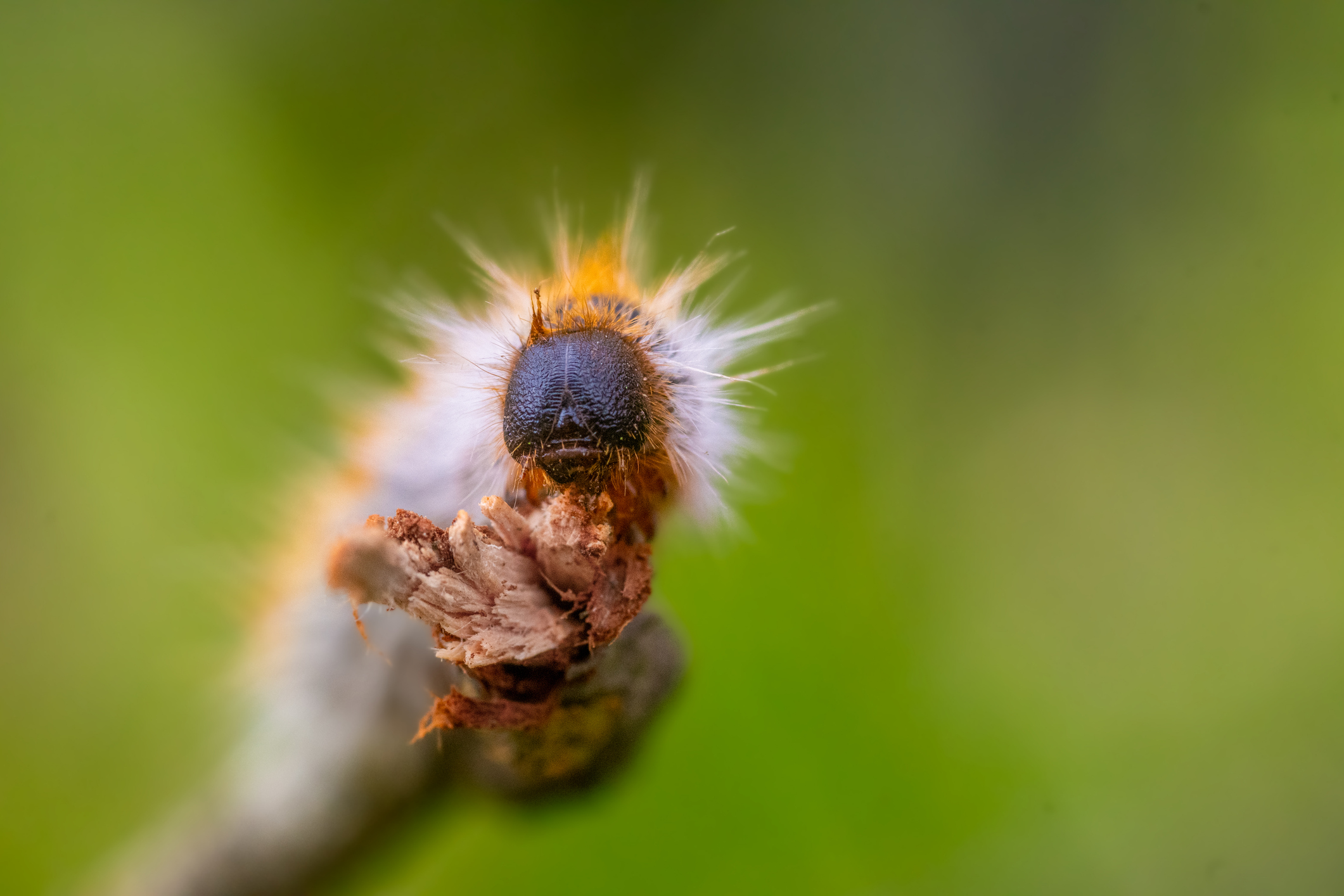
Found mostly in pine forests in Mediterranean countries and parts of central Europe, the pine processionary caterpillar (Thaumetopoea pityocampa) is famous for its unusual habit of travelling in long, nose-to-tail processions across the ground.
Its body is covered in tiny urticating hairs that can cause irritation when they come into contact with skin. The hairs can also become airborne, potentially affecting people who are near infested trees without touching the caterpillars directly. Exposure may cause itchy skin rashes and irritation, while more serious reactions can involve the eyes or respiratory system. The caterpillars are also a concern for animals – particularly dogs – which may suffer severe injuries if they investigate or mouth them.
White-stemmed gum moth caterpillar
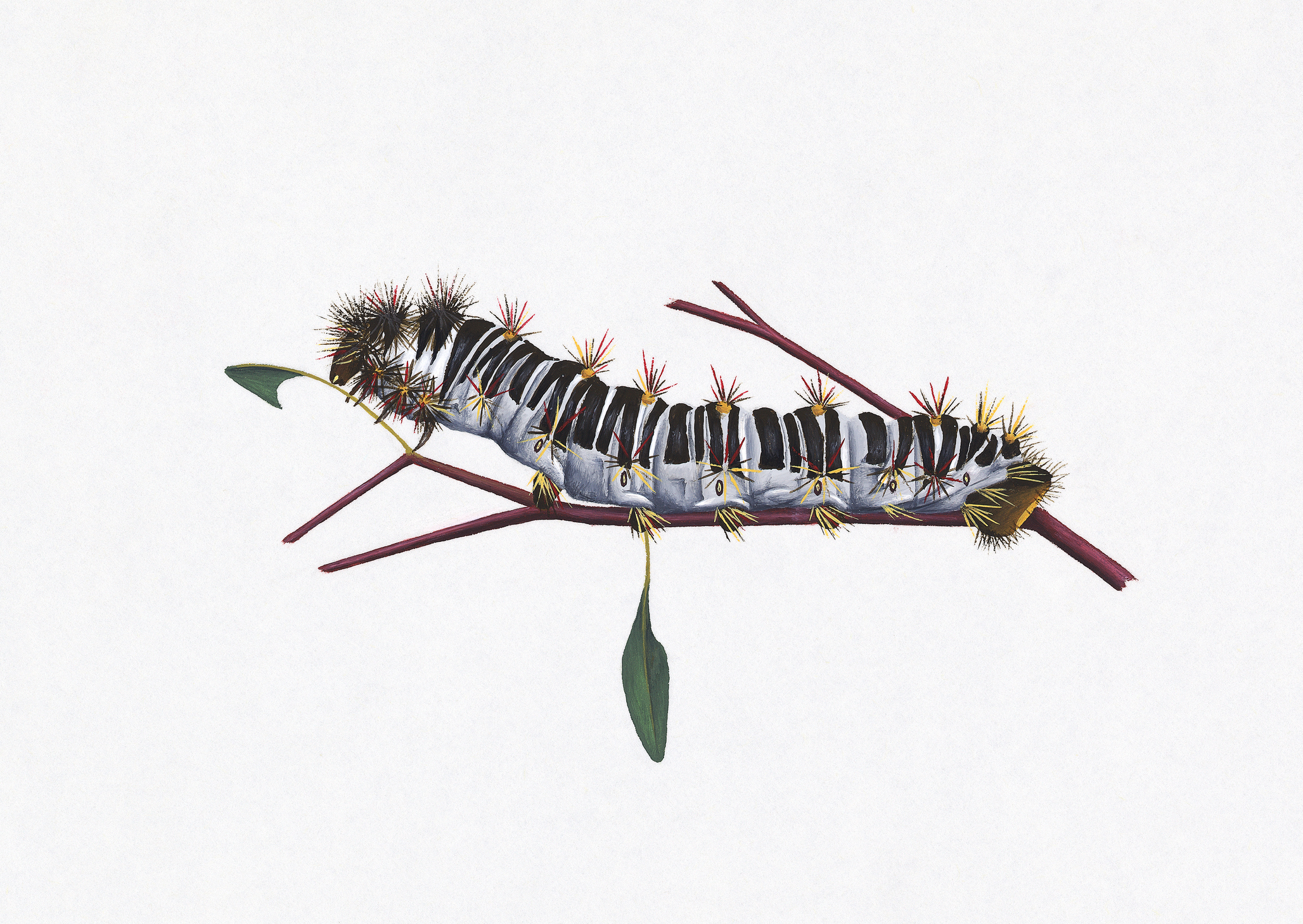
The white-stemmed gum moth caterpillar (Chelepteryx collesi) is one of Australia's caterpillars with irritating defensive structures. Like several other members of this group, it has hairs and spines that can cause an unpleasant reaction when touched. Contact with the irritating caterpillar structures can produce localised pain, inflammation and skin irritation.
How dangerous are caterpillars?
Although some caterpillars can cause severe poisoning or serious allergic reactions, most species are harmless to humans. Even among those that are medically significant, the effects vary considerably: some cause localised pain and itching, while a small number can trigger potentially life-threatening complications.
Discover more deadly creatures:


