We all know some of the more sizeable domestic dogs – Great Danes, Newfoundlands and St Bernards, for example – mostly seen on a lead with their loving owners. Less familiar, perhaps, are their equally sizeable canine relatives, at large in the wild, which are a quite different and more dangerous proposition.
Let’s take a trip around the world to find some of the biggest and most ferocious members of the canid family – the ones you wouldn’t want to meet on a dark night when they’re feeling peckish.
- Was this the largest, deadliest and most terrifying wolf of all time?
- Ultimate guide to wolves, a deadly apex predator: From Arctic hunters to forest stalkers, here's all you need to know about the dog's wild cousin
Biggest wild dogs in the world
Gray/Grey Wolf
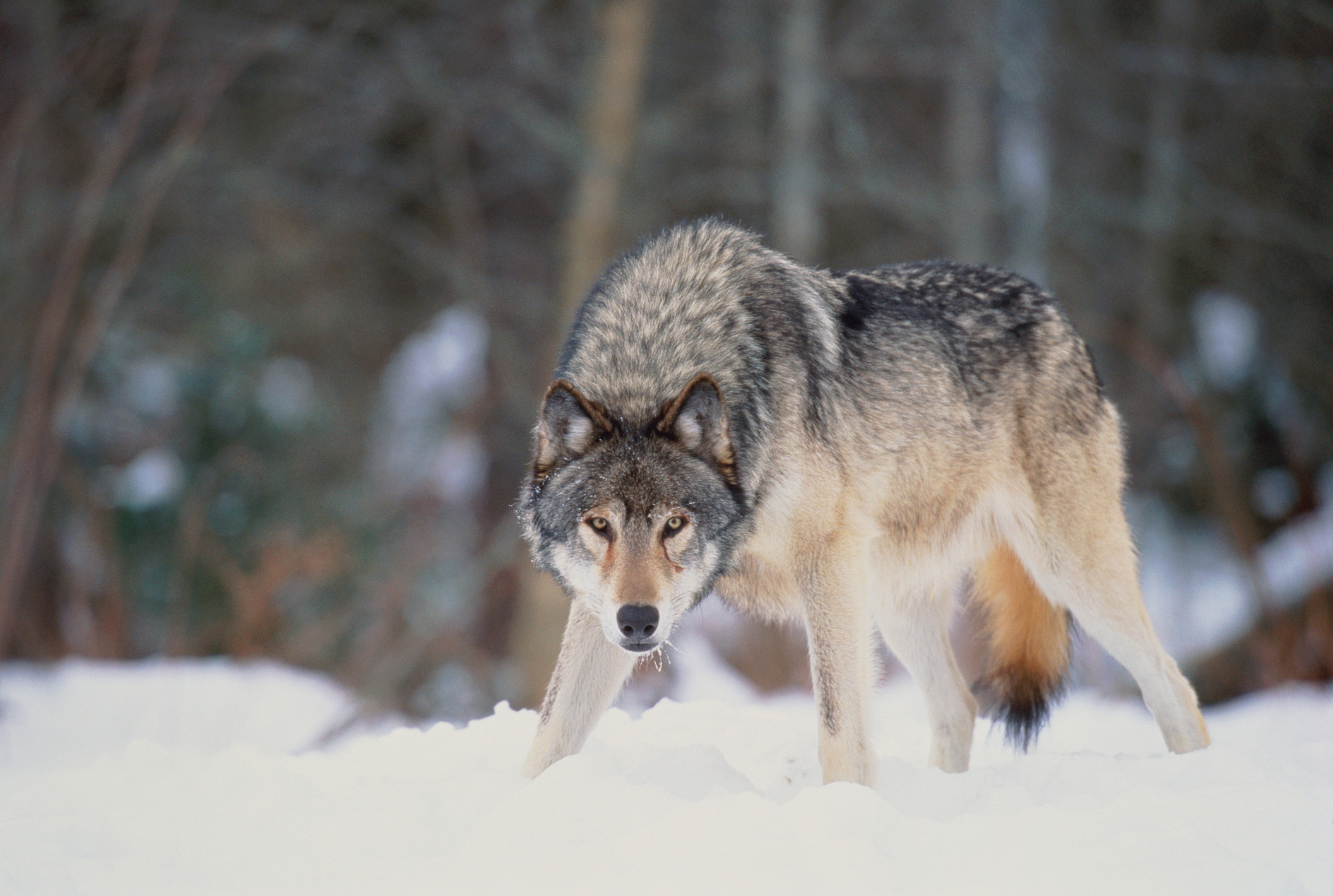
In Canada and the US this formidable predator has the alternative name of Timber Wolf due to its preferred habitat in northern forests. It is the largest of all the wild dog species, and it has cousins in the form of several subspecies living across northern Europe and Asia.
Gray wolves are said to be the forerunners of our domestic dogs, although these were selectively bred over thousands of years into more manageable sizes with rather more human-friendly temperaments.
Adult wolves measure around 75cm (30in) at the shoulder and weigh an average of 40kg (88lb). In themselves they may not seem so huge – not quite the horse-sized direwolves of Game of Thrones – and individually you might therefore consider they are not too fearsome, but you have to remember they live in packs.
Bringing down an elk, buffalo or musk ox, let alone a human, does not present much of a challenge. Luckily, they tend to avoid people, but their eerie howling from a wintery mountainside will still bring a shiver to the spine.
Coyote
Also known as the Prairie Wolf, this wild dog is smaller than the gray wolf, but they have a larger brain. The average male weighs up to 20kg (44lb) with the female only slightly smaller. They live in family groups across North America where they are considered to be intelligent and street-wise, leading to the popular label of ‘wily coyote’, which reflects more human contempt than respect.
A coyote’s diet consists of a wide variety of animals – rodents, rabbits, birds, reptiles, fish and even grasshoppers and other invertebrates. They don’t routinely hunt in packs like the grays but they will join forces with other single coyotes if they want to hunt a deer that they would struggle to overcome on their own, or a porcupine that requires careful handling!
Coyotes are most prone to aggression towards people and other animals when they have pups in a den or if they are drawn to food sources in residential areas. Our rubbish bins, compost heaps and even bird feeders attract tasty mice and rats. Habituated coyotes can lose their fear of humans and although they are not normally a danger to adults they can go for children and family pets so they merit respect.
Red Wolf
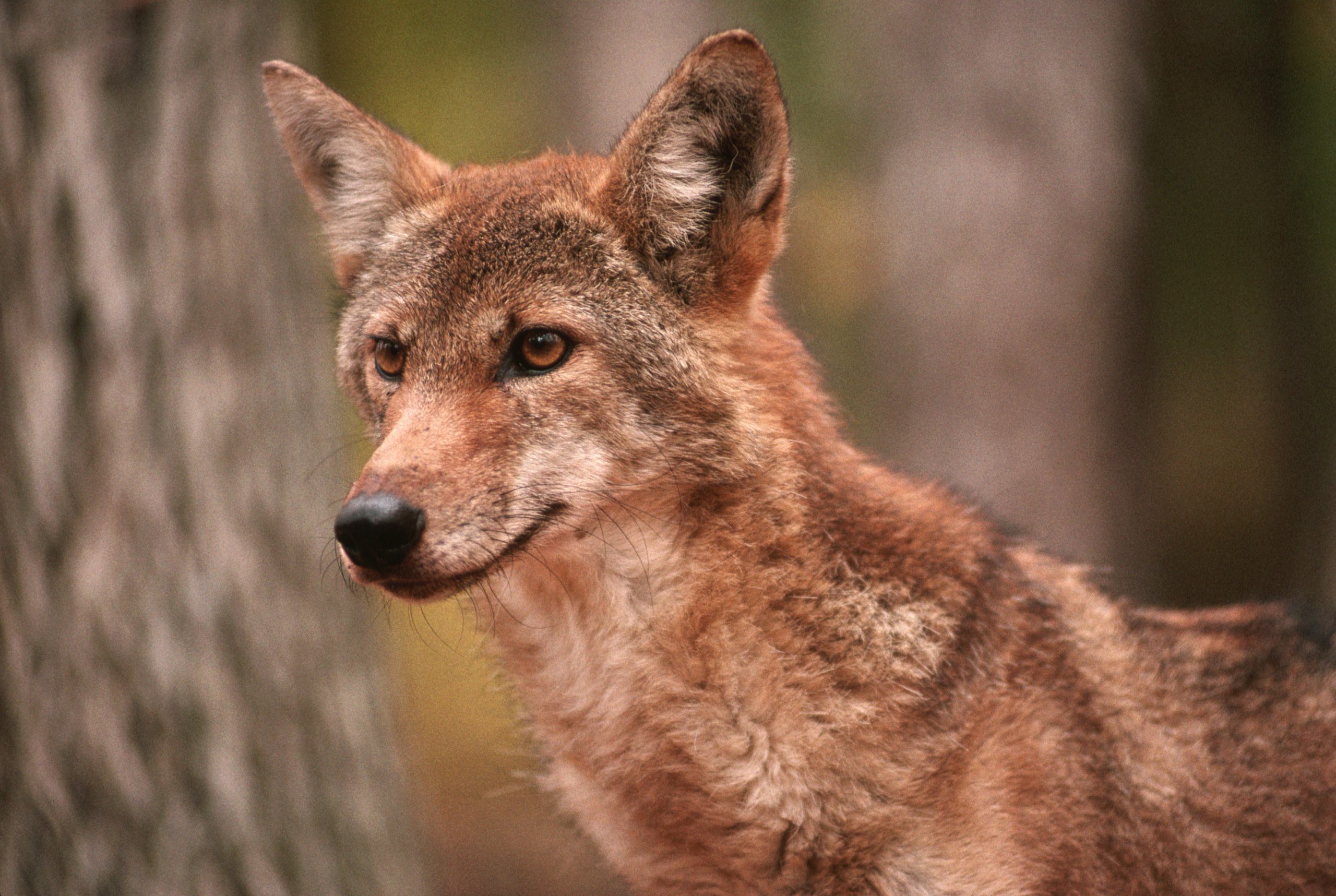
This species occupies a physical position in the south-eastern and south-central USA between the gray wolf and the coyote in size. They are quite chunky animals, ranging in weight between around 20-39kg (44-85lb), but with long skinny legs.
They are thought to pre-date the arrival on the continent of both the coyote and the gray wolf. Traditionally, the Cherokee people have had a great respect for red wolves. One of their ancient beliefs says that if a red wolf is killed by a man its pack mates will seek out and kill the killer.
These days the chances of coming across a red wolf in the wild, let alone a pack, are remote, although slightly more likely than they would have been 50 years ago. This is because the wild populations across the States had been rendered almost completely extinct by the mid-20th century due to loss of habitat and extermination by ranchers.
Since the 1980s, however, there has been a reintroduction programme from captive stock in a number of national parks and wildlife refuges and this effort is slowly restoring the canids to their old hunting grounds.
Eastern Wolf
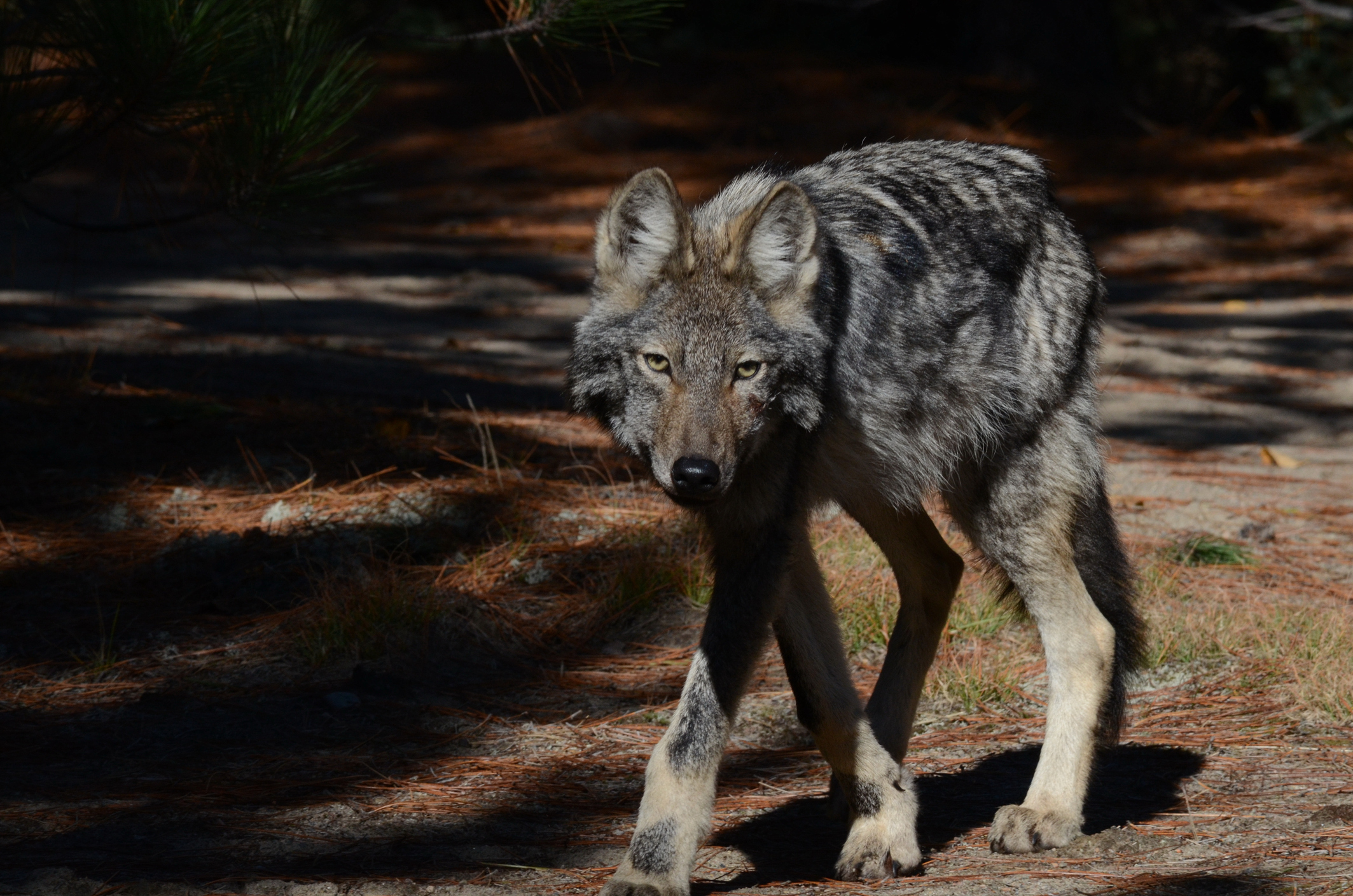
Genetically, this Canadian wild dog is 58 per cent gray wolf and 42 per cent coyote. It lives in deciduous woodlands, particularly in Algonquin Provincial Park in Ontario, where it hunts beavers, moose and deer.
Scientists disagree over the classification of the eastern wolf as a subspecies of the gray or as a species in its own right. Their opinion depends on whether they consider it to be a product of a hybridisation that took place around 1,000 years ago or a separation from a common ancestor a million years ago.
Whatever their ancestry, eastern wolves have developed quite an aggressive stance towards humans. There are recorded instances of lone males stalking families with small children in the Algonquin park, although the total number of instances of a wolf actually biting a person only amount to four or five in a 10-year period.
Having discovered a curious trait of eastern wolves, and in an effort to dispel the negative public opinion of these animals, the park authorities offer a unique event several times a year. A ranger will take a group of visitors to a known wolf location where they will imitate a howl. Invariably, a wolf will howl in response to the delight of the human audience.
Maned Wolf
Moving on to South America, the largest canid on the continent is found in Brazil, Peru, Bolivia, Paraguay and Argentina. With its peculiarly long, skinny legs it measures an impressive 110cm (43in) on average at the shoulder. The name comes from the ridge of hair at the back of its neck that resembles a lion’s mane. This rises like the hackles on a domestic dog when it is displaying aggression.
Its face looks like a fox but it is definitely physically closer to a wolf or a jackal. Officially, though, it is classed as a distinct species that appears to be a descendant of the only wild dogs to have survived the mass extinction of megafauna in South America around 13,000 years ago.
Maned wolves hunt alone at night, using their large ears to listen out for rodents, rabbits and birds. In South American villages it is seen as a ferocious animal, although attacks on humans are extremely rare. Its reputation, however, gives it a mystique that has seen its body parts taken as desirable charms to protect from disease and bad luck. Thankfully for its continued survival as a species, such practices are largely in the past.
Culpeo Fox
It has been given the name ‘fox’ but the culpeo is actually a type of wolf living in the mountains all along the eastern side of South America, from Ecuador to Argentina. Indigenous nomadic people in the archipelago of Tierra del Fuego, off the southern tip of the continent, domesticated the culpeo over centuries and produced a breed that was known as the Fuegian or Patagonian dog.
It cannot be seen these days, though, as it went extinct in the early 20th century thanks to persecution of the nomads and their animals by European ranchers who moved into the region. Fuegians would have made quite an impressive domestic dog, as the culpeo is the second largest canid in South America after the maned wolf. The Selk’nam people employed them to help with hunting and to keep them warm by curling up next to them in their sleeping shelters.
The pure wild culpeos that remain have been useful to farmers because they are major predators of the rabbits that were introduced to southern South America in the early 20th century. This non-native species has such a negative effect on crops and local ecosystems it has secured the safety of wild dogs in many areas.
African Wild Dog
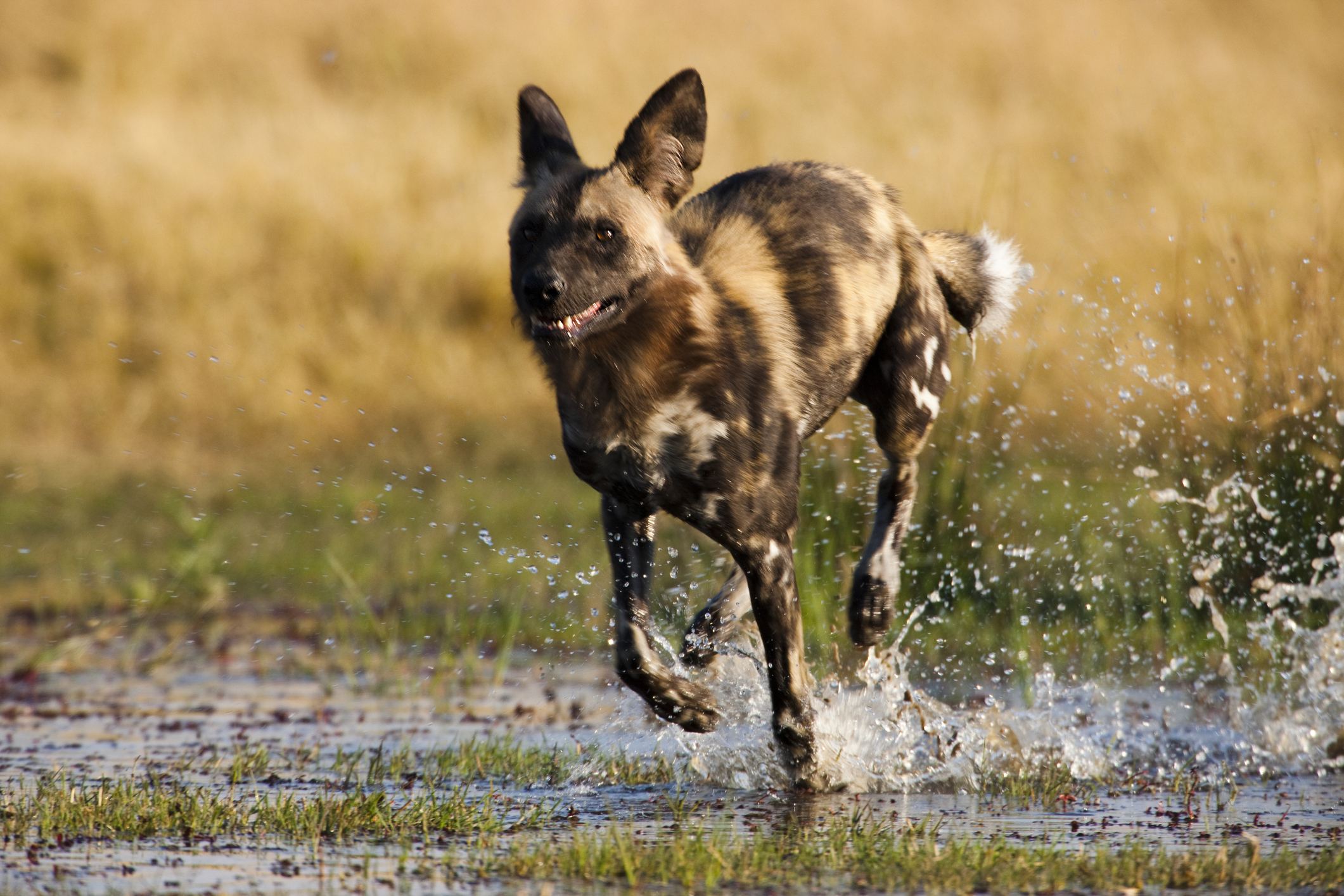
The African continent is home to a number of impressive wild dogs, led by the charismatic species that bears exactly that name. African wild dogs have strongly bonded family packs led by an alpha male and female. The pack does not only operate as a hunting unit but also as a collective nursery and a geriatric care community. The very young, elderly or sick members of the pack are fed and looked after by the more able.
Once numerous in sub-Saharan Africa, these wild dogs are now only found in small populations in Botswana, western Zimbabwe, eastern Namibia and western Zambia. They live on open plains where they prey on birds and small mammals, although they can tackle a wildebeest if it young or disabled in some way.
The third largest wild dog in the world, they have long legs that help them to run at speeds of up to 45 miles per hour. In pursuit of prey they have the stamina to keep up that speed for long periods of time, with their large ears helping to regulate their body temperature and stop them overheating from the effort. They are quick to defend themselves but rarely show aggression towards humans.
African Wolf aka African Golden Wolf
These animals were considered sacred in ancient Egypt as well as in countries such as Senegal. Their range extends across the whole of northern and eastern Africa, taking in Morocco and Libya as well as Kenya and Tanzania.
Halfway between a wolf and a jackal in size, African wolves are near relatives of other wolf subspecies such as the Somalian, Nubian and Algerian. Initially, they were thought to be a type of jackal and indeed carried the name of Egyptian Golden Jackal for decades, but tests as recently as 2015 have proved they are much closer to gray wolves genetically, with a small amount of Ethiopian wolf thrown in.
Notable hunters, African wolves can tackle prey up to three times their own weight, but they do not necessarily aim to kill their catch outright. They will eat snakes alive, for instance, and with larger animals they will simply rip open the body cavity and consume the internal organs. They also cache food, taking away portions of their prey to hide and eat the following day.
Ethiopian Wolf
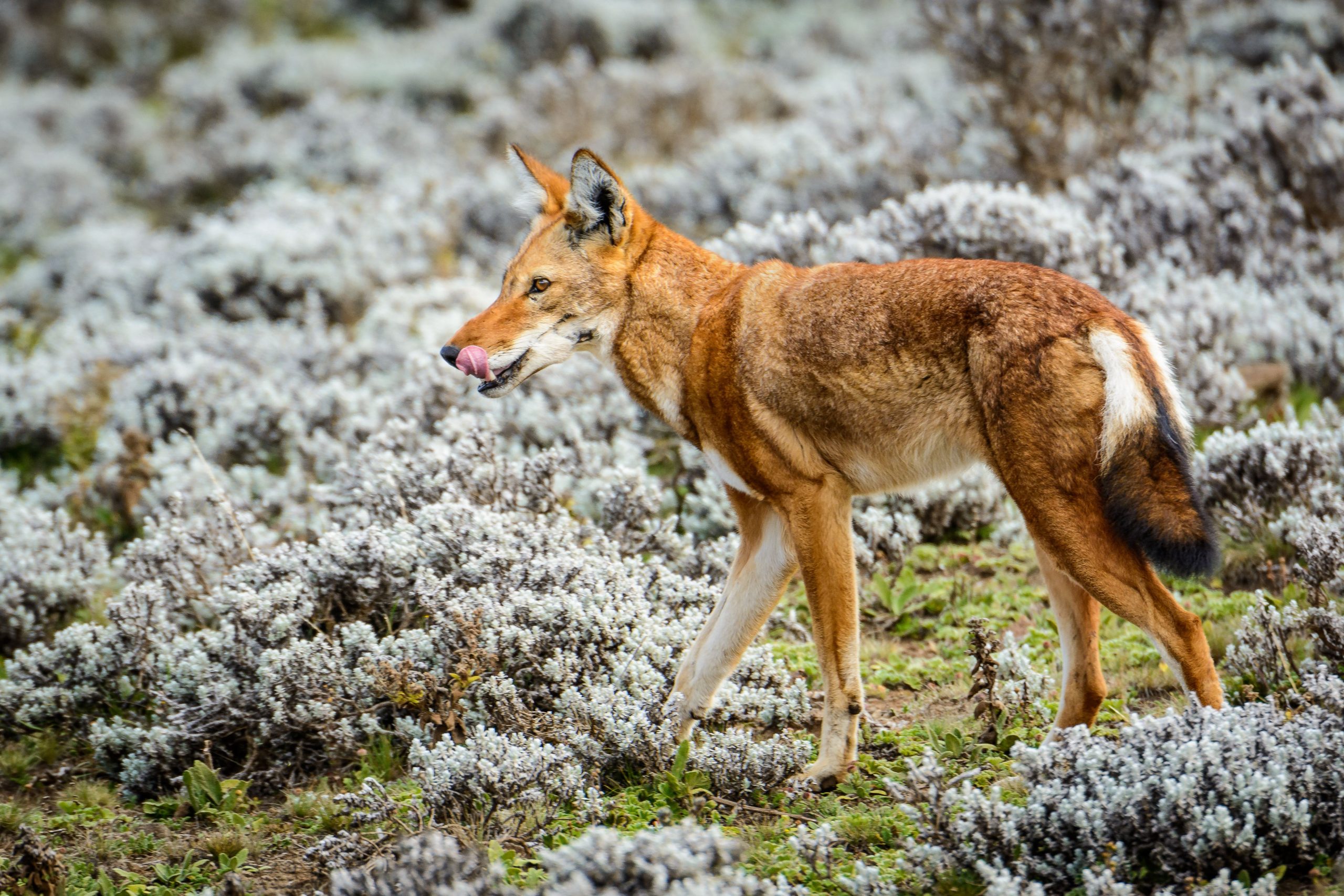
Included in this list because they are similar in size to a coyote, with the same armament of sharp teeth and claws, but Ethiopian wolves are one species of wild dog that cannot be said to be any kind of threat to people. They survive on a limited diet of smaller rodents, such as the African mole-rat and highland hare, and occasionally birds and eggs. Because of this they have a more favourable reputation with their human neighbours in the montane grasslands as they do not threaten them or their livestock.
There are two species of Ethiopian wolves, the Northern and the Southern. The difference between the two lies primarily in the length of their noses. Both species are listed as endangered, having fallen victim to human persecution for their pelts, loss of habitat to farming and to sickness in the form of rabies that devastated populations in the 1990s. They are also victims of canine distemper and road traffic incidents.
In fact, Ethiopian wolves are considered the most endangered canids on the African continent. As a result, harming wolves has become a crime punishable with a jail sentence and steps are being taken to vaccinate domestic dog populations against rabies and distemper in areas with known wolf populations to help preserve these special animals.
Dhole
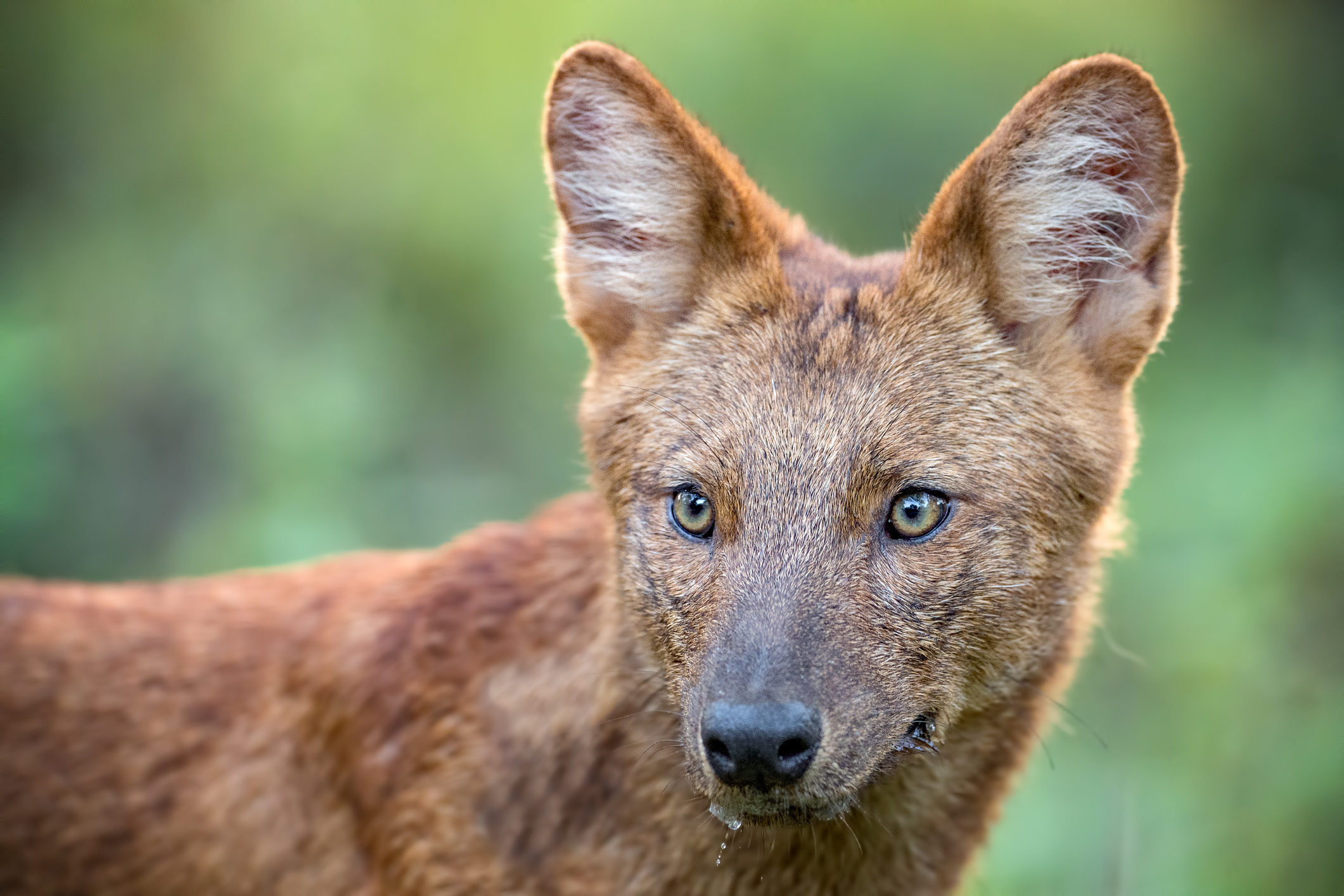
Lastly, we come to the tropical forests of Asia and one of the most formidable wild dogs. Depending in which region they live – India, China, southeast Asian countries or Russia – these canids predate medium-sized ungulates such as sambar deer, tapir, water buffalos and reindeer.
They are ruthless pack hunters, about the size of German Shepherd dogs, bringing down their prey by a divide and conquer method – one dhole will attach itself to the victim’s nose while the others pull down its hind quarters. This is usually after a prolonged chase with pack members swapping the front-runner place as they tire. Once the prey has been caught, the dogs disembowel it rather than administer a killing bite, so death is rarely instantaneous. They eat the heart, lungs, intestines and liver but leave the stomach, and then tear off chunks of muscle flesh to consume later.
They are no respecters of other apex predators, either, and are known for following a tiger or leopard in order to steal parts of its catch. Perhaps understandably given their methods of dispatching their prey and their boldness, dholes have a reputation for being vicious and untameable. Certainly, people who have tried to domesticate them have found that they never lose their distrust of humans and will defensibly attack with little provocation.
In some Asian countries predation of livestock has been a problem for local farmers, so the dhole has never been a popular neighbour, but the species now has protected status in India, China, Cambodia, Russia and to a certain extent in other southeast Asian countries.