Close relatives of humans, orangutans are highly intelligent great apes. They are semi-solitary in the wild. Once they reach maturity, they spend most of their time alone, or, in the case of females, with their immature offspring. Adult males old enough to have cheekpads are the most solitary, spending over 90 per cent of their time alone.
Orangutans live on only two islands, Borneo and northern Sumatra. They are a relic species, the only surviving members of the subfamily Ponginae. At the end of the Pleistocene period some 12,000 years ago, their range was much wider, encompassing southern China, Indochina, Java and southern Sumatra. The species is now extinct in all these regions.
- What's the difference between humans and apes? And when did humans first appear?
- Think you know your family? Well, think again. You might call yourself a Jones or a Patel, but at heart you're a great ape
There are three species of orangutan, all listed as Critically Endangered on the IUCN Red List of Endangered Species, based on an assessment from 2016. The number one threat to these great apes is habitat loss and deforestation, with millions of acres of the tropical rainforests of Borneo and Sumatra being cleared for palm oil plantations, industrial logging, mining operations and large-scale agriculture.
What are the different species of orangutan?
Sumatran orangutan, Pongo abelii
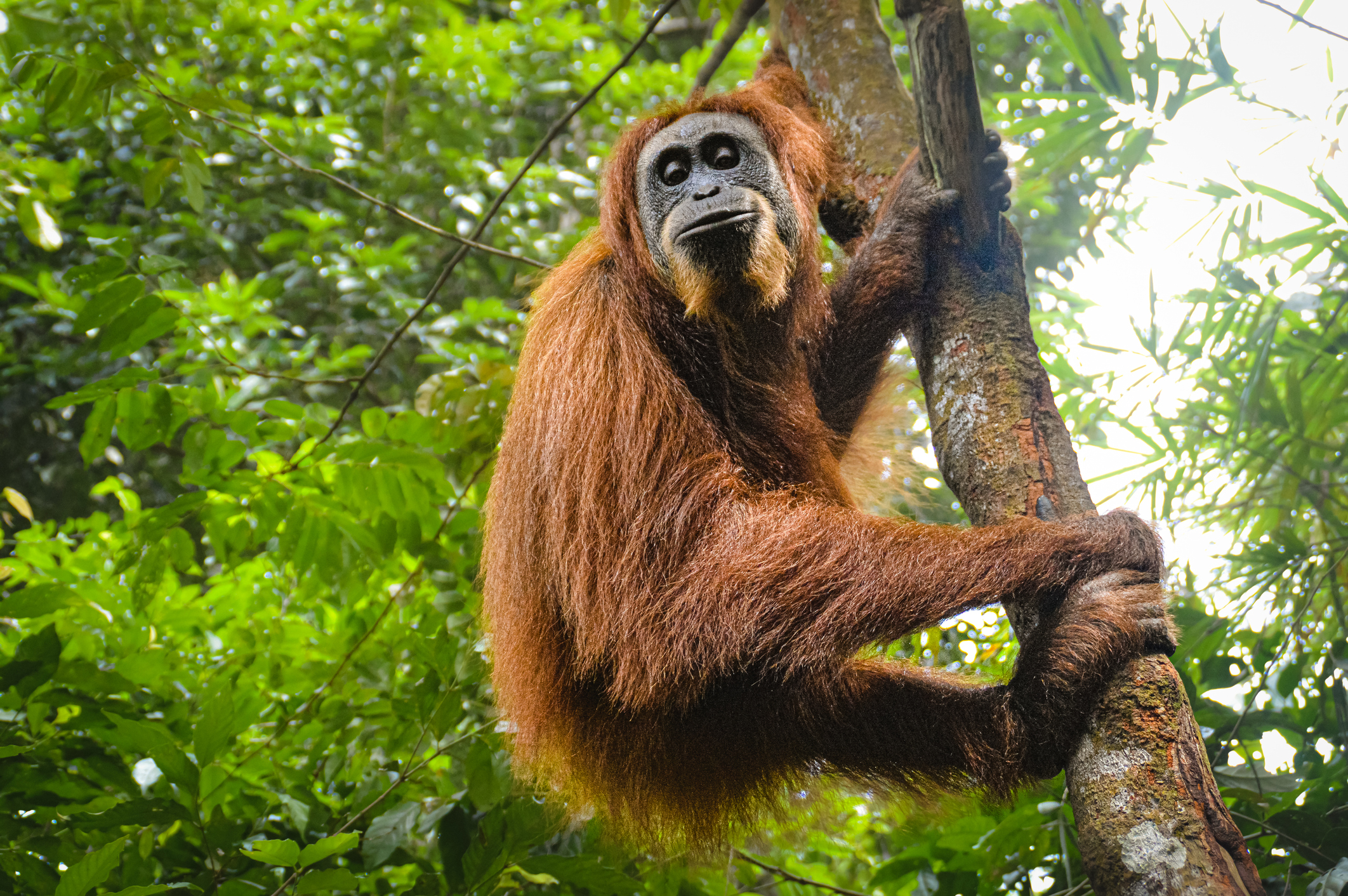
Bornean orangutan, Pongo pygmaeus
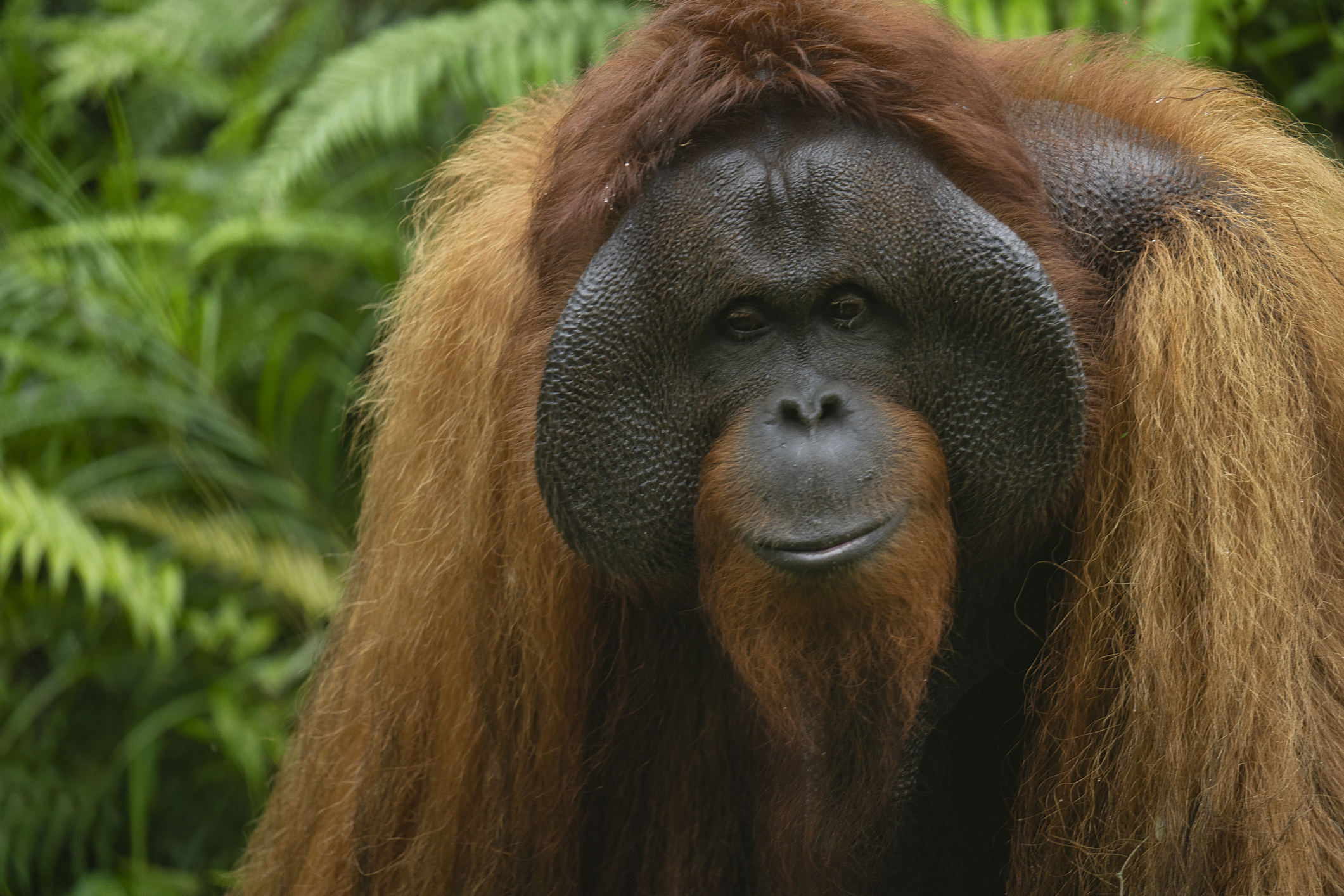
Tapanuli orangutan, Pongo tapanuliensis
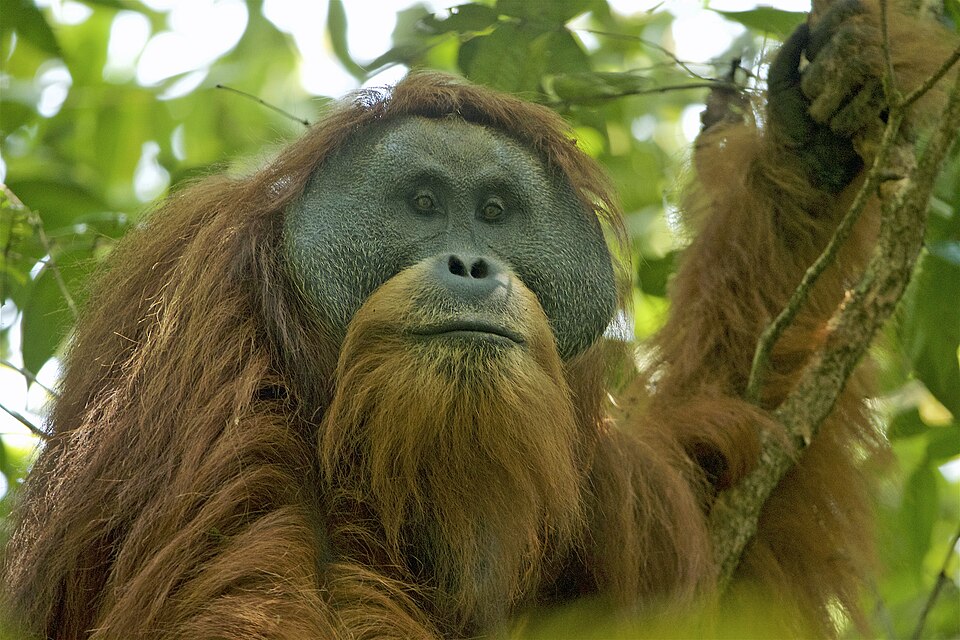
Why are orangutans orange?
Orangutans 'blaze' in the sunlight but virtually disappear when they move into shadow. In the shade of the canopy, their tan skin absorbs the light so you don't see the sparse hair but the dark skin underneath. Then they become functionally black. Could this now-you-see-me-now-you-don't combination be adaptive? Or, given that they generally don't congregate in groups, does their bright orange colour announce their presence to others of their species? We simply don't know.
What does 'orangutan' mean?
Orangutan is a portmanteau, where two Malay words have been combined together. In these languages, 'orang' means 'person' and 'hutan' means 'forest'. So 'orangutan' means 'person of the forest'.
What do orangutans do all day?
Orangutans are the largest tree-dwelling animals on Earth. Though adult male gorillas climb up to the canopy to feed, they do not spend much time there and are basically terrestrial. Adult male orangutans, reaching a weight of 140kg or more, spend over 90 per cent of their time in the treetops, eating ripe fruit, young leaves and the occasional termite or vine. Adult females spend even more time in the canopy.
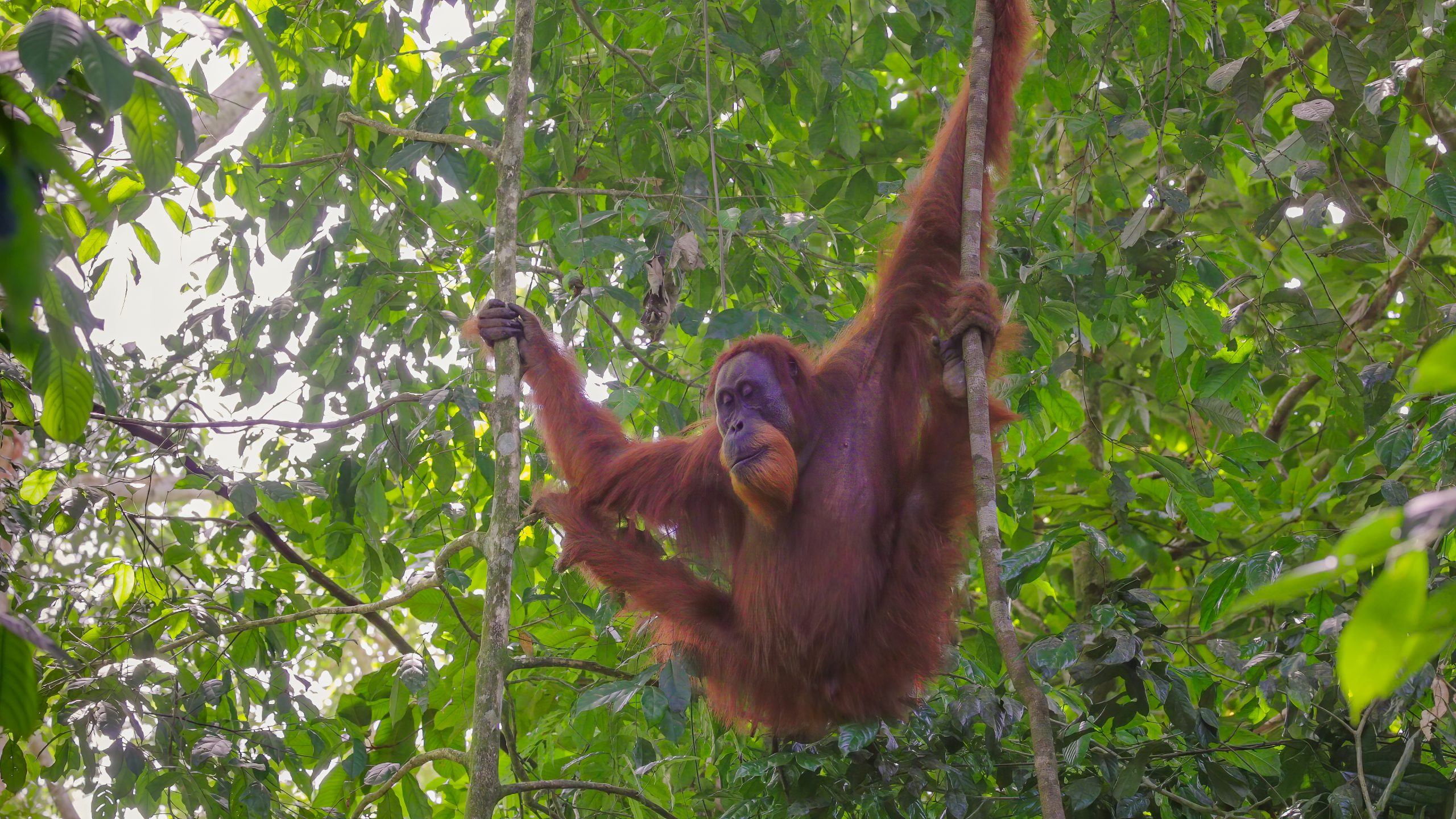
How long do orangutans live in the wild?
We can only make educated guesses. In captive environments, orangutans have lived for over 60 years. Wild females at one study site who were adolescents back in 1971 are still alive today and bearing offspring. A formerly captive female in her 40s recently had an infant. It's possible that wild orangutans may live into their 70s, but this is likely to be rare.
Why do orangutans have such big faces?
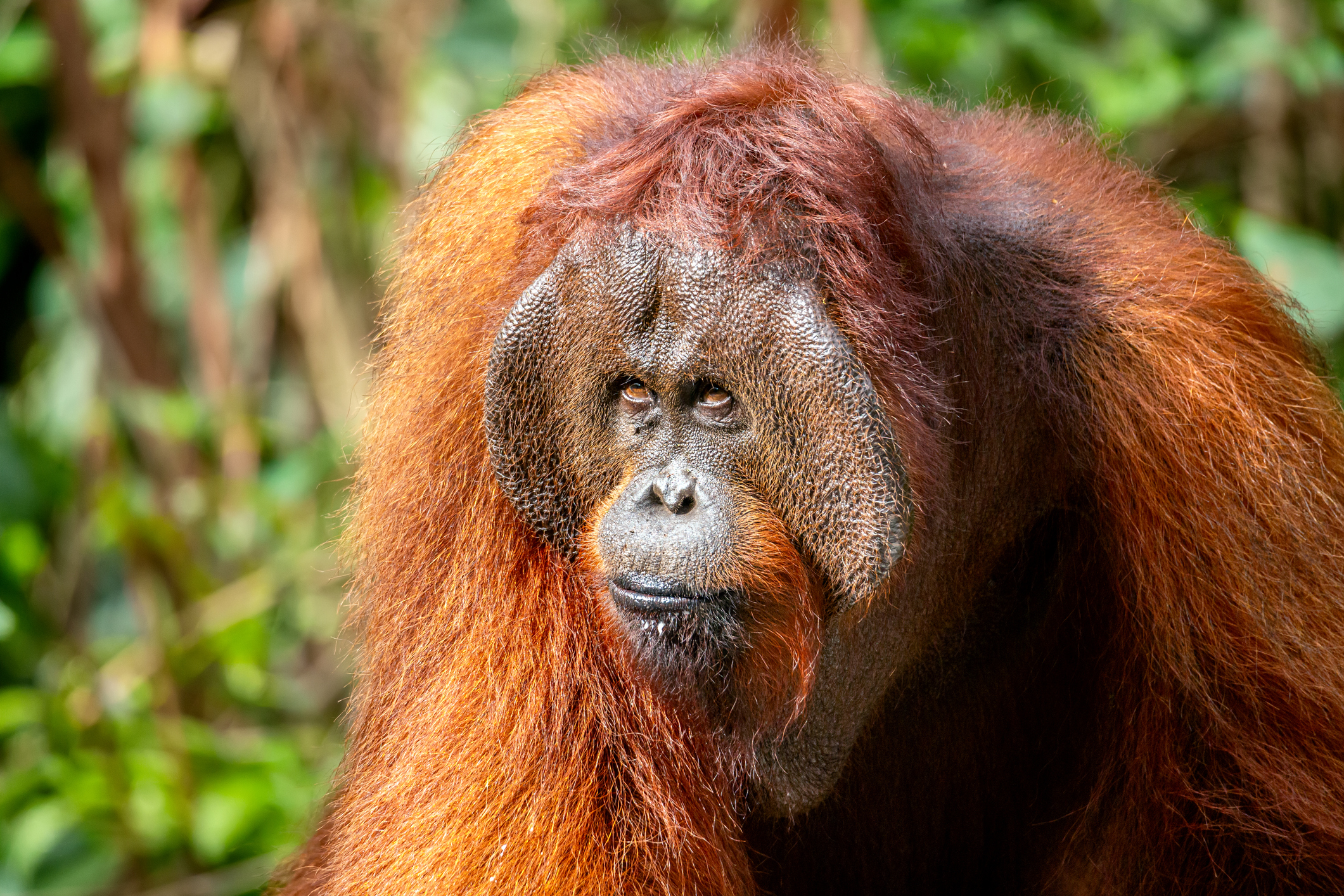
Adult male orangutans develop cheekpads, which frame their faces and make their heads look larger. In captivity, males as young as 13 develop cheekpads, but in the wild, some males may not grow them until the age of 30. Once a male has his cheekpads, he won't tolerate any other adult males in his vicinity and competes with them for access to receptive females. Cheekpads may also serve an acoustic function in helping project the 'long call' a male uses to broadcast his presence through the dense forest.
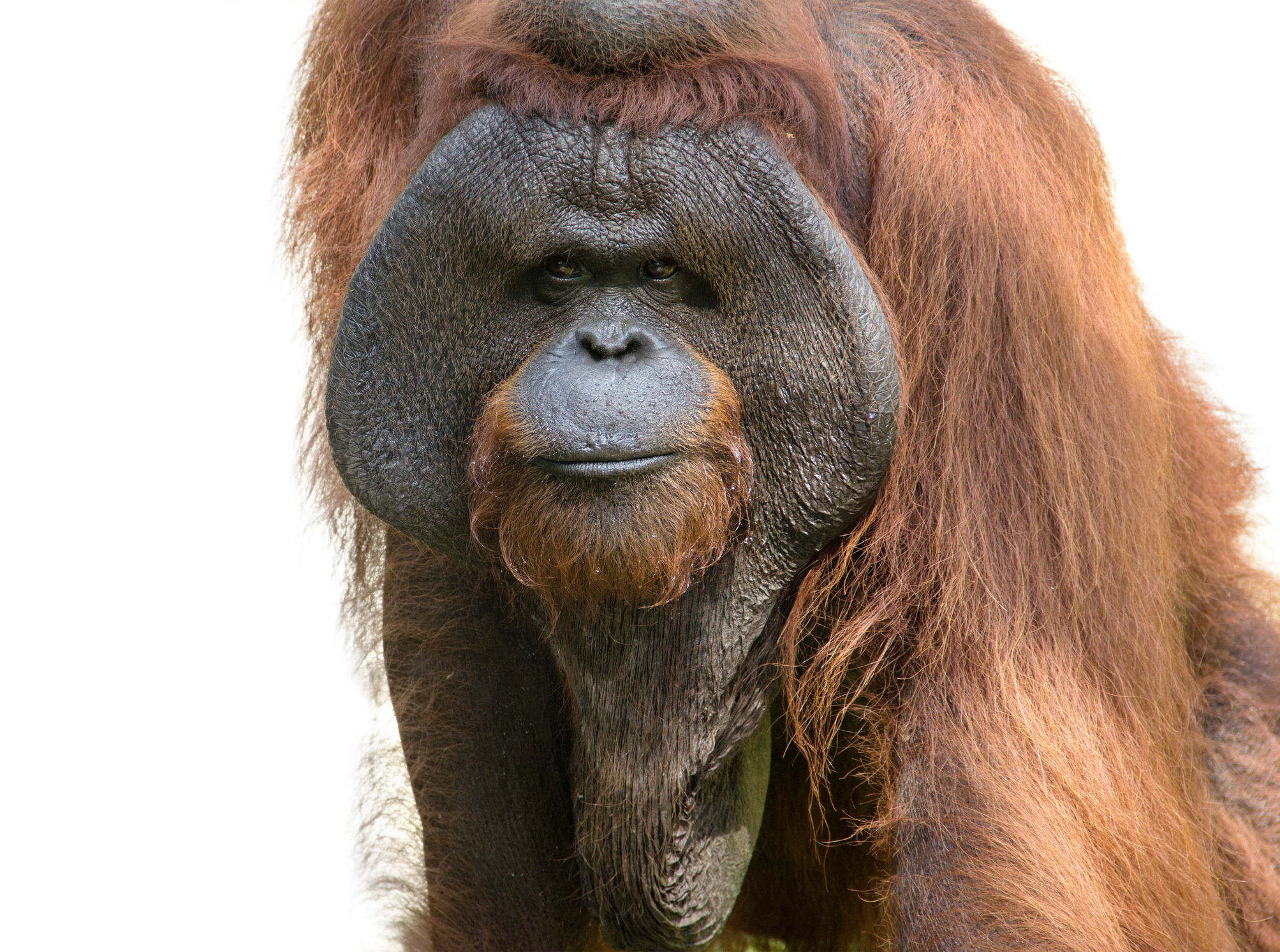
Do male orangutans look the same as female orangutans?
Orangutans are among the most sexually dimorphic of primates. An adult male may be three times heavier than an adult female. On average, females stand around 115 cm tall and weigh around 37 kg, while adult males stand around 137 cm tall and weigh 75 kg.
Male orangutans also sport large cheekpads, a throat pouch that acts as a resonating chamber for their loud call, and a muscular body from a testosterone surge at an earlier stage of life. Males use their large size to compete with each other for access to receptive females.
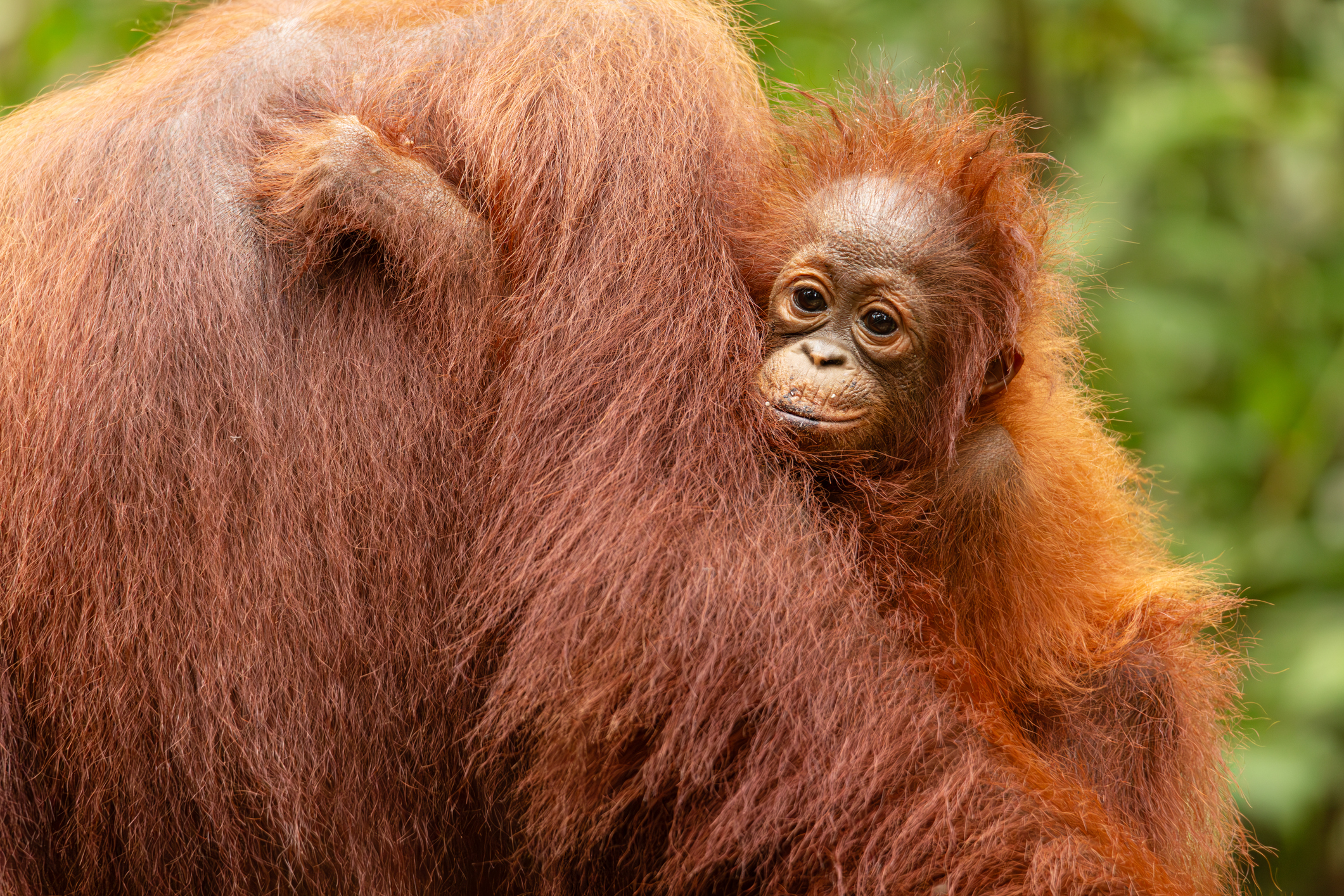
Are baby orangutans cared for by their mothers?
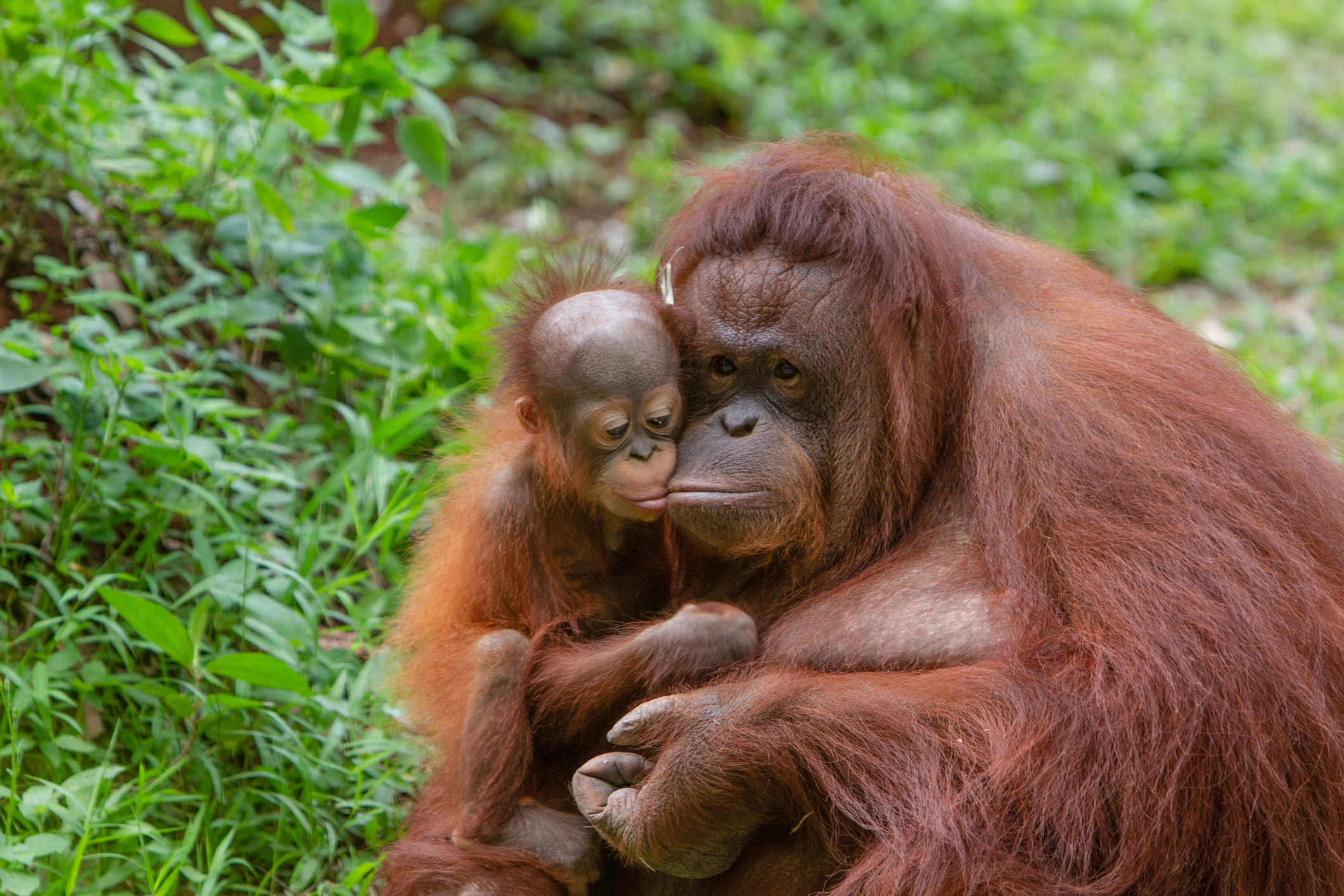
Orangutans have the most intense relationship between mother and young of any non-human mammal. A baby orangutan will be carried around by its mother, and that will continue for the first five years. Some mothers even suckle their offspring for six or seven years. For the first eight years of a young orangutans life, its mother is its constant companion. Until another baby orangutan is born, mothers sleep in a nest with their offspring every night.
Who was Clyde the orangutan?
Back in 1978, Clyde the orangutan became an unexpected movie star as Clint Eastwood's sidekick in the box office hit Every Which Way But Loose. Clyde was played by a trained orangutan named Manis, but was replaced for the sequel as he grew too quickly.
How do orangutans communicate to warn of danger?
According to research published in the Journal of Experimental Biology, when approached by a predator, orangutans issue what is called a ‘kiss squeak’ alarm call. But biologists in Borneo have noticed that some of the apes place a cupped hand in front of the mouth when making the sound.
In humans, such a gesture is usually employed to keep whispered conversations private. But it seems that, for orangutans, it serves a very different purpose. The cupped hand makes the kiss-squeak call resonate, so the animal sounds bigger than it actually is.
“No other mammal appears to modify their calls in this way,” said Bart de Boer of the Free University Brussels, who led the research. “It is probably a signal to the predator: ‘Don’t bother stalking me, I have spotted you already!’”
How often do orangutans reproduce?
Orangutans have the longest birth interval of any mammal. In Borneo, they give birth on average once every eight years. In Sumatra, some females may only give birth once every 10 years. Females often do not breed until the age of 17. If adult females are killed, the population takes a long time to recover.
Are there any albino orangutans?
There's only one known albino orangutan in the world. Discovered in captivity in Indonesia after being taken from the wild, she was rescued by the Borneo Orangutan Survival Foundation (BOS), who named her Alba and took care of her. She remained in the care of BOS until 2018, when she was released into the wild in Bukit Baka Bukit Raya National Park, alongside Kika, another female orangutan she bonded with during her rehabilitation.
Are orangutans the only great apes in Asia?
Orangutans are the only great apes of Asia, but not the only apes. It appears that they are of African origin but dispersed about 15 million years ago. During the Miocene period, there were many ape species throughout Africa, Asia and Europe. Chimpanzees, bonobos and gorillas survived in Africa, but only the orangutans survived in Asia.
It's hard to forget the orangutan in The Jungle Book; the terrifying and enigmatic King Louie. But he should never have been there in the first place: The Jungle Book was set in the forests of central India, thousands of miles from the nearest wild orangutan. Still, it did make a pretty good story.
Do orangutans use tools?
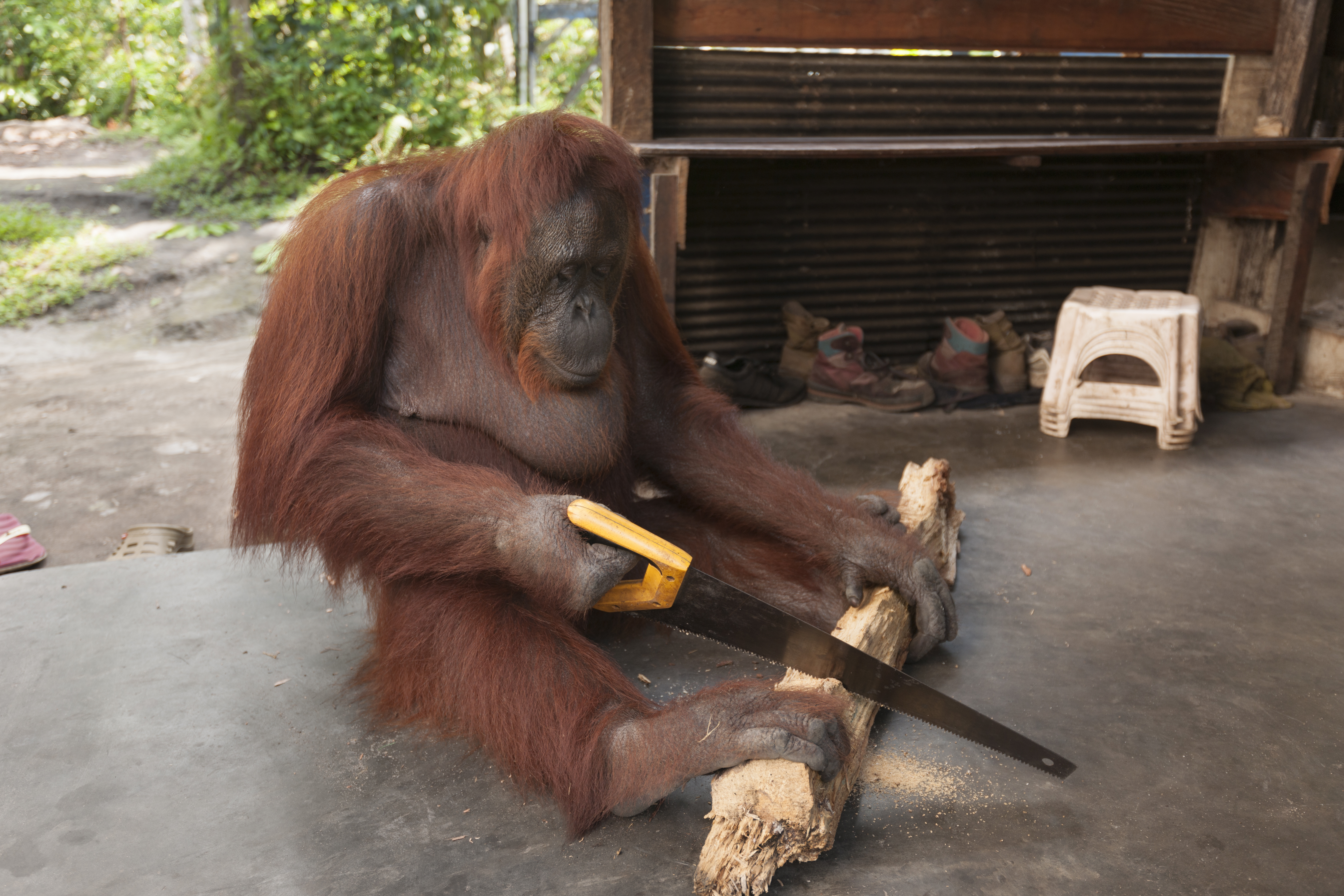
Orangutans are gentle and sit for hours gazing. They are also very smart: they perform as well as chimpanzees and gorillas in tests of cognitive ability. In captivity, they are excellent tool-users and versatile tool-makers. One captive orangutan was taught how to chip a stone hand-axe. In the wild, one population makes and uses tools for opening and extracting fruit in a sophisticated manner reminiscent of chimpanzees – except that these orangutans hold the tools in their mouths.