
Researchers have successfully bred two generations of Romanian hamsters as part of a project to create a sustainable wild population of the Vulnerable species.
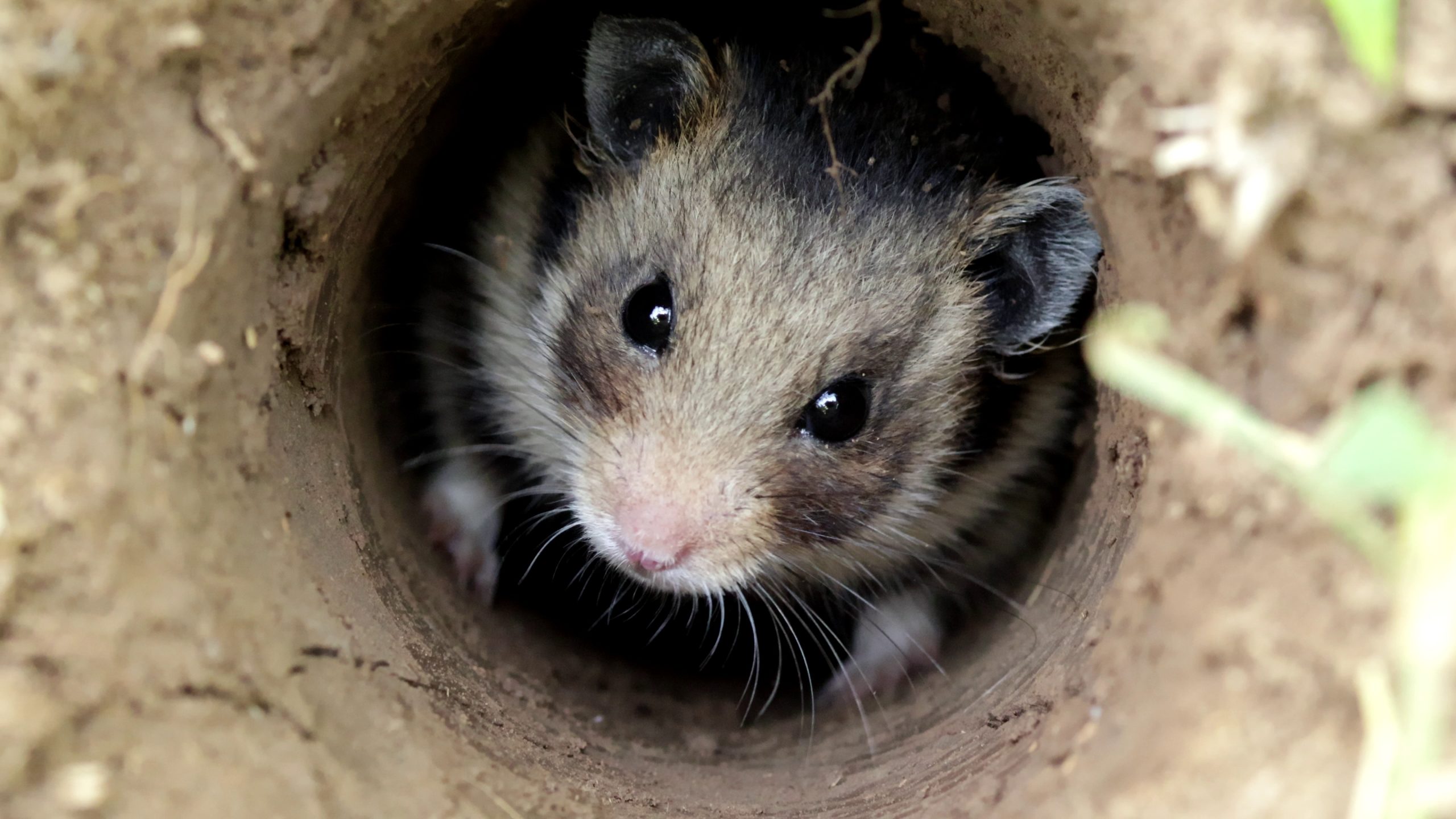
The Romanian hamster is endemic to small regions of Bulgaria and southeastern Romania. It can grow up to 16cm long and has a distinctive contrasting coat, with a light-coloured stomach, dark back, and a solid black band of fur across its chest.
- Wait there's wild hamsters? Oh yes – and they're fuzzy, feisty, and just as cute and podgy as your childhood pet, just 4 times the size
- This grave-robbing hamster finds its next meal in a cemetery – but it’s not what you think
However, it’s listed as Vulnerable on the IUCN Red List due to agriculture, pesticide use, and habitat loss and degradation. Its natural habitat is pristine steppe grassland, which has now almost disappeared, according to the scientists working on the project. Instead, the hamster is more commonly found in cultivated farmland such as alfalfa fields.
Scientists from the Institute of Biodiversity and Ecosystem Research at the Bulgarian Academy of Sciences (IBER-BAS) have spent more than two years breeding the hamsters in captivity. So far, 21 individuals have been released into suitable habitats in northeastern Bulgaria.
The sites were selected for their living conditions, natural vegetation and sufficient food sources.
“When it comes to releasing the animals into the wild, in practice you have to approach the landowners and say, ‘Hello, we’d like to release some very special rodents in your fields. They might feed on your crops, but please don’t panic and just carry on growing alfalfa!’” say Maria Kachamakova and Yordan Koshev, who are working on the project at the IBER-BAS.
Artificial burrows are dug in advance to provide the hamsters with initial shelter, and protective enclosures are installed around them to reduce predation during the hamsters’ initial adaptation period. The team monitors the hamsters during their first days.
“Immediately after the hamsters’ release, we observed signs of natural behaviour,” say Kachamakova and Koshev.
“The animals started digging new burrows and interacting with one another. The males have been particularly active. This gives us hope that they will adapt and reproduce successfully. We hope this will eventually lead to a sustainable population.”
The scientists plan to continue the project with more releases. “So far, we have carried out only two pilot releases,” they explain. “Next year, we plan to release some of the animals fitted with GPS tracking collars, allowing us to monitor more closely how they adapt and survive in the wild.”
The conservation efforts are part of the international LIFE for Falcons project, coordinated by the Bulgarian Society for the Protection of Birds (BSPB), BirdLife International’s partner in Bulgaria.
Top image: suitable habitats are selected for the release of Romanian hamsters into the wild. Credit: Dimitar Gradinarov BSPB


