
The squirrel monkey is a small New World monkey found in the tropical forests of Central and South America, where it mostly sticks to the canopy layer. It looks quite unassuming, but some of its behaviours are truly fascinating – and a little bit weird.
- "It looks like Gollum from The Lord of the Rings. "8 weirdest, most peculiar (and most wonderful) primates on the planet
- Prowling cats, pink dolphins and giant eagles: 16 incredible photos from the Amazon
Squirrel monkeys can only sweat through the palms of their hands and feet – so, because they live in habitats with high temperatures and high humidity, they’ve had to find creative ways to thermoregulate. Squirrel monkeys engage in something called ‘urine washing’, in which they urinate on their hands and rub the urine over the soles of their feet to cool themselves.
Female squirrel monkeys also have pseudo-penises, which they use to display dominance over smaller monkeys. They reach sexual maturity at around 2-2.5 years, while males reach it a bit later, at 3.5-4 years. Females give birth to young after a 150-170-day gestation period.
How many species of squirrel monkey are there?
Until the 1980s, all South American squirrel monkeys were considered part of a single widespread species. Currently, the IUCN Red List of Endangered Species recognises seven species of squirrel monkey.
Central American squirrel monkey (Saimiri oerstedii)
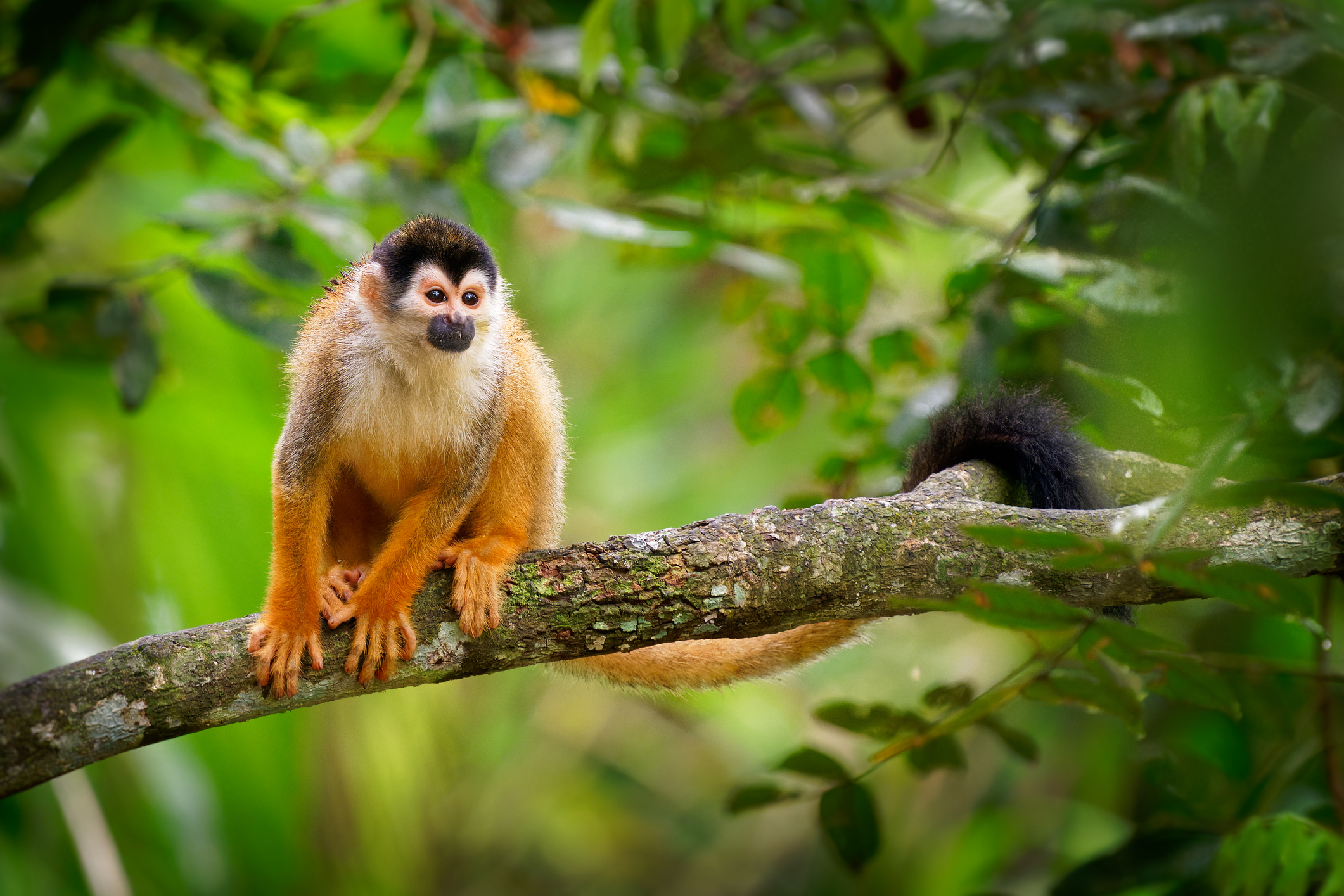
Black squirrel monkey (Saimiri vanzolinii)
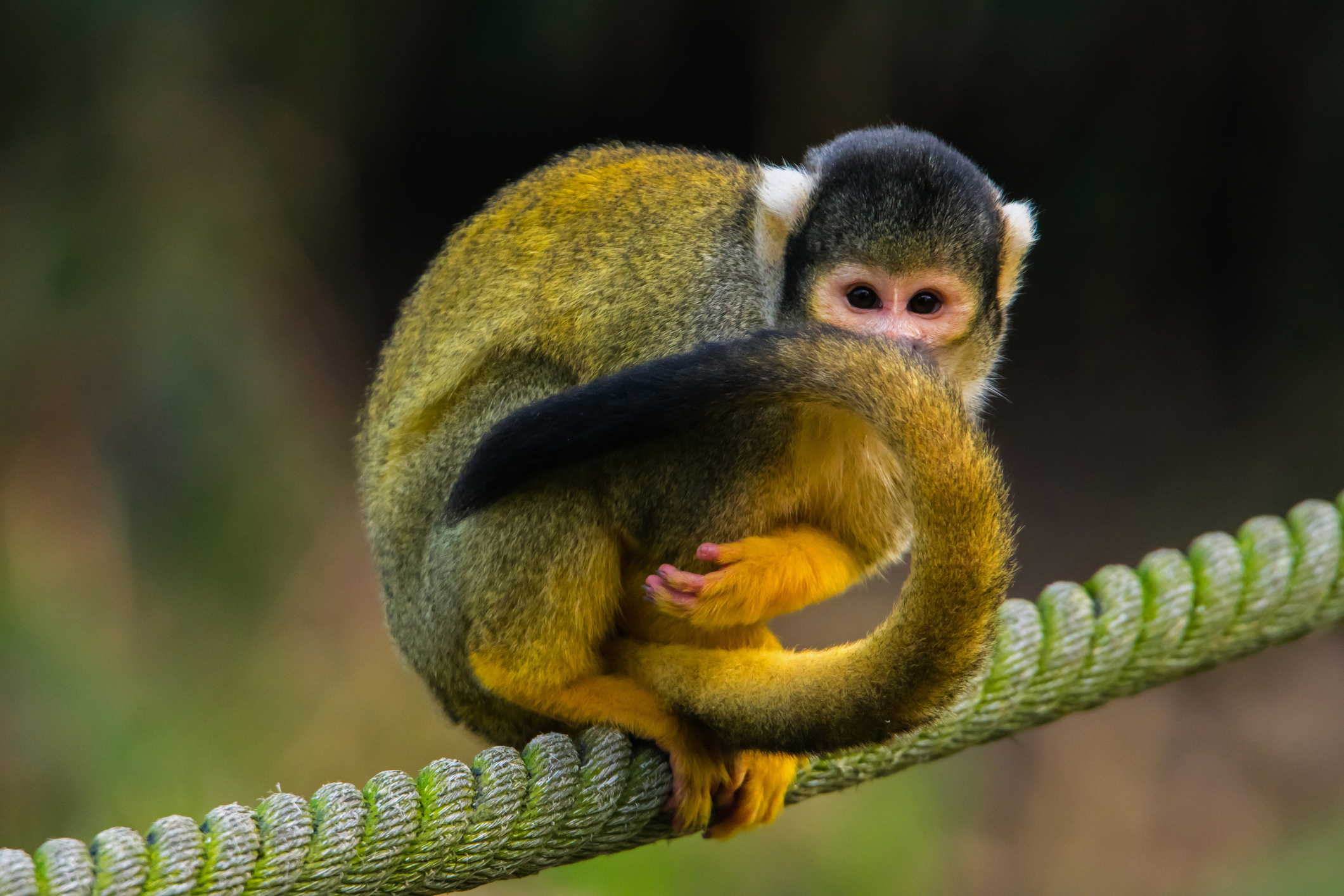
Bolivian squirrel monkey (Saimiri boliviensis)
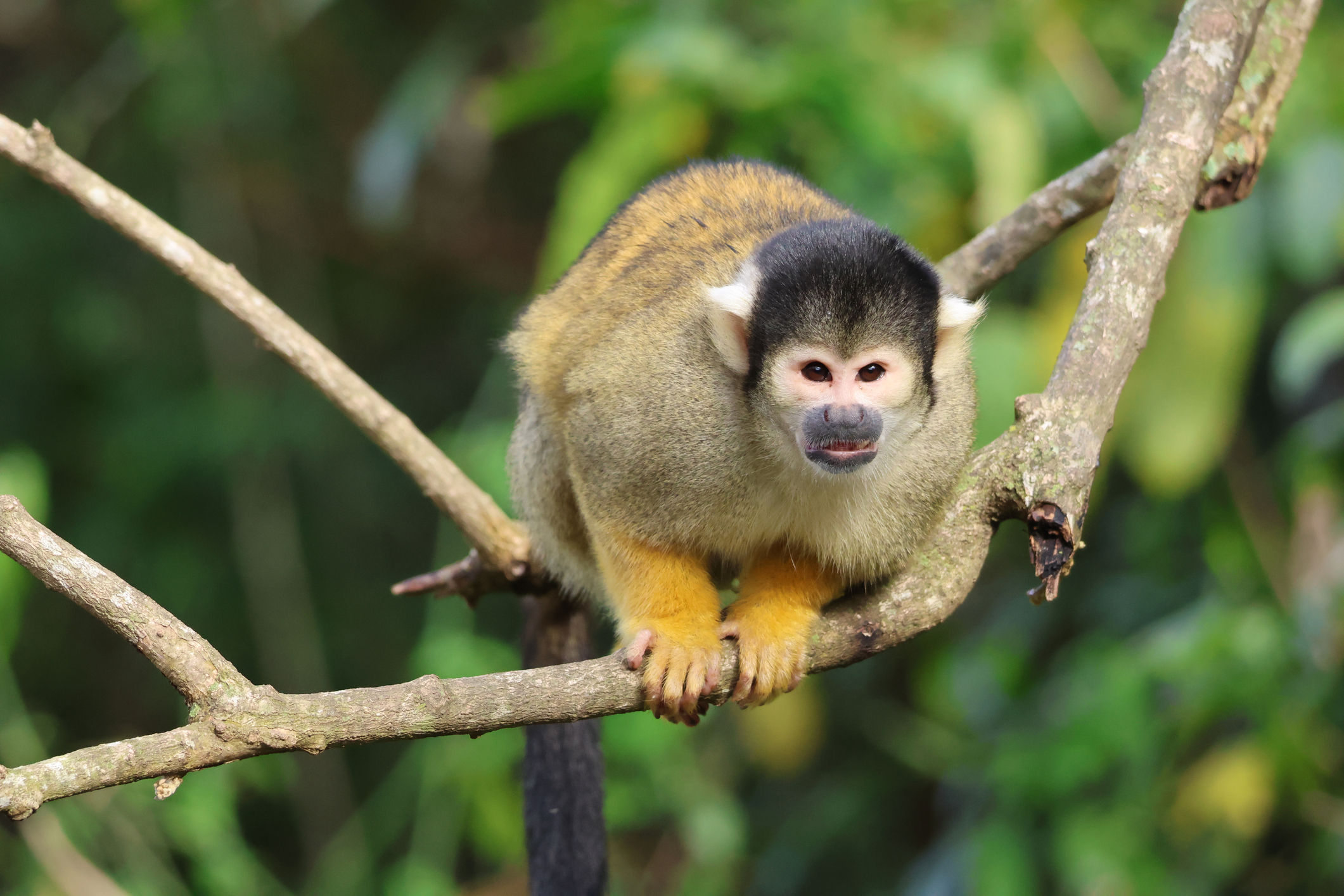
Golden-backed squirrel monkey (Saimiri ustus)
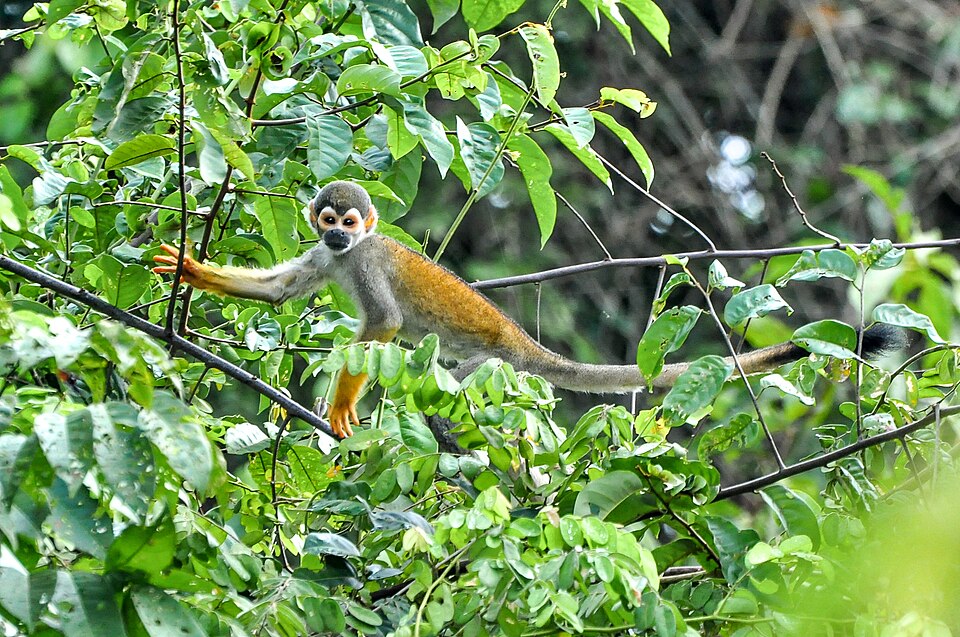
Guianan squirrel monkey (Saimiri sciureus)
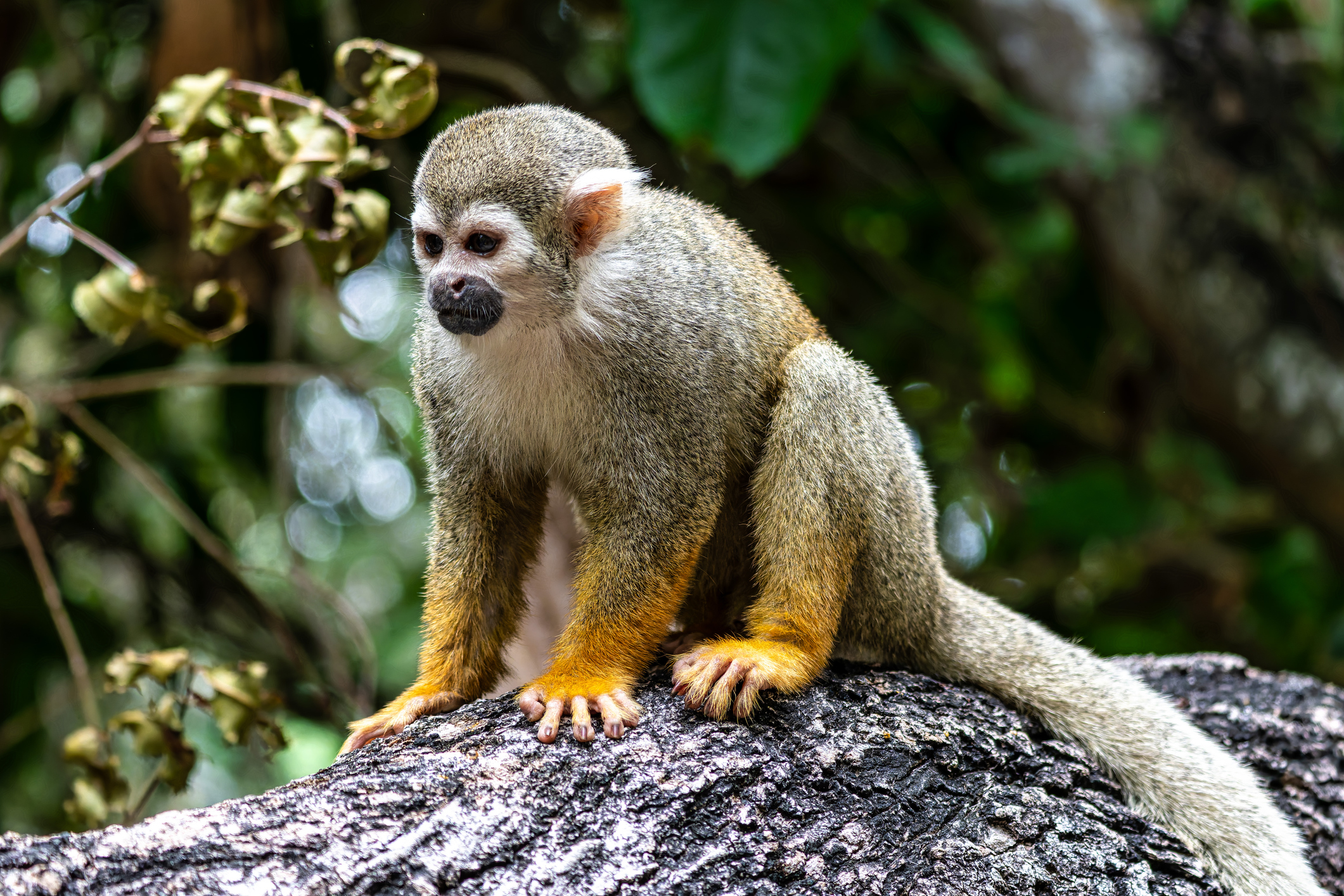
Collins’ squirrel monkey (Saimiri collinsi)
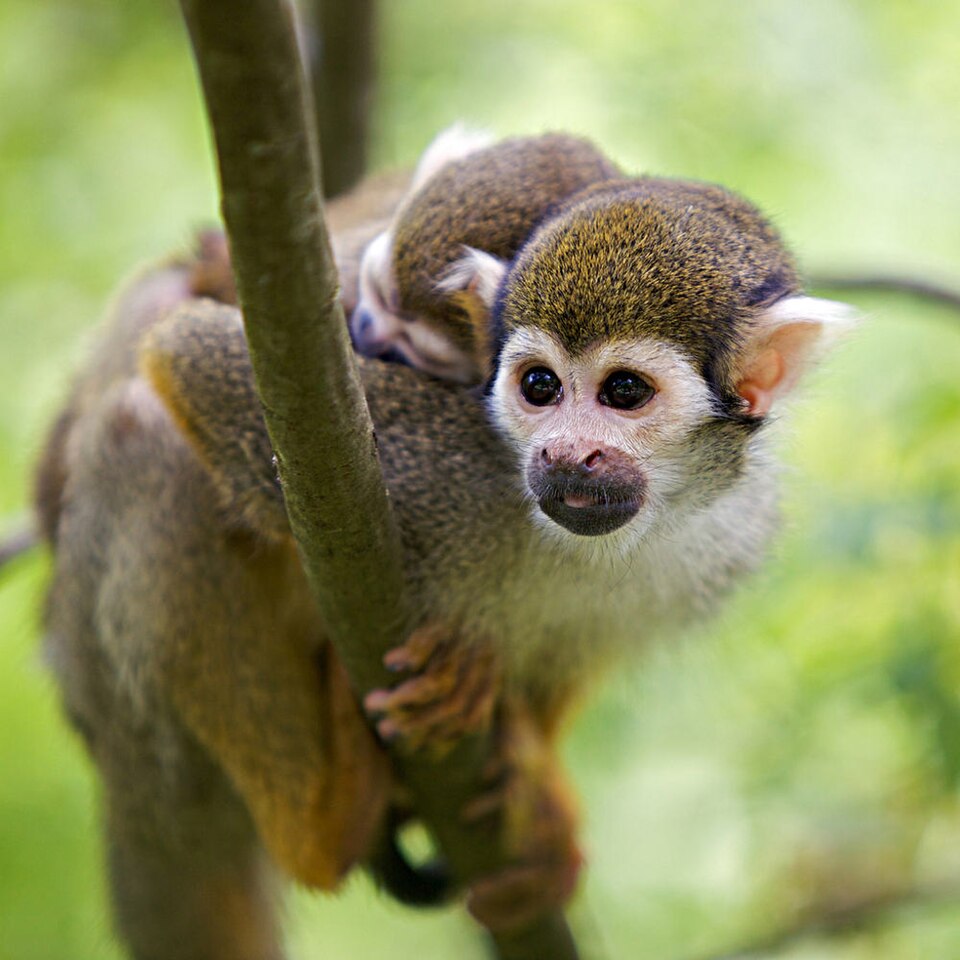
Humboldt’s squirrel monkey (Saimiri cassiquiarensis)
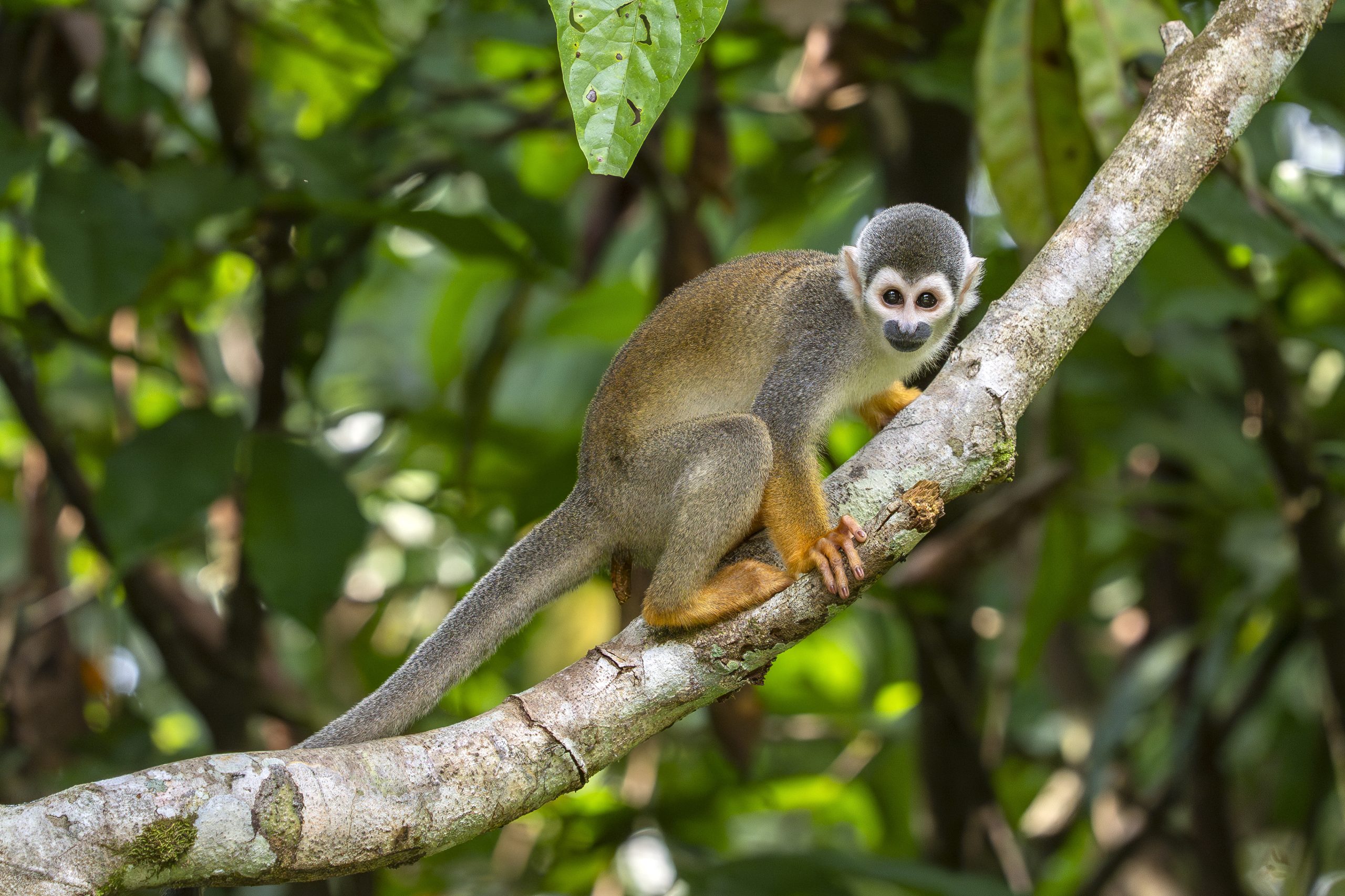
What does the squirrel monkey look like?
The squirrel monkey is a small, slender monkey with a mask-like face. White fur surrounds the eyes and covers much of the face, which is why some refer to the squirrel monkey as the ‘skull monkey’. The exact shape the white fur forms depends on the species; some of them form a pointed arch, and some a rounded one.
These monkeys grow from 25 to 35 cm long, with a tail longer than their body – between 35-42 cm. Their tail is not prehensile, meaning it is not used to grab or hang from branches, but is rather a balancing tool.
Male squirrel monkeys weigh 750 grams up to 1kg, on average, while females are a bit smaller at 500-750 grams.
- “I spent five days in hospital after a bite from a monkey you could buy for a child”
- Mysterious new monkey species with orange lips discovered in the Congo rainforest
Is the squirrel monkey endangered?
Although commonly captured for pet trade and medical research, squirrel monkeys in general are not endangered. There are two species, however, that are listed as Endangered on the IUCN Red List of Threatened Species: the Central American squirrel monkey and the black squirrel monkey, both most recently assessed in 2020.
The main threat to the Central American squirrel monkey is habitat loss, primarily due to agriculture and logging. For the black squirrel monkey, it’s climate change – this species has one of the most restricted geographical distributions for a primate, with its entire range restricted to the Mamiraua Sustainable Development Reserve in the Brazilian Amazon.
Who is Miss Baker the squirrel monkey?
Miss Baker was a squirrel monkey who in 1959 became one of the first two animals launched into space by the US – along with a female rhesus macaque named Able. Both animals survived the launch and came back to Earth safely.
Top image credit: Suren Vispute/Getty Images
