
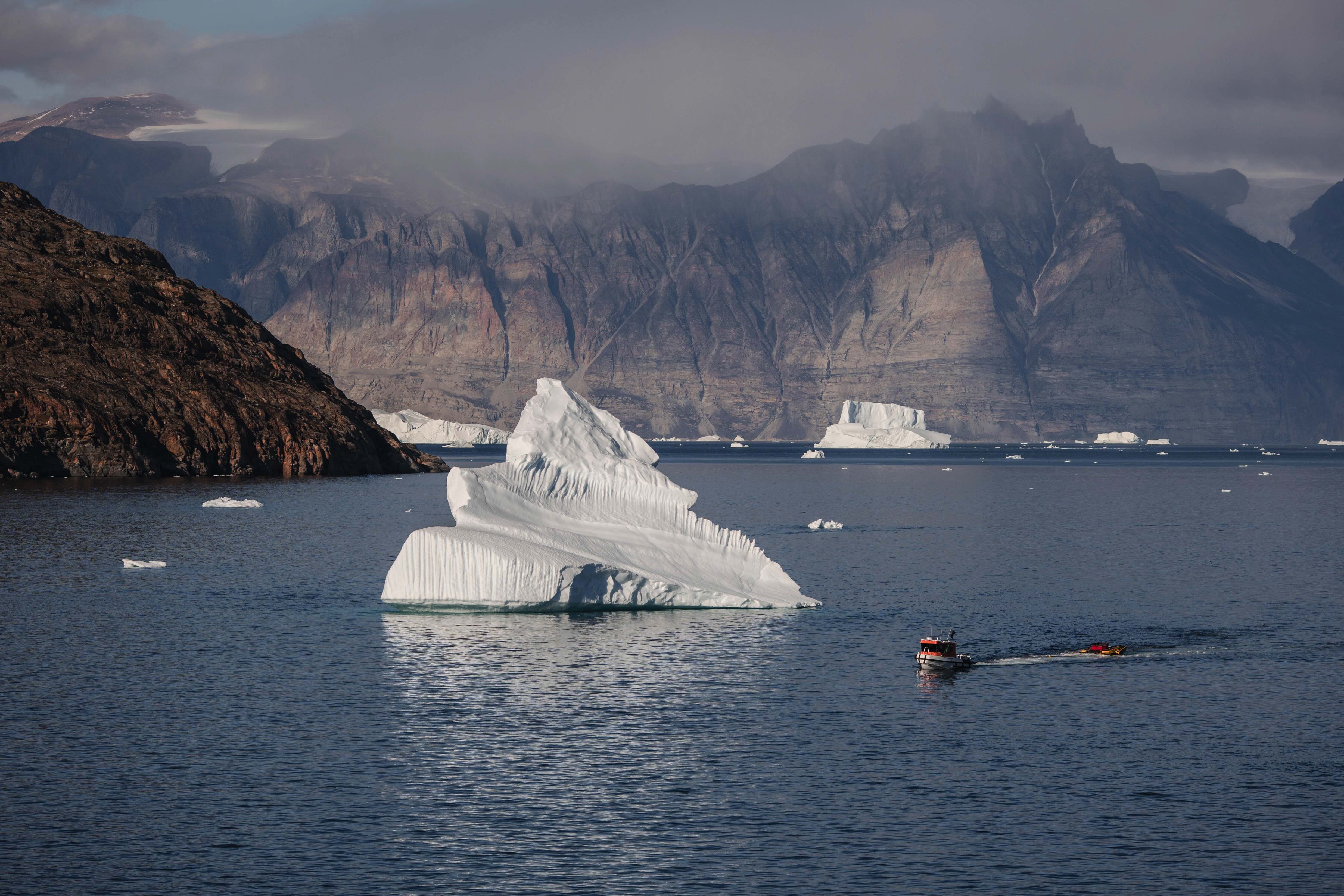
The sea ice shifts nervously around our inflatable boat as we speed towards a small floating platform off the coast of Uummannaq, Greenland, nearly 500km north of the Arctic Circle. Soon, I’ll climb down through a hatch to a yellow submarine called Paul, which will whisk me down to the seafloor far below.
Uummannaq lies in the shadow of a 1,175m-high mountain with rocks that formed around 3 billion years ago. Today’s submarine trip with travel company Viking is going to follow the ancient cliff down to the seabed. We’ll only know exactly how far that is when we hit the bottom.
- How deep is the deepest part of the ocean and where is it?
- “I'm shaking…” Watch incredible moment deep-sea researchers see something very rare - and very surprising - deep down in the ocean
As a recreational scuba diver, going underwater wouldn’t usually worry me, but it’s hard not to recall the fate of the Titan – the submersible that imploded more than 3,000m below the surface in June 2023, instantly killing all five people on board.
To up the nerves, our dive has already been called off twice: first because of rough waters, then because of dangerous sea ice. Now, we’ve been given the go-ahead – and it’s too late to back out. Weights are calculated meticulously, meaning that if one of the six passengers changed their minds, the trip would have to be cancelled.
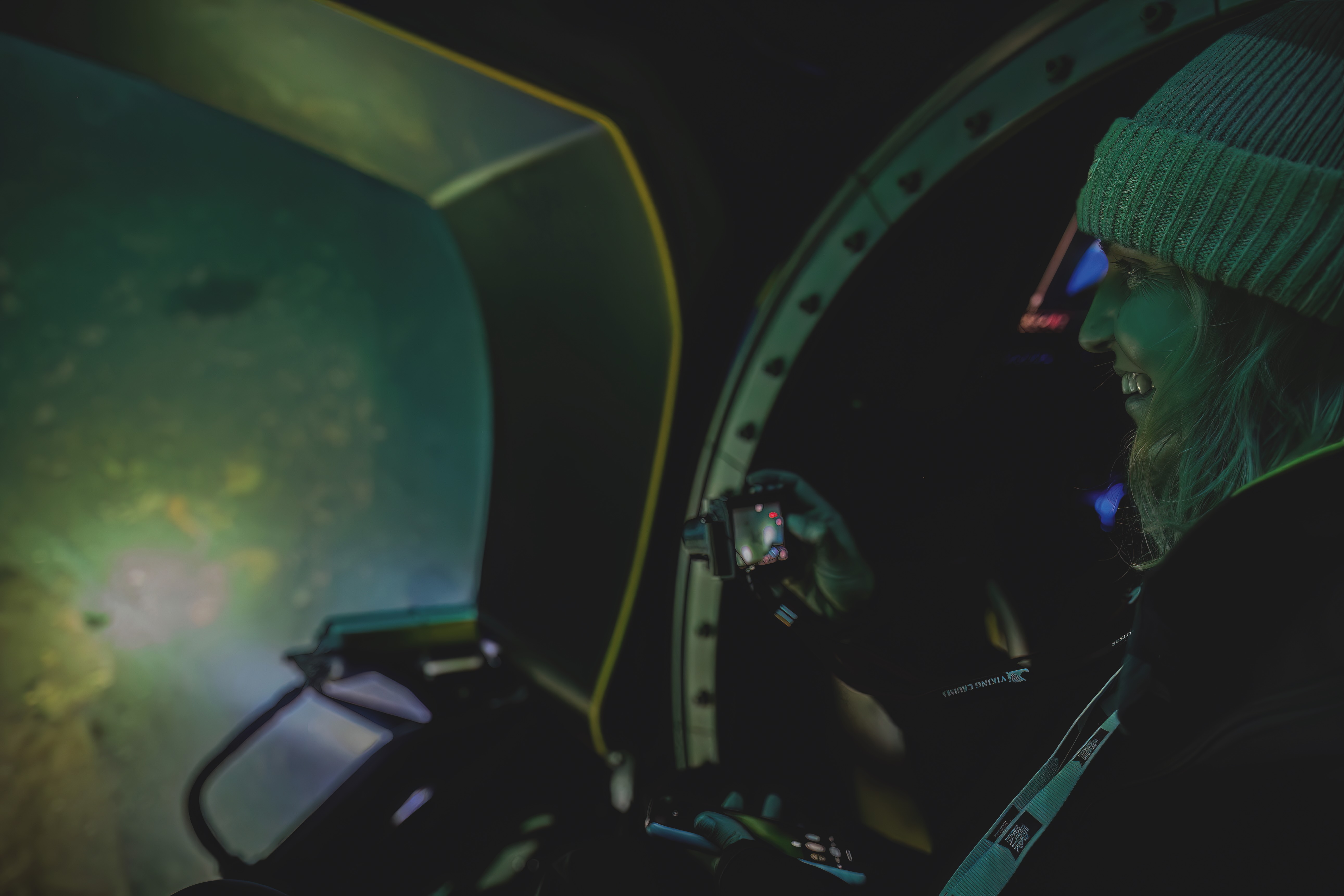
Thankfully, my nerves evaporate as soon as I climb down the ladder into the vessel – perhaps the sea butterflies bumping clumsily into the impeccably polished acrylic windows have distracted me. These tiny molluscs, also known as pteropods, look a bit like snails with two fluttering wings.
- What's it like to be a deep-sea explorer? Ocean scientist Moronke Harris takes you into the abyss...
“They’re a good indicator of ocean health,” says Jason Hayden, Viking’s chief scientist, as he sits down beside me. When high carbon dioxide levels make the water more acidic, these animals struggle to maintain their fragile shells, he explains. Researchers can examine them to help measure the extent of ocean acidification.
These little critters had a more imminent threat to worry about, though: the sea angels gliding along nearby. With their slender transparent bodies and cherubic wings, they might look celestial, but these miniature predators have a taste for sea butterflies.
The plentiful plankton at the surface makes me wonder what we might see below. Sightings of marine mammals – narwhals and beluga whales are endemic to the Arctic – are “very, very unlikely,” sub-pilot and second officer Jessica Burnell tells me.
These toothed whales can both dive down to more than 800m, but will use their excellent sonar to locate and avoid us, she says. “They’re not going to come swimming towards something that’s creating lots of light and noise.”
I still hope that a Greenland shark might saunter by. These ancient beings can live for more than 400 years and have natural anti-freeze in their blood to survive in frigid Arctic waters. “Anything is possible,” says Jessica. “That’s what makes it fun.”
In Antarctica, she’s seen “huge sea stars the size of tabletops and sponges big enough to sit in” plus “a leopard seal that came and bumped its nose on the window.” Recently, she was surprised by a curious porbeagle shark when she was in Newfoundland.
Through her headset, Jessica gets word that the other sub – John (there’s no George or Ringo here) – has surfaced, and that it’s safe for us to depart. She rattles off various safety checks to the dive boat at the surface and a South African voice crackles back down the line, counting down our departure: “3, 2 1…”.
Into the deep
Reassuringly, Viking’s other sub pilot, Josh Pons, will be in constant communication throughout our dive, monitoring conditions closely. Should anything make our dive potentially unsafe, they’ll abort immediately.
The sub hums loudly and we dip below the waterline. The two rows of seats spin around, like a theme park ride, to face outwards, and we’re off. The surface is soon out of sight and, with no landmarks outside or pressure squeezing my ears, it’s hard to tell how quickly we’re dropping.
There are a few signs: the increasing darkness, ‘marine snow’ (flakes of organic matter) appearing to rise rather than fall, and the colour seeping out of our bright red jackets – water absorbs red, orange and yellow light waves, so these colours disappear first as you go deeper. Unnervingly, my crimson coat fades to maroon, then black.
We’re descending at around one metre per second, according to Jason. In no time at all, we hit 40m – deeper than I’ve ever been before – and still plummeting. In three more minutes, we reach a gloomy 89m.
Signs of life
In the sub’s light beams, the rock wall looms in front of us, covered in sponges. Harsh polar waters might be less colourful than tropical reefs, but they’re still important.
“Sponges and deep-water corals are vital in transferring energy from the water column to the benthos [life on the seafloor],” explains Keiron Fraser, associate professor at the University of Plymouth during a post-trip phonecall.
He’s been down to 450m while leading research expeditions for the National Geographic Pristine Seas project (their sub is equipped to go down to a staggering 1,300m).
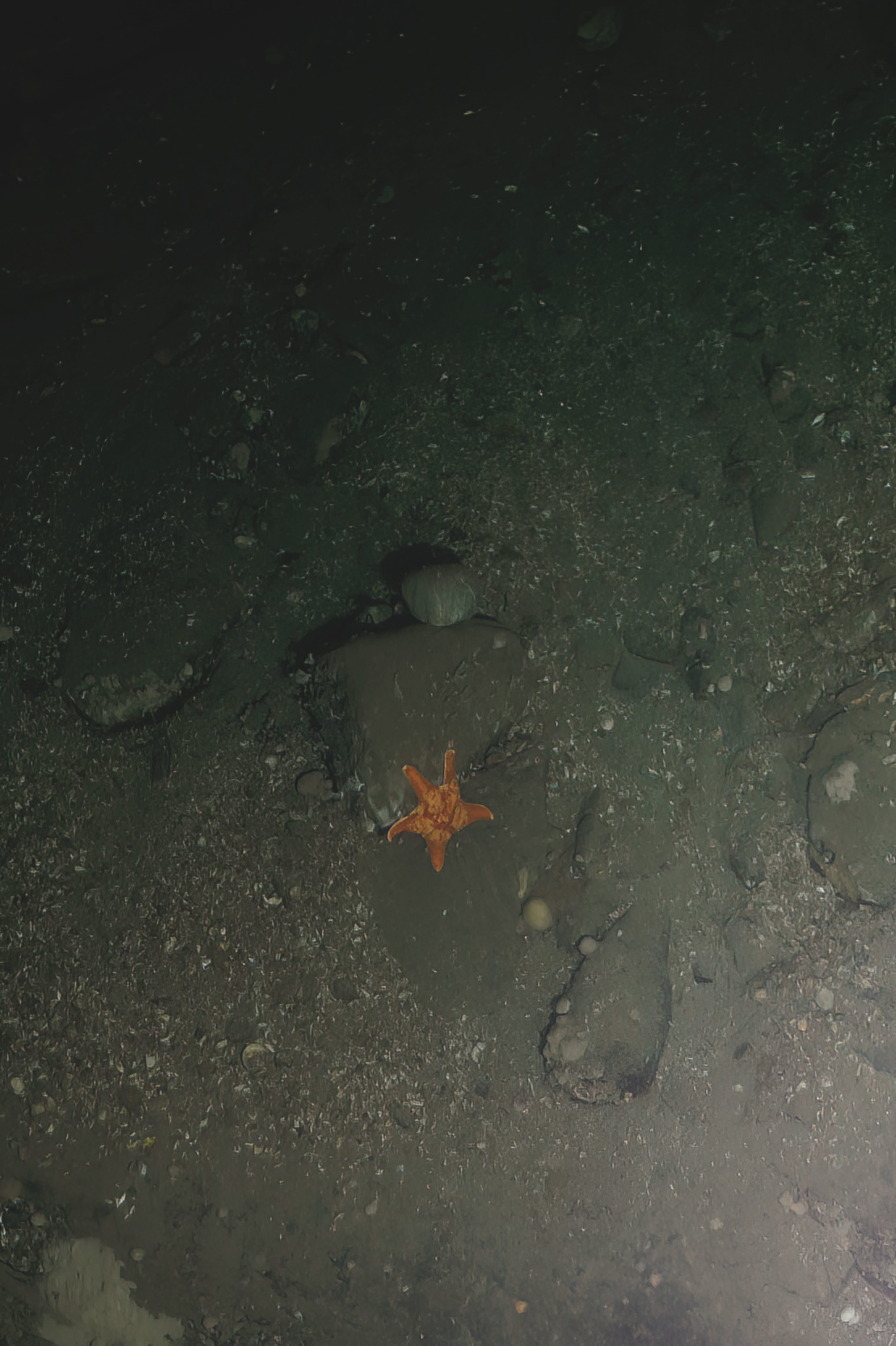
There are signs of life everywhere: shell fragments, encrusting sponges, tube worms, shrimps and anemones. The bloat of an orange starfish reveals it’s feeding.
“It goes over the top of whatever food there is, fills itself up with water, then extrudes its internal organs outside its body to consume what’s there,” Jason says. Dissolving food by smothering it with its guts might sound disgusting, but apparently it’s an efficient way to get nutrients.
Suddenly, something moves. A small cod swims into view, then another. It feels like our noses are pressed against the rock wall, so I’m surprised when Jessica tells us that they’re 5m away. Underwater, the refraction of light makes it difficult to gauge size and distance.
“Everything you’re looking at is a lot bigger than it currently appears,” she says, adding that the little cod are probably around 30 per cent bigger than they look.
Mapping the seafloor
We settle on the seabed just shy of 150m – deeper than the London Eye is tall. I wonder whether any anyone else has ever set eyes on this patch of the ocean before.
Humans first saw deep-sea creatures in their own habitat when explorers William Beebe and Otis Barton journeyed to 923m in the early 1930s. Terrifyingly, their 1.5m metal diving bell, Bathysphere, was tethered to the surface by just a steel cable.
In 1960, oceanographers Jacques Piccard and Don Walsh became the first people to reach the ocean’s deepest point: the Challenger Deep, in the Mariana Trench. It’s 10.9km below the surface.
Now, technological developments such as submersibles and autonomous vehicles are helping scientists explore and sample the deep sea like never before.
Yet, less than a third of the seafloor (28.7 per cent) has been mapped to modern standards and researchers estimate that just 0.001 per cent of the ocean’s depths have been seen by humans. “One thousandth of one per cent has actually had anybody look at it,” says Keiron. “It’s an incredibly unexplored environment.”
While it might be unexplored, it’s not unimportant. The deep sea protects the planet from climate change and regulates weather systems by absorbing heat and locking away carbon.
The picturesque marine snow drifting down around our sub is, in fact, made up of dead matter and faeces, carrying carbon from the surface that could be sequestered for hundreds of years.
These vast depths also provide a home to millions of species, and support the food chain. The copepods twinkling like glitter around us feed several species of fish. Many of the fish larvae wriggling past the windows will also be meals for predators. Compounds in deep-sea bacteria and sponges have even inspired cancer treatments.
However, it’s thought that only around 10 per cent of marine species have been scientifically described. “There’s so much we don’t know,” says Veerle Huvenne, a seafloor-mapping expert at the National Oceanography Centre, with whom I spoke later.
As incredible as it is, I can’t help but wonder: should I be here? As explorer Jacques Cousteau often said (quoting Senegalese conservationist Baba Dioum), “people protect what they love, and love what they understand”.
Seeing these places makes us fall in love with them, says Keiron. “There’s nothing like taking your own eyes there… It gives you a different perspective.”
Tourist trips can also help research efforts. Guests can share photos and videos with scientists, particularly when they encounter rare animals such as Antarctica’s giant phantom jellyfish, and the sub is equipped with a CTD device.
“This collects conductivity, temperature and depth, as well as turbidity data every time the sub goes up and down,” Jason explains. Sending this information to scientific partners helps them with their work.
There are also environmental risks, such as pollution and carbon emissions. “No tourism can be organised without a footprint,” says Veerle.
Marine life can be disturbed by the sub’s lights, noise and water blown by the thrusters. If a vessel makes contact with slow-growing coral, for example, it could take years to recover.
Deep-sea tourism is still largely unregulated and, since so much of the habitat remains a mystery, there might be other unforeseen impacts. “Tinkering with a system when you don’t know what the outcome will be is always a risk,” says Veerle.
However, she agrees there are also positives to it. “There is definitely a benefit in allowing people to go there,” she continues.
“If you just close it all off, people don’t know about it and they’re probably not going to be strongly keen on protecting it.” With growing threats including global warming, destructive commercial fishing methods and deep-sea mining, protections are desperately needed.
“It’s easy to think about the deep sea as separated from what’s going on at the surface, but it’s not,” says Keiron. There’s even plastic pollution in the Marina Trench.
Around an hour after setting off, we pass through the shimmering halocline layer of water, sea angels flit around the windows and our jackets flush from black to purple and then red, signalling our return to the surface. As I climb back up to the boat, my main thought is “Can I go down again?”
Top image: Viking Octantis submarine. Credit: Viking


