
A new species of deep-sea worm has been named after the late Dolly Parton.
Bathyadmetella dollypartonae was named by scientists from London’s Natural History Museum and the University of Gothenburg in homage to the country musician.
“The first time I saw the Antarctic scale worm specimen, I thought, ‘That’s a bizarre-looking one.’ I couldn’t immediately place it in a genus, or even a subfamily,” explains Lenka Nealova, a taxonomy researcher at the Natural History Museum and lead author of the study that formally describes the worm.
“After a few days of digging through the literature, I realised this creature – with its massive body, long parapodia, huge eyes, and extra head appendages – belonged to the genus Bathyadmetella. Only one species was known in that genus, so I knew we had something truly special on our hands.”
“When Dolly’s passing was announced, there was only one thing to do. I reached out to my co-author, Helena, and told her, ‘We have to name this rare worm after Dolly – she was a one-off, too.’ She agreed and prioritised her DNA work to make it happen.”
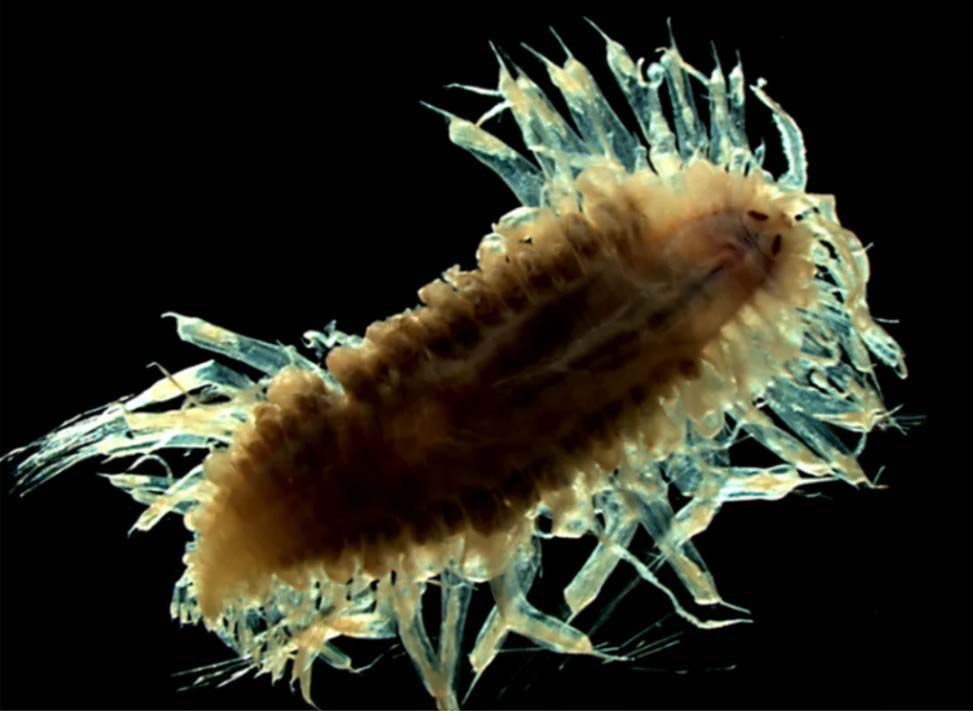
Bathyadmetella dollypartonae was collected from the depths of the Amundsen Sea, off the western coast of Antarctica, during a British Antarctic Survey cruise in 2008.
Bathyadmetella dollypartonae is a type of scale worm, which are characterised by a segmented body and overlapping, scale-like plates. It measures 14 mm in length and 4.5 mm in width (excluding its protrusions) and is only the second species to be described in the Bathyadmetella genus.
The other, Bathyadmetella commando, was described in 1967 and found off the mouth of the Columbia River, Oregon, USA.
The scientists also took some inspiration from the worm’s appearance when naming it. “While it may not have the flaming locks of auburn hair Dolly once sang about, its long appendages reminded us of Dolly’s flowing blonde locks,” adds Nealova.
However, it’s likely that the specimens now look noticeably different than from when they were first collected. By the time they were studied and photographed, their colours had largely faded.
“According to the notes from the original expedition, Bathyadmetella dollypartonae was purple when they were collected. Unfortunately, there are no photographs of the living worms,” says Helena Wiklund, from the Natural History Museum and the University of Gothenburg, and co-author of the paper.
“However, I’m due to take part in another expedition to Antarctica next year and hope to see the Dolly Parton worm alive for the first time. That would be cool.”
Data collected by the team suggests that Bathyadmetella dollypartonae could be widely distributed within the Southern Ocean, as it was detected in the Amundsen Sea and East Scotia Ridge. The distance between these two locations is approximately 4,000 km, spanning the Bellingshausen Sea, the Drake Passage and the West/Central Scotia basins.
Read the full paper here.
Top image: a close up of Bathyadmetella dollypartonae. Credit: Lenka Nealova


