Sea turtles are famous for their nomadic lifestyles. Guided by the Earth’s magnetic field, ocean currents and the sun, these wizened wanderers can travel vast distances between feeding grounds and breeding beaches. Now scientists have documented a population that seems to buck the trend.
The ‘homebody’ turtles, described in Frontiers in Amphibian and Reptile Science, are a type of yellow-shelled green turtle that live in the Galápagos. Green turtles are one of the seven living species of sea turtle. Their shells aren’t green, but their fat stores can be, thanks to the seagrasses and algae they eat.
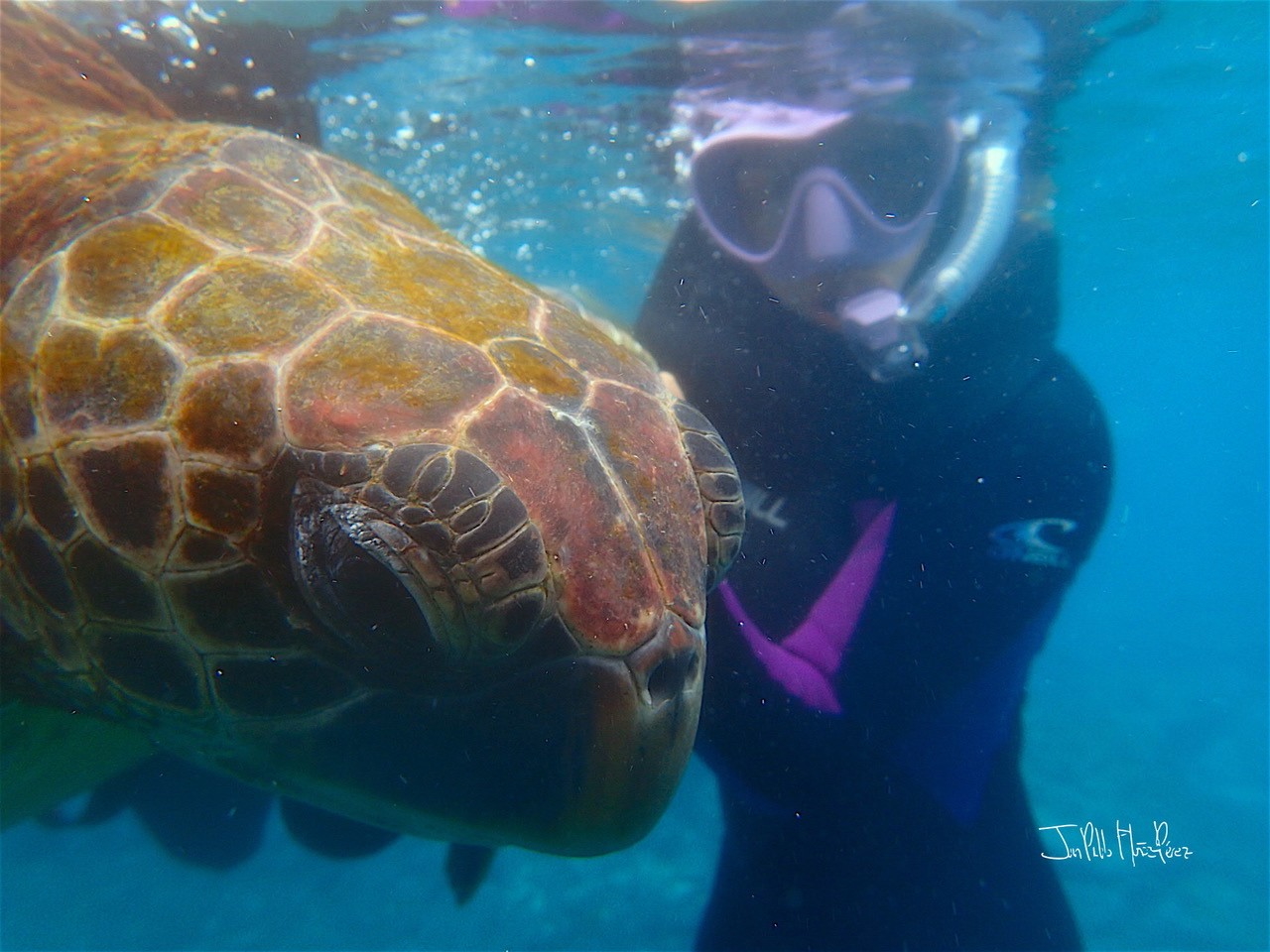
Two different colour morphs exist; a dark-shelled form in the central eastern Pacific, and a yellow-shelled version, found in the western Indo-Pacific. The Galápagos is unusual because both forms occur here.
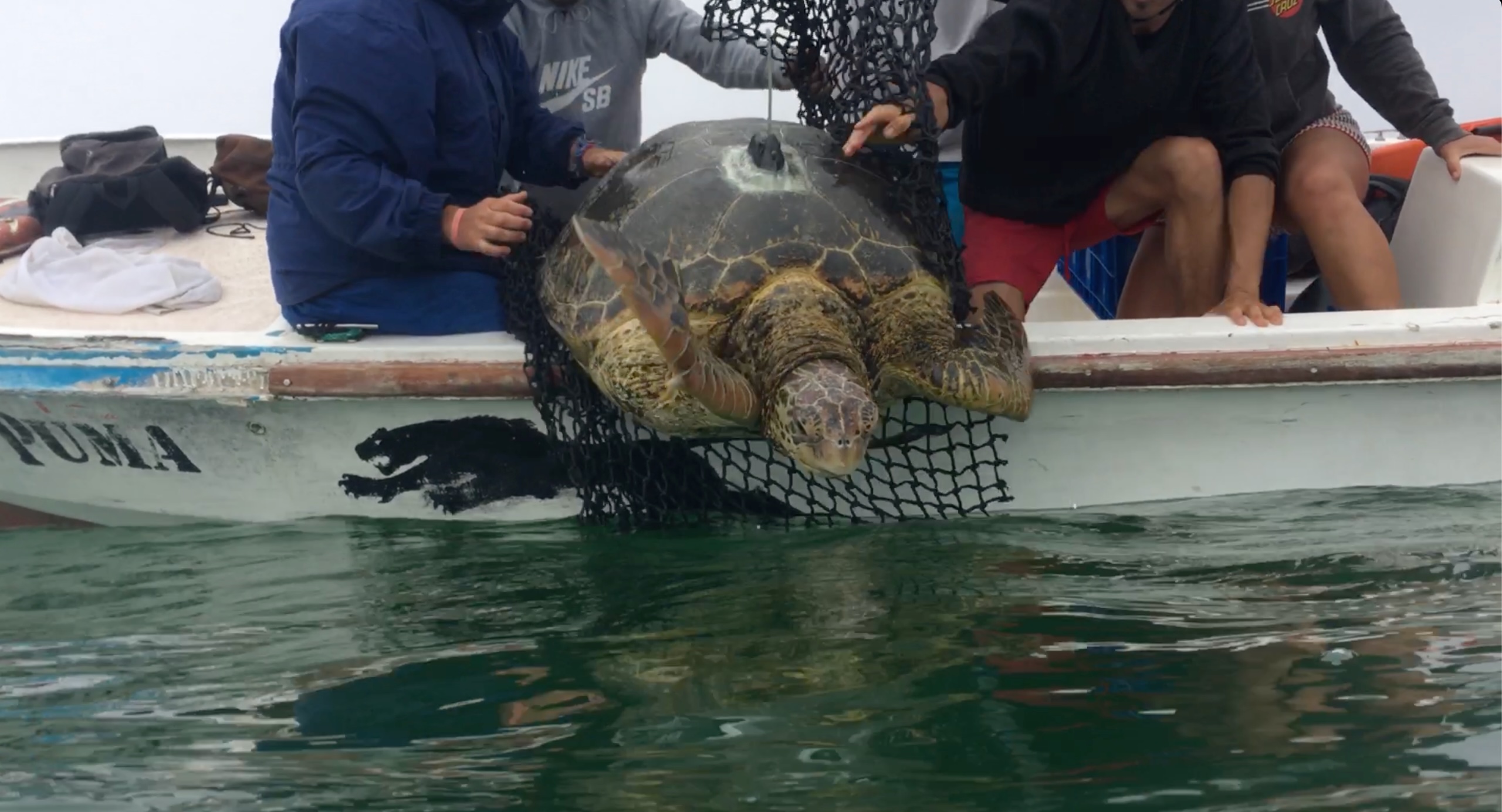
Scientists wanted to study the yellow morph’s habitat preferences and movements. So, in 2015, they caught seven adult males and two adult females in the shallow waters around four of the islands. The turtles were given nicknames and fitted with satellite tags, which tracked their movements.
Overall, the turtles preferred to stay in shallow coastal waters. “We expected them to migrate to distant beaches in the western Pacific to reproduce, yet interestingly, none of our satellite-tagged turtles even left the Galápagos Marine Reserve over the three years of our study,” says John Warren Rowe, from Alma College in the United States.
Five of the animals stayed closed to a single island, while Bernardo and Sara swam between Isabela and San Cristóbal. Leandro travelled between Isabela and Española, while Ainoa mooched from San Cristóbal to Santa Cruz and later to Isabela.
The average size of a single turtle’s home range was just 1,500 square kilometres. Compared to other more adventurous species of sea turtle, this makes the yellow-shelled green turtles of the Galápagos remarkably ‘stay at home.’
- Evolution experts say wild tomatoes in Galápagos are going 'back in time'
- When helicopters poisoned a tiny island in the Galápagos, a 'once-extinct' animal appeared
However, the study is just a snapshot in time. “Since female yellow-morph green sea turtles are not known to lay eggs on the beaches of the Galápagos, we believe that they will eventually leave the area to return to their natal beaches in the western Pacific,” says Jan Pablo Muñoz Pérez, from the Universidad San Francisco de Quito in Ecuador.
In contrast, while some female black-morph green turtles do migrate long distances, others are thought to be year-round residents of the Galápagos. Collectively, this underscores the importance of preserving the quality and connectivity of the islands’ coastal habitats.
Find out more about the study.
Top image: yellow-morph green turtle in the Galápagos Islands. Credit: Juan Pablo Muñoz-Pérez
More wildlife stories from around the world
- Incredibly rare giant turtle with a face like a frog found in India's tropics
- “This is what a turtle eruption looks like – wait till the end!"
- “That’s unbelievable.” Scientists strapped a camera to a turtle. What it filmed shocked them all
- Turtles in Saudi Arabia just led scientists to a gigantic carbon sink