The northern short-tailed shrew (Blarina brevicauda) is barely larger than a mouse at 10 to 14 cm (4 to 5.5 inches) in length, with tiny eyes, velvety grey fur and a pointed snout. It spends much of its life hidden beneath leaf litter, in burrows and among dense vegetation across eastern and central North America.
Despite being one of North America's most widespread small mammals, the northern short-tailed shrew (Blarina brevicauda) is rarely seen.
- Kidnapping isn’t just a human crime: 7 of nature’s most shocking, brutal – and sometimes ballsy – abductors
- Kidnapped, brainwashed, enslaved: the animal that steals the young and forces them to work
The largest member of its genus, it spends much of its life hidden beneath leaf litter and underground tunnels, relying on echolocation due to its poor eyesight, plus a keen sense of smell and sensitive whiskers to navigate and locate prey in the dark. The species is also known as the American short-tailed shrew, red-toothed shrew or simply the short-tailed shrew.
How does the northern short-tailed shrew kill its prey?
Yet beneath this cute-looking appearance lies a deadly predator – the northern short-tailed shrew is a venomous mammal and uses a powerful neurotoxin in its saliva to immobilise its prey.
A highly active and voracious hunter, this semi-fossorial insectivore must feed frequently to sustain its rapid metabolism. It is one of the few venomous mammals in the world, producing toxic saliva in specialised glands.
- This creature might be tiny but it sure is mighty as it has a backbone strong enough to withstand being stood on by a 70kg human
- What's the smallest mammal in the world? Meet the tiny mammals
The venom can immobilise or kill small mammals and invertebrates by causing respiratory failure, enabling the shrew to tackle prey surprisingly large for its size. The shrew's venom is produced by glands beneath the lower jaw and delivered through grooves in its teeth when it bites and is a highly effective tool against its prey. Although a bite can be painful and may cause swelling, the venom poses little threat to humans.
The shrew sometimes keeps its victims alive for days or even weeks, creating a living food store that can be consumed when hunting conditions are poor.
What does the northern short-tailed shrew eat?
The northern short-tailed shrew eats a varied diet consisting of invertebrates, such as earthworms, snails and insects, vertebrates such as frogs and mice and plants and berries. In some cases, venom allows the shrew to subdue animals that are nearly as large as itself.
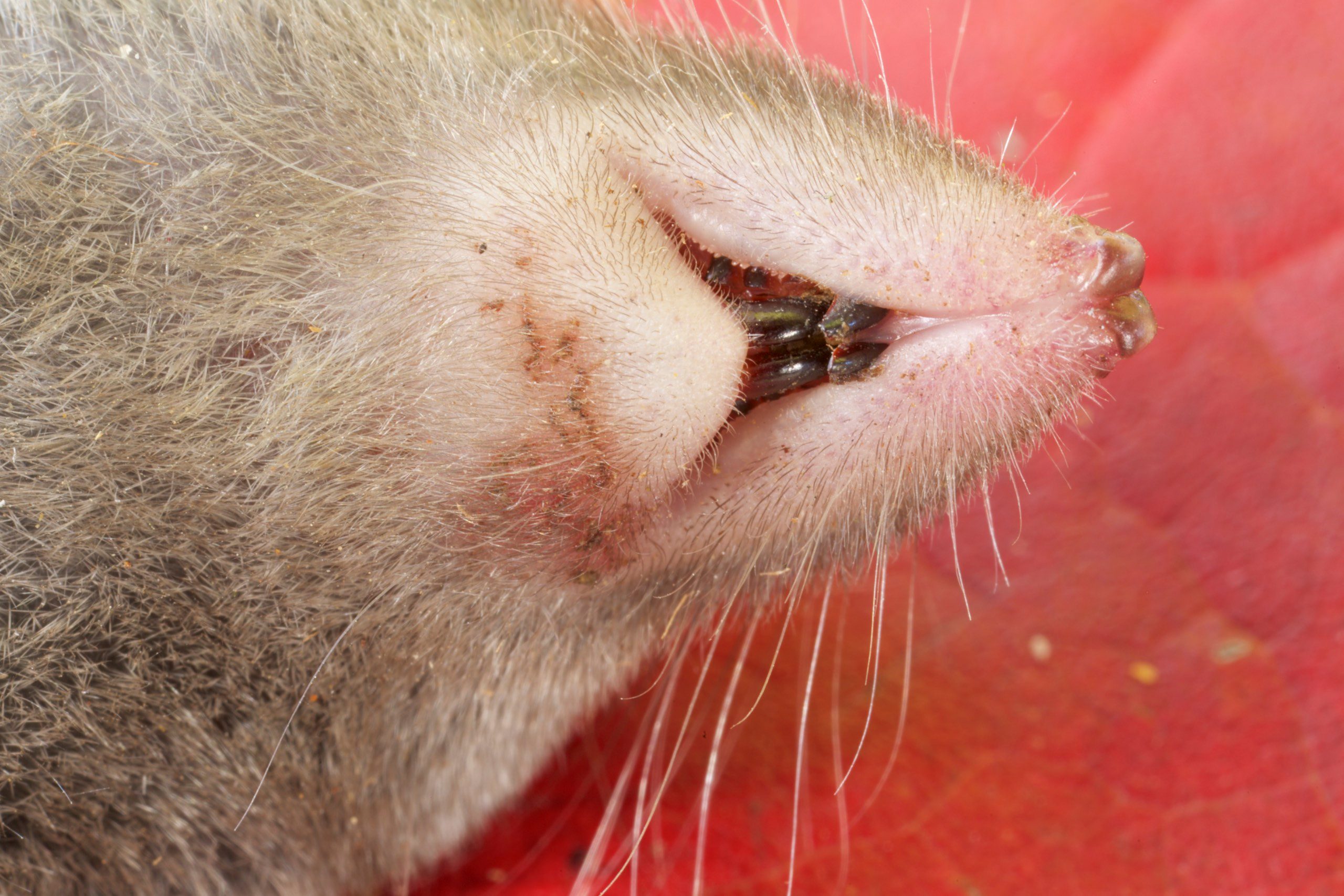
After biting its prey, the shrew's venom paralyses the animal without immediately killing it – the helpless creature can then be dragged back to an underground chamber and stored for later consumption. A 1982 study by Aldephi University in New York found evidence caches containing numerous paralysed and mutilated earthworms, all still alive but unable to escape.
Why do they do it?
This behaviour provides a survival advantage as northern short-tailed shrews have exceptionally high metabolic rates and must eat frequently to avoid starvation. Some individuals consume food equivalent to their own body weight every day and maintaining a supply of fresh prey reduces the risk of going hungry during periods when food is scarce.
- World's deadliest reptiles, from snakes to lizards
- Can reptiles breathe underwater?
- “Hunger drives the lizard to make a second attempt.” Watch brutal BBC footage of an opossum fighting off a huge lizard to save her babies
According to a 2020 study published in the National Library of Medicine, the shrew's venom contains a complex mixture of compounds that interfere with the nervous system, causing paralysis while leaving prey alive – this differs from many predators that kill their prey outright. By keeping their victims alive, the shrew effectively preserves them as dead animals quickly decay, but a paralysed earthworm can remain fresh for an extended period, ensuring the shrew always has access to nutritious food.
More deadly wildlife stories
- 10 deadliest insects: Discover the world's most dangerous insects to humans
- 10 deadliest fish: you won't want to meet these fearsome species underwater
- 10 deadliest animals to humans - discover the world's most lethal creatures
- 10 world's deadliest places for wildlife: You may want to take extra care if these places are on your visit list...
- 10 deadliest snakes in the world: Meet the world's most venomous snakes and their lethal bite