
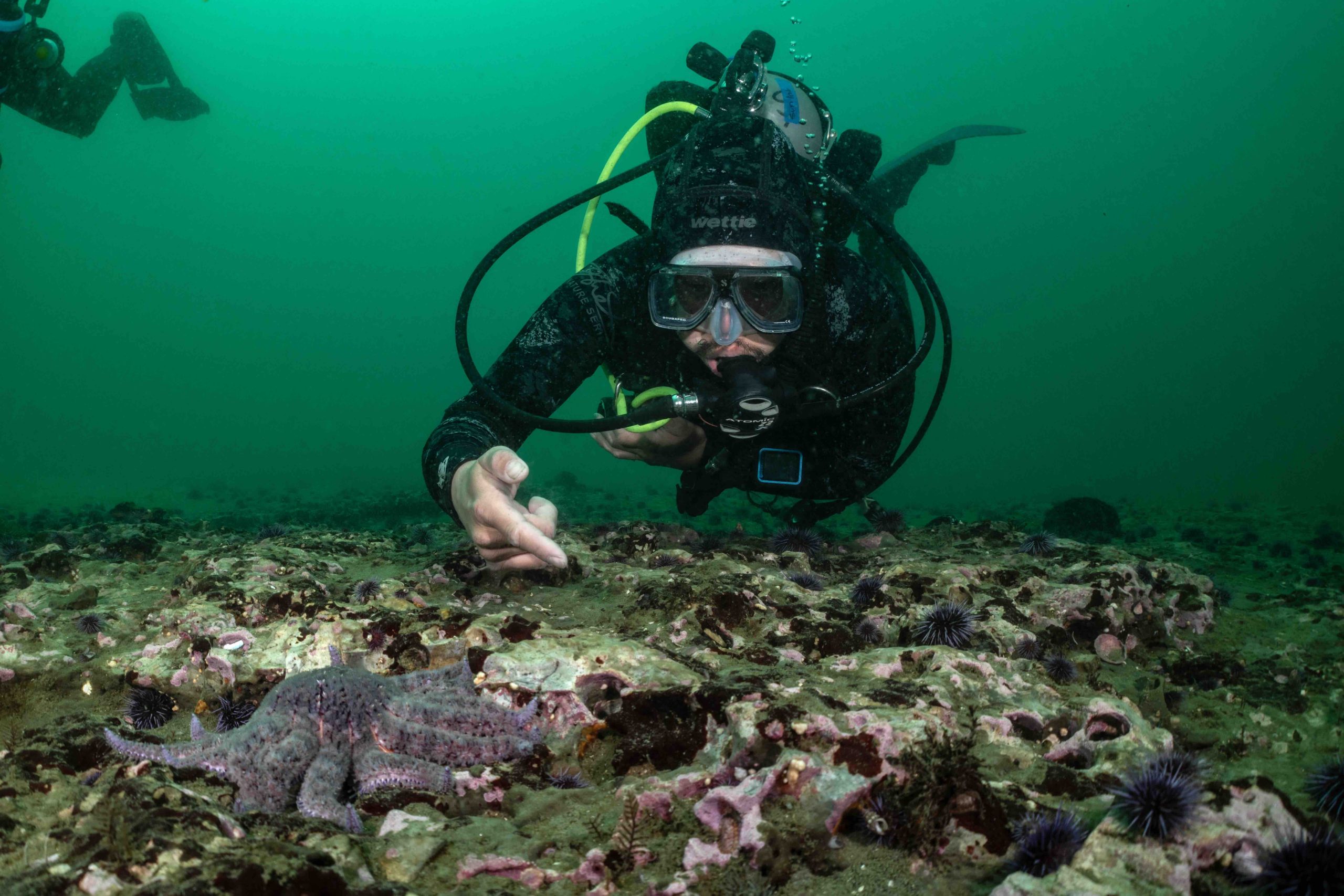
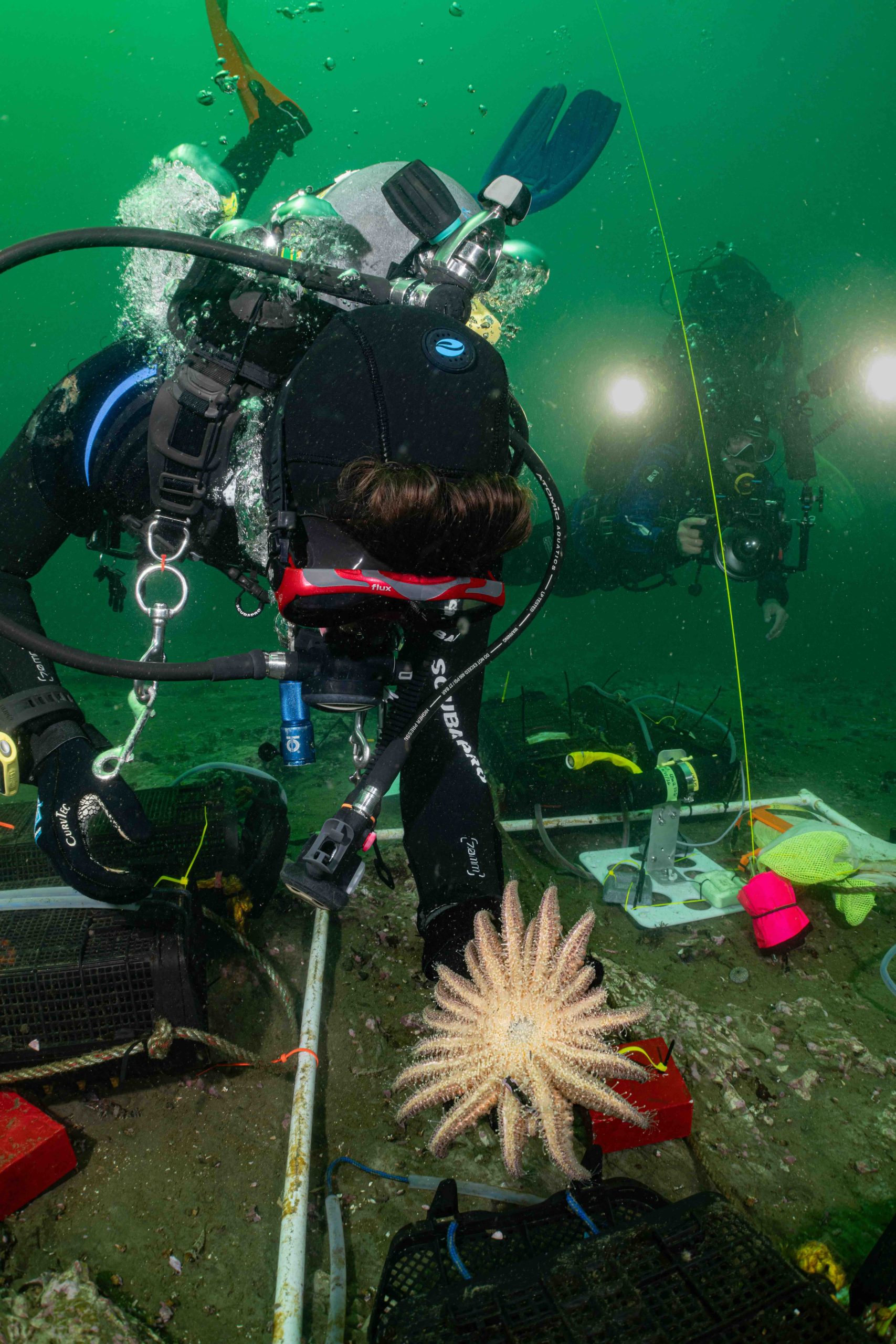
This summer, a critically endangered predator – the sunflower star (Pycnopodia helianthoides) – was temporarily released onto a reef in Monterey Bay, California during an out-planting trial led by Sunflower Star Laboratory (SSL).
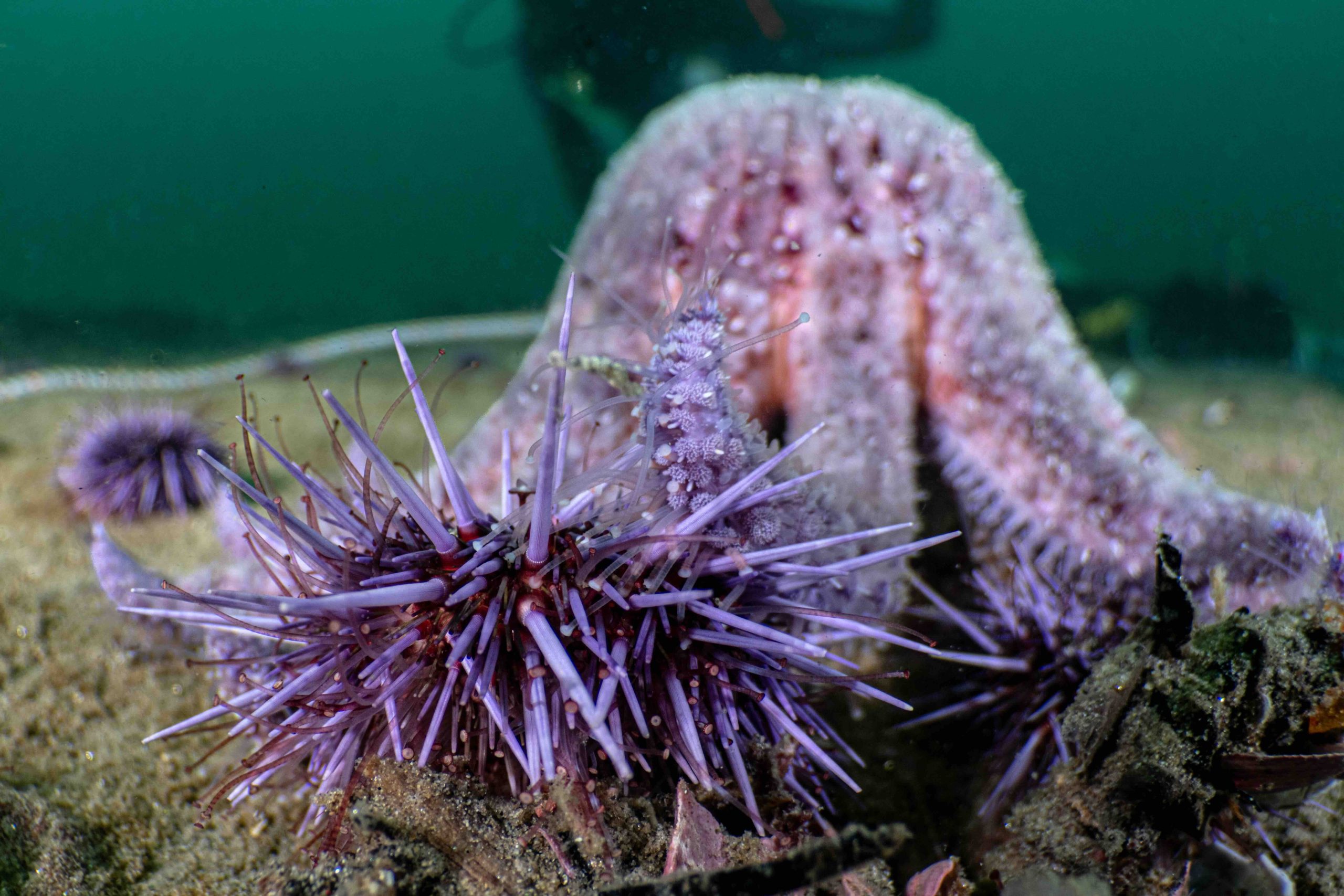
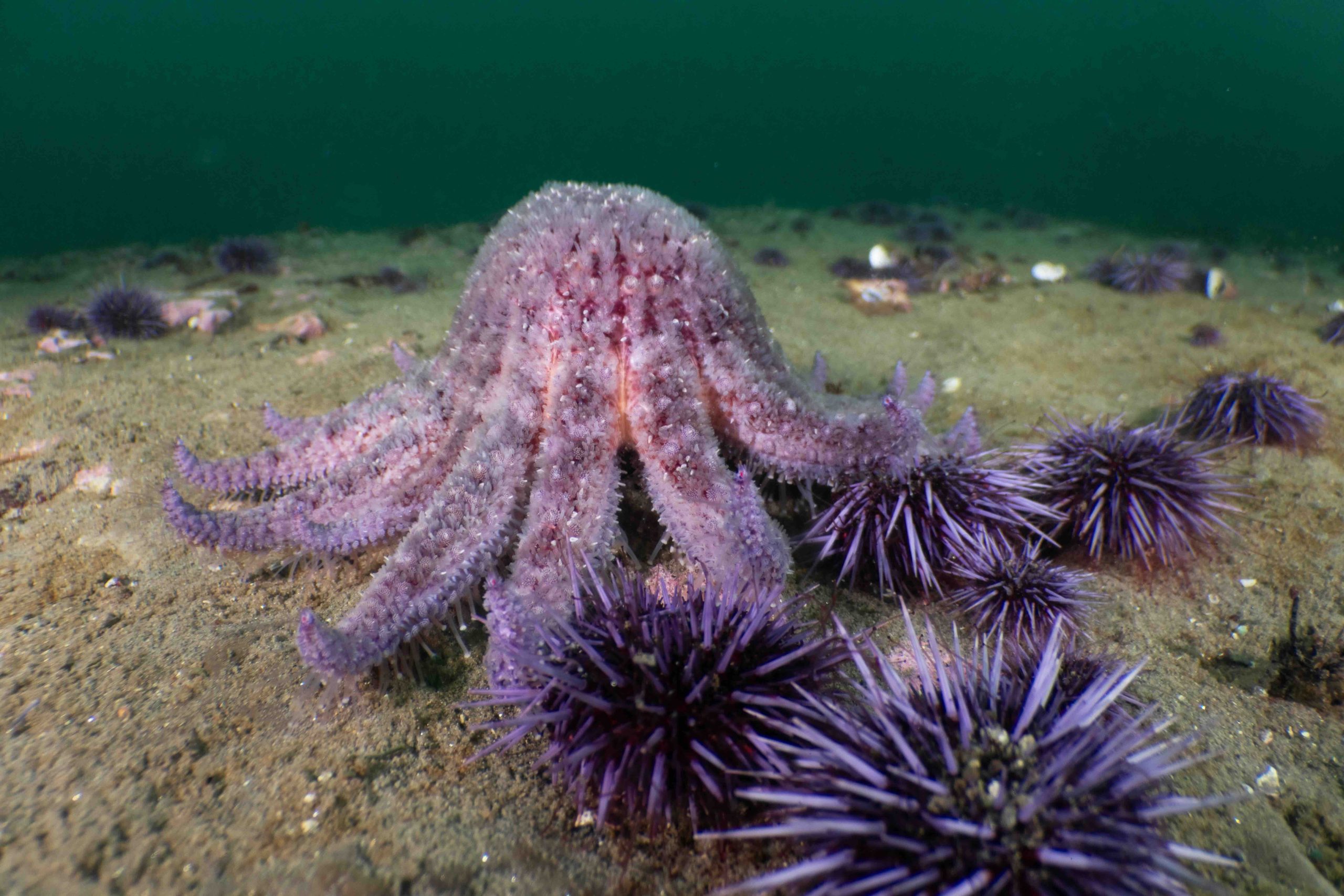
Sunflower stars are keystone predators of kelp forest ecosystems, where they prey on kelp-grazing purple urchins (Strongylocentrotus purpuratus). An outbreak of sea star wasting disease in 2013-14, however, led to the collapse of sunflower star populations along the west coast of North America. In northern California, this was associated with a 95% decline in kelp forests.
Over a decade later, urchin barrens – areas of seabed dominated by high densities of starving urchins – remain widespread where kelp forests once flourished.
- Sea otters are suddenly flourishing along the Monterey Peninsula – for a surprising reason
- Take a 36-second dive through California's enchanting kelp canopies
Since 2021, SSL has been developing ways to raise sunflower stars to support their recovery in the coastal waters of California.
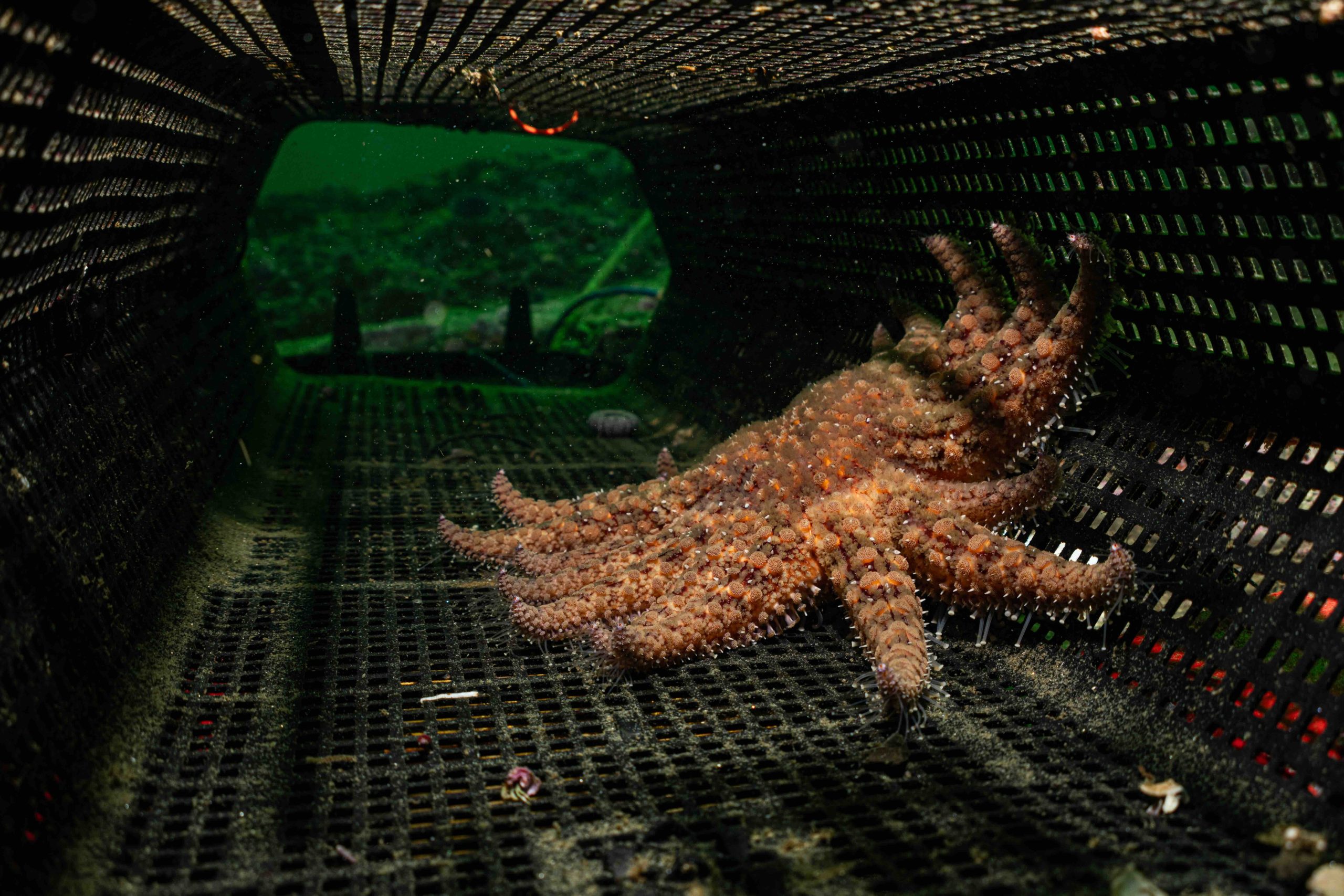
During the trial, 16 laboratory-reared sunflower stars were placed in enclosed pods in Monterey Bay for a month. Eight were given an unlimited supply of starved urchins from urchin barrens, while the other eight were fed healthy urchins.
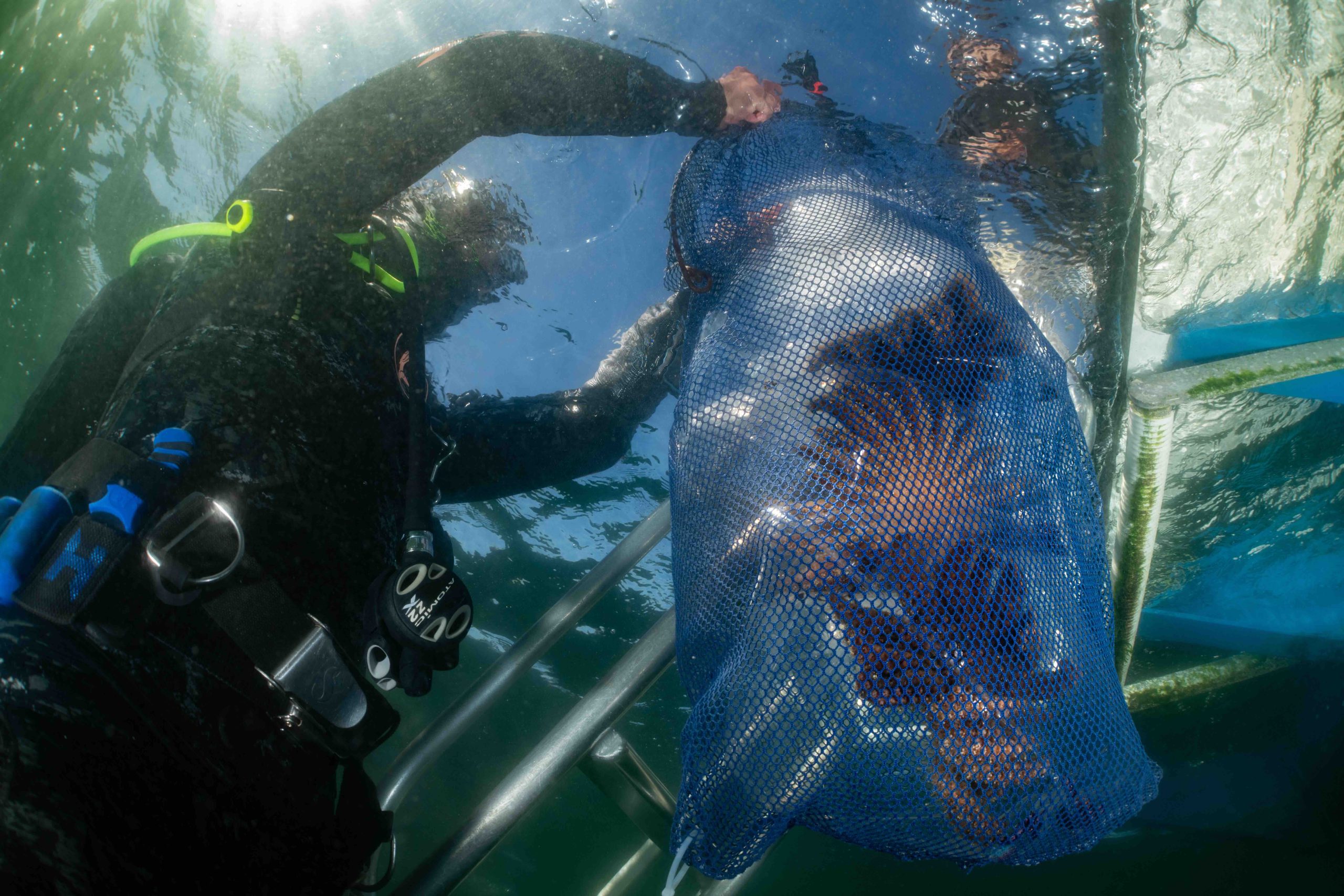
Sunflower stars fed on starved urchins consumed significantly more prey than those fed on healthy urchins, gaining, on average, 59% of their body mass over 30 days. The results provide promising evidence that sunflower stars could help restore kelp forests both by eating urchins and prompting others to flee.
“If you want to transform a barren back into a kelp forest, it's good to know that sunflower stars are going to be able to consume barren urchins and still grow and be able to thrive,” says Reuven Bank, executive director of SSL.
Researchers also studied how other marine species responded to the sunflower stars. Within three feet of the pods, 99% of adult urchins crawled away, with the ‘landscape of fear’ created by the sunflower stars extending several metres and persisting for weeks after the sunflower stars were removed.
“It was really exciting to see,” says Ashley Kidd, SSL’s conservation programme lead. “These urchins have never experienced a sunflower star in their lives, and then they are immediately moving away.”
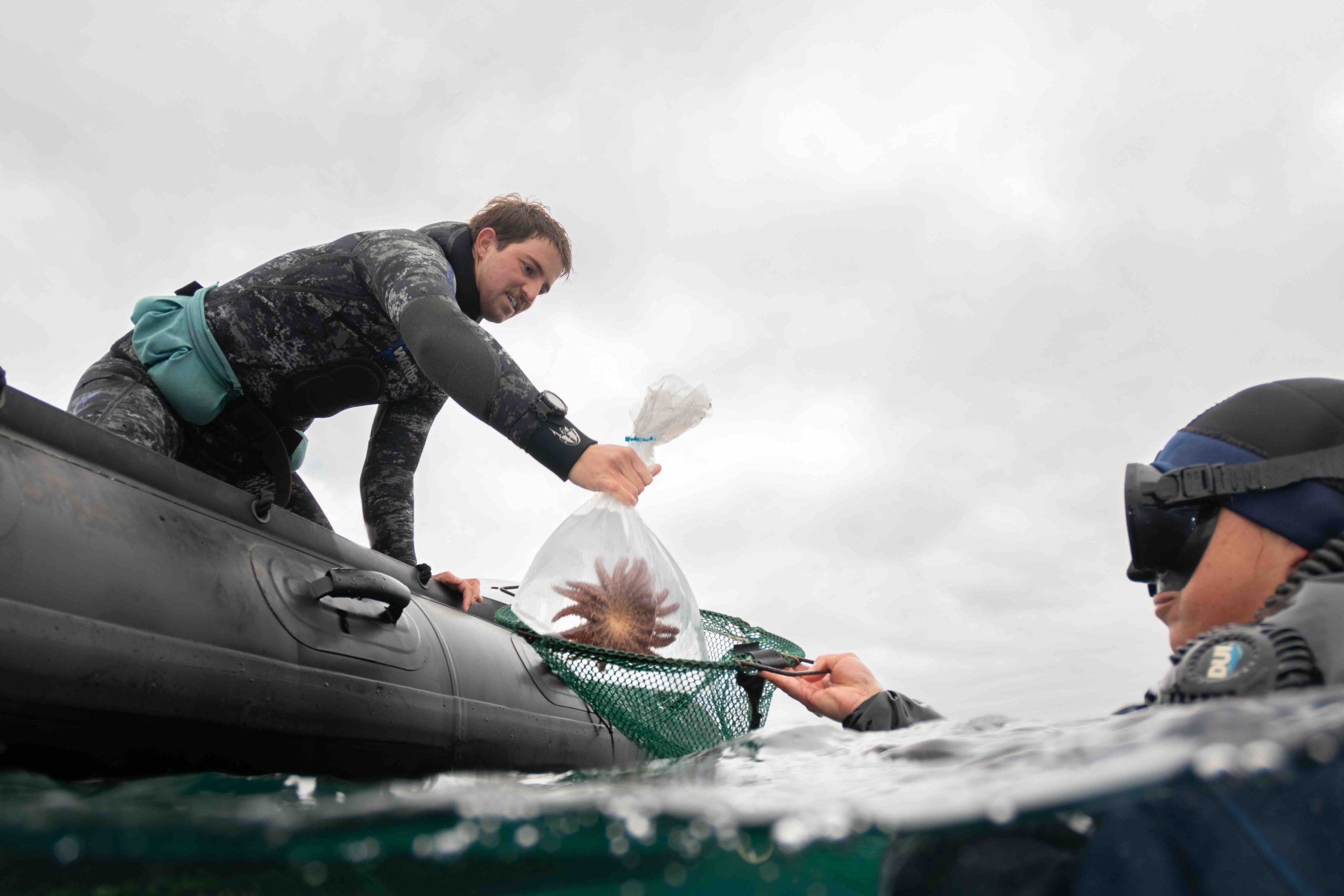
Next, researchers conducted 18 temporary releases of sunflower stars to test behavioural survey protocols and monitoring methods. These marked the first temporary releases of lab-reared sunflower stars into California’s coastal waters.
The trial was conducted in partnership with Reef Check Foundation, Monterey Bay Aquarium, Moss Landing Marine Laboratories, the California Department of Fish and Wildlife, California State University Monterey Bay (CSUMB), Phil Sammet’s Underwater Company and Hopkins Marine Station.
“This groundbreaking research from Sunflower Star Laboratory and our collaborators illustrates the strength of cooperative conservation in action and lays the foundation for the future transition to permanent outplanting in our state,” says Bank.
In pictures: Monterey Bay's sunflower star trial
More wildlife stories from around the world
- “Check out this SUPER POD!" See awesome moment 1,500 dolphins surround boat in California
- Heaviest jellyfish on Earth filmed on night dive in Pacific Ocean
- Colossal squid filmed alive in deep ocean for the first time ever
Top image: Sunflower Star Laboratory manager Andrew Kim places a sunflower star into a pod as part of 2026 outplanting fieldwork. Credit: Sage Ono


