
Palaeontologists have identified the first evidence of the iconic dinosaur Diplodocus outside North America. Researchers from the Fundación Conjunto Paleontológico de Teruel-Dinópolis outline the findings in the Journal of Vertebrate Palaeontology.
- 10 deadliest dinosaurs on the planet: meet the ferocious prehistoric beasts that ruled Earth
- Just how ferocious were dinosaur teeth? "Some had a combination; pointed for piercing and cutting; rounded for pounding and crushing…"
Until now, all confirmed Diplodocus specimens had come exclusively from the Morrison Formation in the western United States.
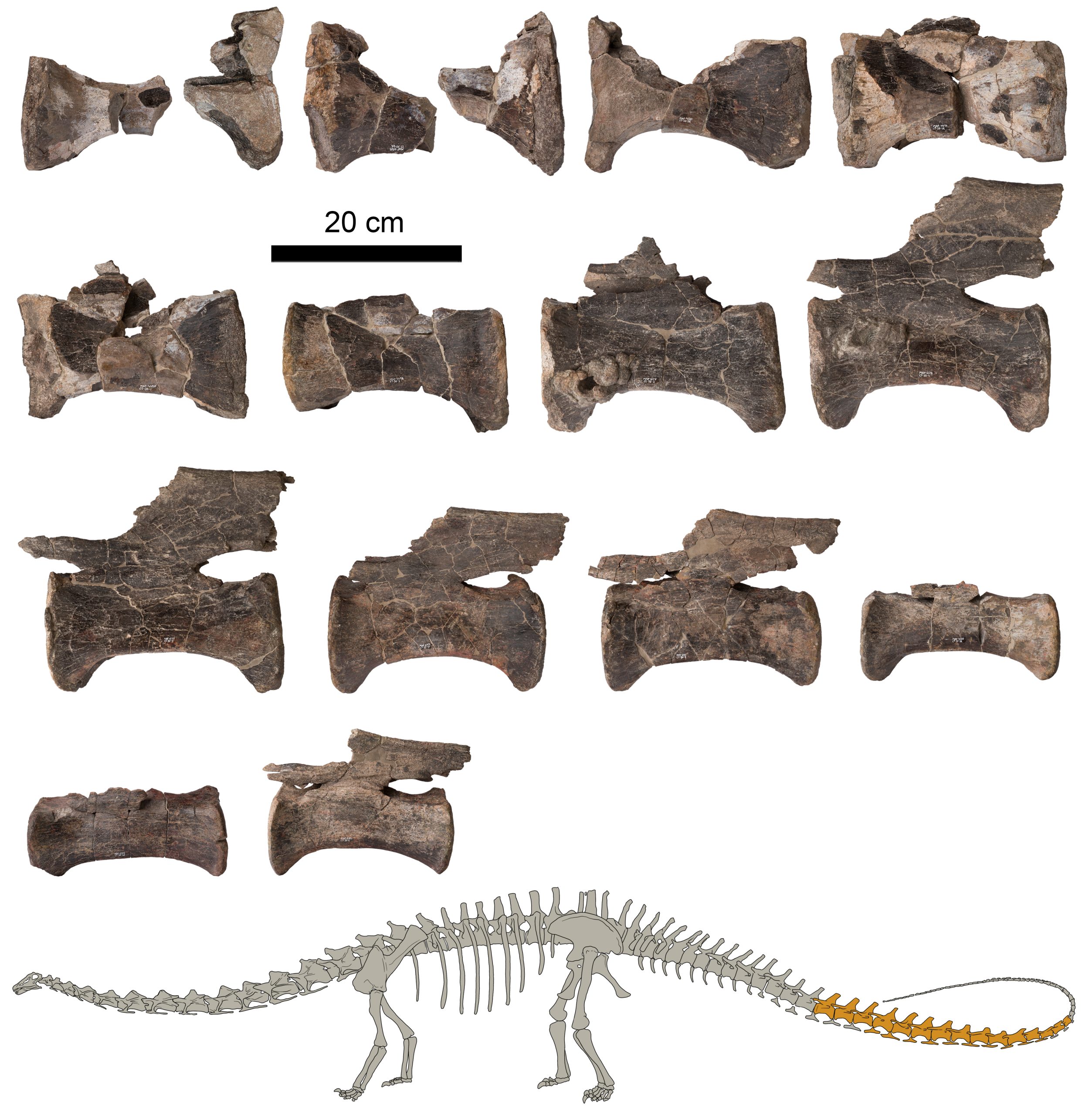
This fossil specimen, unearthed at the La Tejeria site in El Castellar, Teruel, Spain, represents one of the most complete diplodocid (a group of sauropod dinosaurs that includes the Diplodocus) skeletons ever discovered in Europe. The researchers excavated 14 exceptionally preserved tail vertebrae and several chevron bones.
“We are delighted with this discovery. It was an exciting and continuous process of seeing the pieces of the puzzle gradually fall into place,” said Sergio Sánchez Fenollosa, PhD student in biodiversity and evolutionary biology at Fundación Dinópolis and lead author of the paper.
“From the early stages of the osteological study, we noticed strong similarities with several diplodocine sauropods. As we looked more closely at the anatomy, we began to identify a combination of features characteristic of Diplodocus species.
“Then, as we carried out different evolutionary analyses, they kept pointing in the same direction. With each new result, the picture became clearer: we were looking at a Diplodocus.”
- "It's believed that something went terribly wrong and the mother died while giving birth..." 7 groundbreaking fossil discoveries that changed the world
- Fossil poo, fossil vomit, fossil penis... World's 10 weirdest fossils that will have you scratching your head
Migrating dinosaurs
Diplodocus is one of the most iconic dinosaurs in the world, instantly recognisable thanks to its enormous length, long, whip-like tail, and relatively small head. It was first discovered in the US in 1878 and is one of the more common dinosaur fossils found in the Morrisson Formation.
The newly unearthed Spanish Diplodocus dates to approximately 150 million years ago – the end of the Jurassic Period. Scientists say it was about 25 metres long, comparable in size to its North American relatives.
The presence of this Diplodocus in Europe supports the idea that dinosaurs could migrate between North America and Europe during the Late Jurassic. Geotectonic evidence suggests a regressive trend in the proto-North Atlantic (an ocean that was just starting to form between North America and Europe), meaning when sea levels were falling, land that used to be underwater would pop up above the surface. So, dinosaurs would have most likely been able to cross these temporary land bridges.
“Essentially, this discovery allows us to better understand Iberian Mesozoic ecosystems and the diversity of sauropod dinosaurs that inhabited the European Jurassic,” said Sánchez Fenollosa.
The fossils are currently on display for future research and public education in the dinosaur hall of the Museo Aragonés de Paleontología at Dinópolis in Teruel, eastern Spain.
Read the full findings here.
Top image: An illustration of the Diplodocus. Credit: Carmelo López


