
An exquisitely preserved fossil found in western Liaoning, China, has just been described as a brand-new species of microraptorine dinosaur.
The tiny dinosaur, named Norellraptor barsboldi, looks like a bird, but with four wings and a long, feathered tail, it’s clear it belongs to an entirely different group of trailblazing dinosaurs - one that had taken a unique approach to flight.
The microraptorines are among the smallest dinosaurs known to science, not to mention some of the most bizarre.
Known for possessing four wings instead of the standard two seen in avialan dinosaurs (i.e. those that evolved into birds), microraptorines have become the poster children for doing things differently, proving that different groups of dinosaurs took to the skies in different ways.
The discovery of Norellraptor barsboldi, named in honour of the American paleontologist Mark Allen Norell and Mongolian palaeontologist Rinchen Barsbold, who both sadly passed away in 2025, has added another new species to a diverse group that may contain more than a dozen genera.
Microraptorines are predominantly known from China, where they’re found in rocks dating to the Early Cretaceous (125-113 million years ago).
In a study recently published in Nature Communications, Andrea Cau, Qiang Ji, Xuri Wang, and colleagues meticulously described the new species, which was found in rocks belonging to the Jiufotang Formation in western Liaoning, China.
- These petrifying prehistoric beasts would have terrified early man
- How many species of dinosaurs were there?
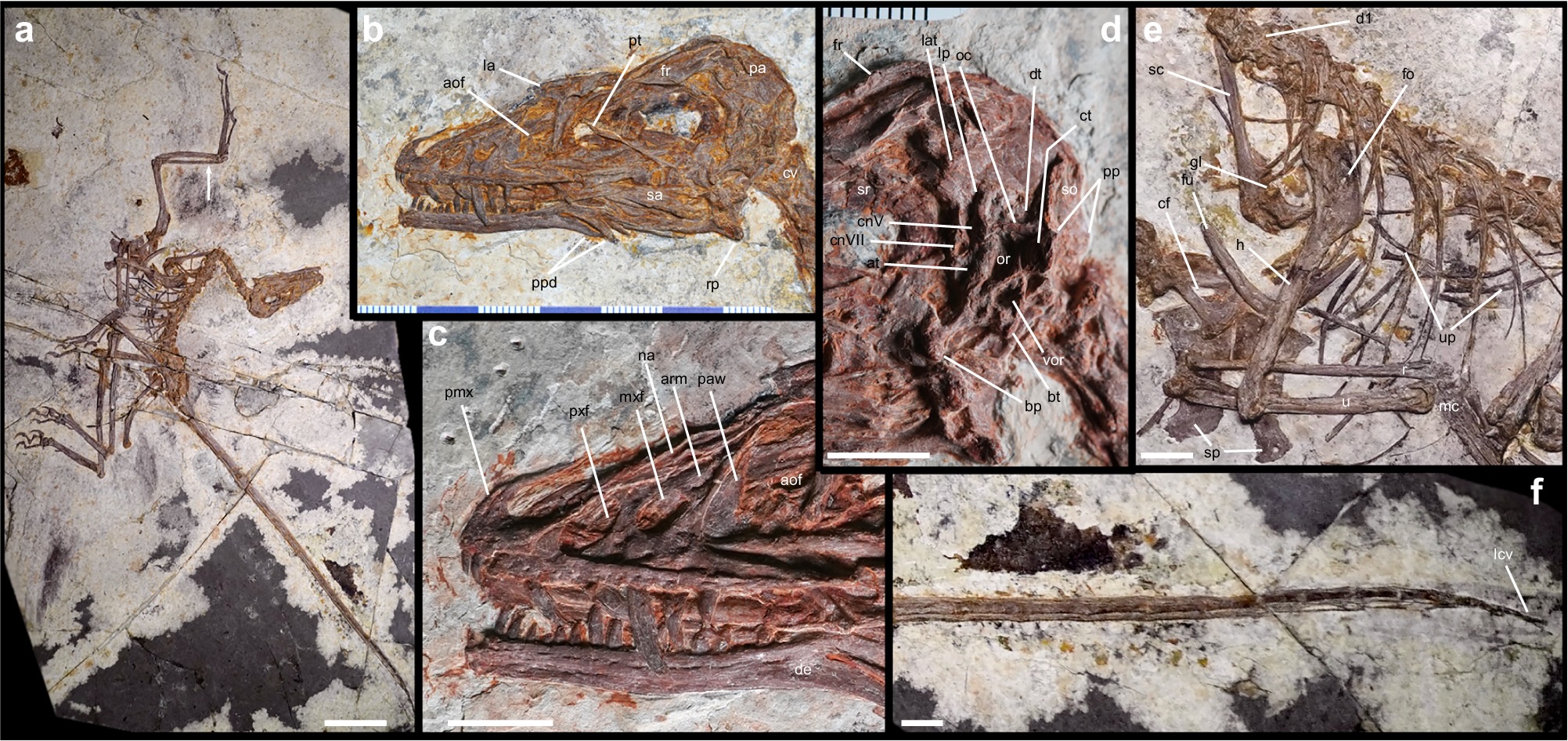
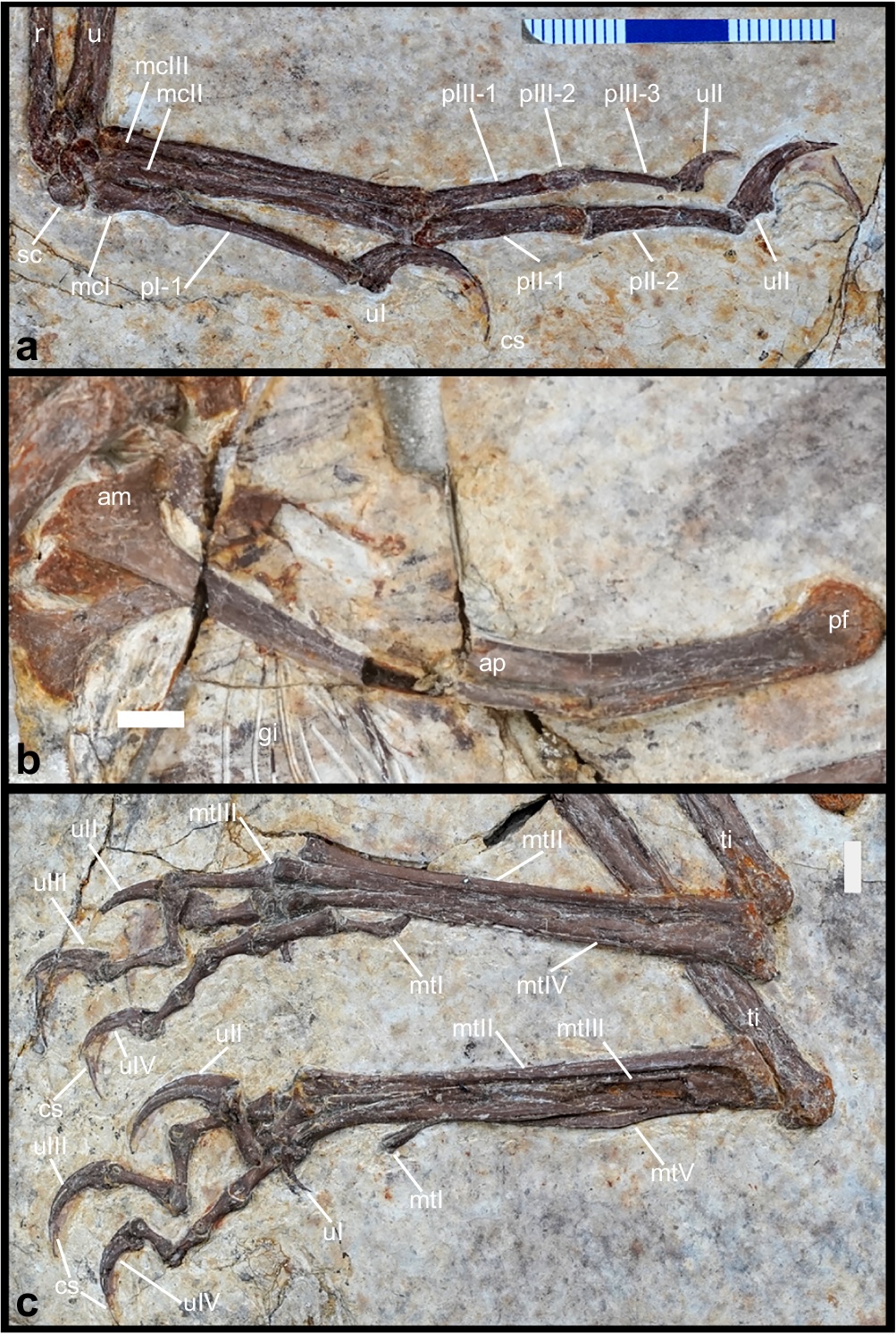
The 57cm-long skeleton of N.barsboldi is complete and even evidence of its plumage has been preserved, with traces of feathers projecting from both its forelimbs and hindlimbs and the tip of its tail.
Thanks to the specimen’s completeness, the researchers were also able to estimate how old it was when it died. After examining the microstructure of the left radius (one of two long bones in N.barsboldi’s forearm), they were able to determine it was at least three years old and likely a teenager, based on comparisons with other juvenile and adult microraptorines.
Prior to the discovery of N.barsboldi, fossils of other microraptorines had already revealed they had long feathers on both their forelimbs and hindlimbs. While it’s debated how well they could fly, and whether they were capable of powered flight at all, the presence of feathered wings suggest they were at least experimenting with flight.
It has been argued whether these flight-adapted features were inherited from a shared ancestor at the base of the paravian lineage (i.e. the group that includes both microraptorines and birds), or whether they evolved independently. The discovery of N.barsboldi has added further weight to the latter theory.
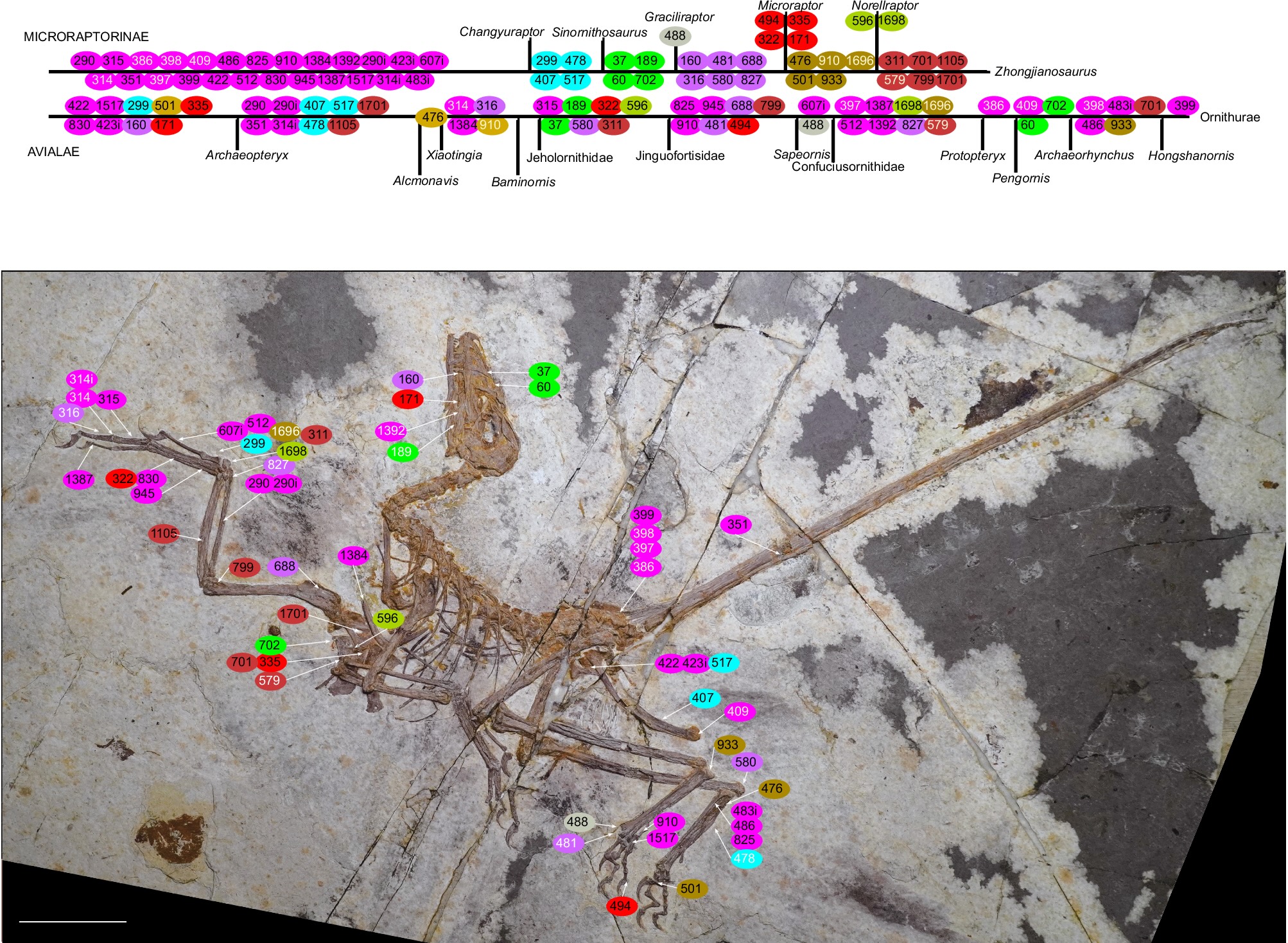
By comparing N.barsboldi with other dinosaurs from across the paravian evolutionary tree, the researchers found that approximately 30% of anatomical changes identified across microraptorine evolution also evolved in the bird lineage. Some of these shared features include an increase in the number of ribs attached to the sternum, the presence of thumb feathers (known as alular feathers), and more robust forelimbs.
However, the order in which these shared features appeared differed between the two groups. This challenges the idea that microraptorines and birds inherited a common flight apparatus or a shared developmental process from a common ancestor. Instead, the authors conclude that different selective pressures likely shaped the flight-related features of each lineage independently.
In order to test whether the same thing is true for other groups of bird-like dinosaurs - that they evolved flight-related features independently - the authors stress that they need further fossils and bone-growth evidence.
Liaoning Province in northeastern China may offer them the best opportunity to answer these kinds of questions. This area is home to the world-famous Yixian Formation, which underlies the Jiufotang Formation and also preserves extraordinary fossils, including soft tissues, feathers, and complete, 3D skeletons, like that of N.barsboldi.
Capturing a unique snapshot of a dynamic, freshwater lake and surrounding forest, the Yixian Formation has been at the forefront of modern dinosaur discoveries and promises to spill more secrets in the decades to come as excavations continue.
Read more about the latest study here.
More stories from around the world
- A scientist has worked out if Jurassic Park really could exist
- Dinosaur hunters make “chilling” discovery deep in Canadian badlands
- Imagine if dinosaurs hadn't gone extinct. Here's what scientists think may have happened next
- T.rex vs triceratops – who would win in a fight between these two prehistoric giants?
Top image: Reconstruction image of Norellraptor barsboldi. Credit: Zhao Chuang


