
The Champagne Vent is helping scientists to understand how human activities that produce carbon dioxide could impact marine life
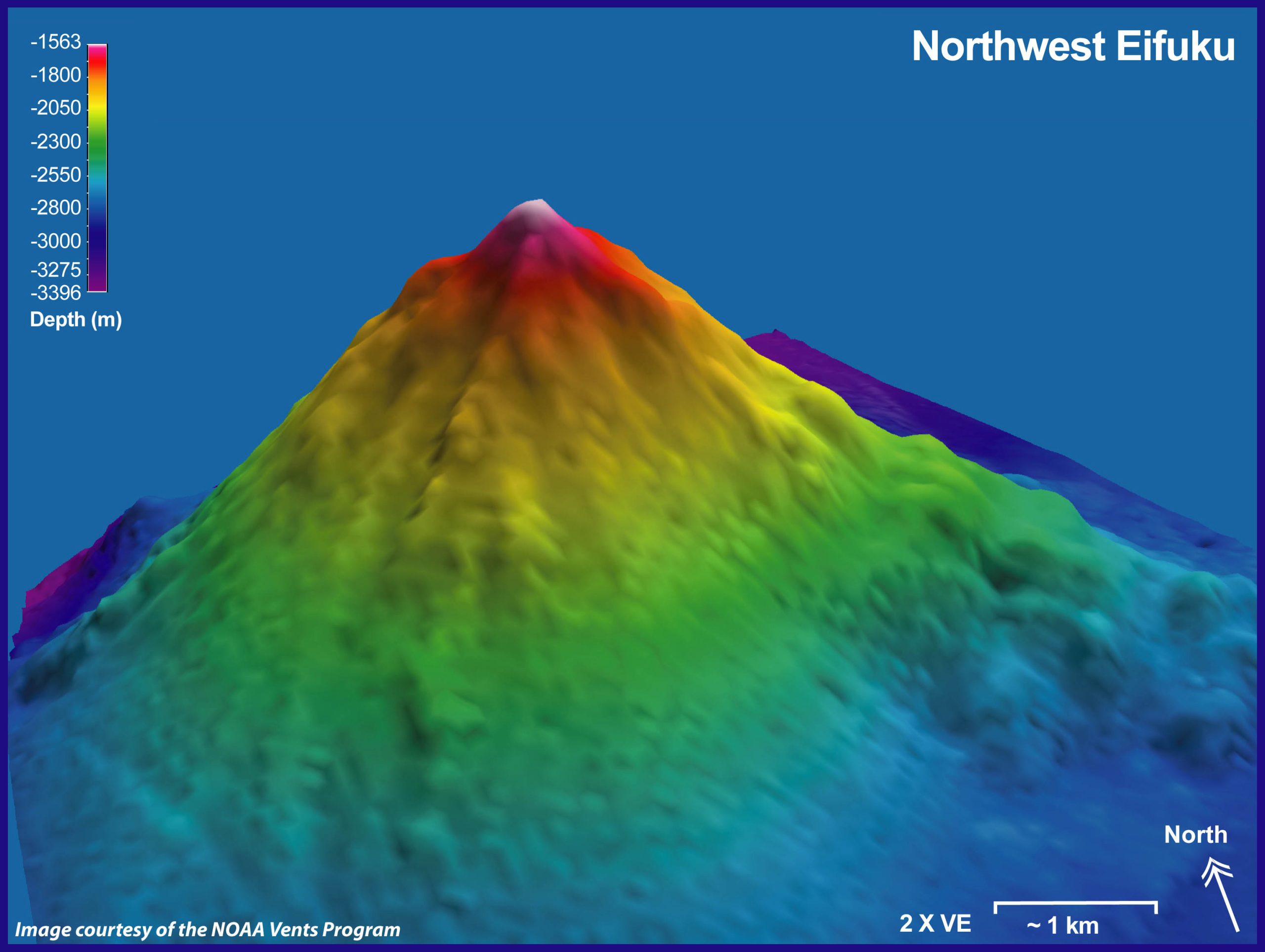
There’s an underwater volcano where liquid carbon dioxide (CO2) spurts out from the seafloor like fizzing champagne. Known as the Champagne Vent, it’s found around one mile below the surface on an underwater volcano called Northwest Eifuku in the Pacific Ocean.
In 2004, deep-sea scientists sent a remotely operated vehicle (ROV) to explore the underwater volcanoes in the Mariana Arc group in the Pacific Ring of Fire (active volcanoes surrounding the Pacific Ocean basin).
- "Sand pours off and disappears below like an underwater waterfall. This eerie phenomenon looks like a monstrous plume of smoke being dragged down into the darkness"
- "As it touches the seafloor, it kills whatever living thing it contacts by encasing it in a tomb of ice…" Discover the finger of death
The researchers planned to spend three dives exploring Northwest Eifuku and what they saw on the first blew them away. “Bubbles are coming up all over the place,” says one researcher in the video capturing the moment of the discovery.
Around 1,604 metres (one mile) deep, the scientist found a hydrothermal vent where streams of CO2 bubbles fizzed up towards the surface, collecting on their equipment like firefighting foam.
“In addition to the vent fluid discharge at Champagne vent, droplets coated with a milky skin were rising slowly from the seafloor around the chimneys,” write the authors of a 2006 Geochemistry, Geophysics, Geosystems paper documenting the discovery.
They noticed something that made them suspect these bubbles may have been made of carbon dioxide. “Sometimes you’ll see two of [the bubbles] going up together and they don’t join,” says another scientist in the video. “That’s very typical of CO2.”
The peculiar bubbles bunched together but didn’t merge. “The droplets were sticky and adhered to the ROV like clumps of grapes, although they did not tend to coalesce into larger droplets,” they add in the study. Gas bubbles would have combined into one larger bubble. These were liquid.
It turns out the team had come across something incredibly rare. At the time, there was only one other hydrothermal vent known to gush liquid carbon dioxide: the Okinawa Trough. “Although CO2 is generally the most abundant dissolved gas found in submarine hydrothermal fluids, it is rarely found in the form of CO2 liquid,” write the study authors.
Today, there are just a handful of places in the world where this is known. In 2021, scientists recorded liquid CO2 bubbles at the Horseshoe edifice (Fer à Cheval) off the coast of Mayotte Island in the Indian Ocean. In 2025, researchers also documented this strange phenomenon at Toto Caldera in the Mariana Arc.
Tests later confirmed these bubbles aren’t made up of gas. They are mostly liquid carbon dioxide combined with a small amount of hydrogen sulphide.
The CO2 is under such high pressure that it’s squished into a liquid and held together by a skin of carbon dioxide hydrate that forms when the liquid meets the surrounding water. The bubbles fly upwards because they’re less dense than seawater at this depth (they become denser below around 2,600 metres).
They didn’t see any animals close to the effervescent vent but there were thick mats of microbes and bacteria. These organisms get energy from the chemical reactions in the water, rather than from sunlight.
They also provide food for other animals. “An extensive biological community was found within the surrounding few hundred meters, including mussels, shrimps, crabs and limpets,” they say in the study.
Strangely, although they found lots of mussels around the vents, they didn’t notice many shells from dead animals.
The high carbon content of the water could have something to do with this. “We suspect that the high levels of CO2 being released from the volcano increase the acidity of the water and after a mussel dies its shell is quickly dissolved,” writes NOAA.
With ocean acidification changing the pH level of seas around the world, studying this strange habitat could help researchers better understand the impact of greenhouse gas emissions on ocean life.
- 3 miles down, deep-sea robots discovered an incredibly hostile habitat with scorching 400°C waters, smoking black chimneys and – somehow – life...
- Scientists just spent 16 months exploring Earth's oceans – what they found is breathtaking
- “In places, you couldn't see a single rock because everything is so densely populated… ” Deep sea scientists find something staggering in the Pacific


