
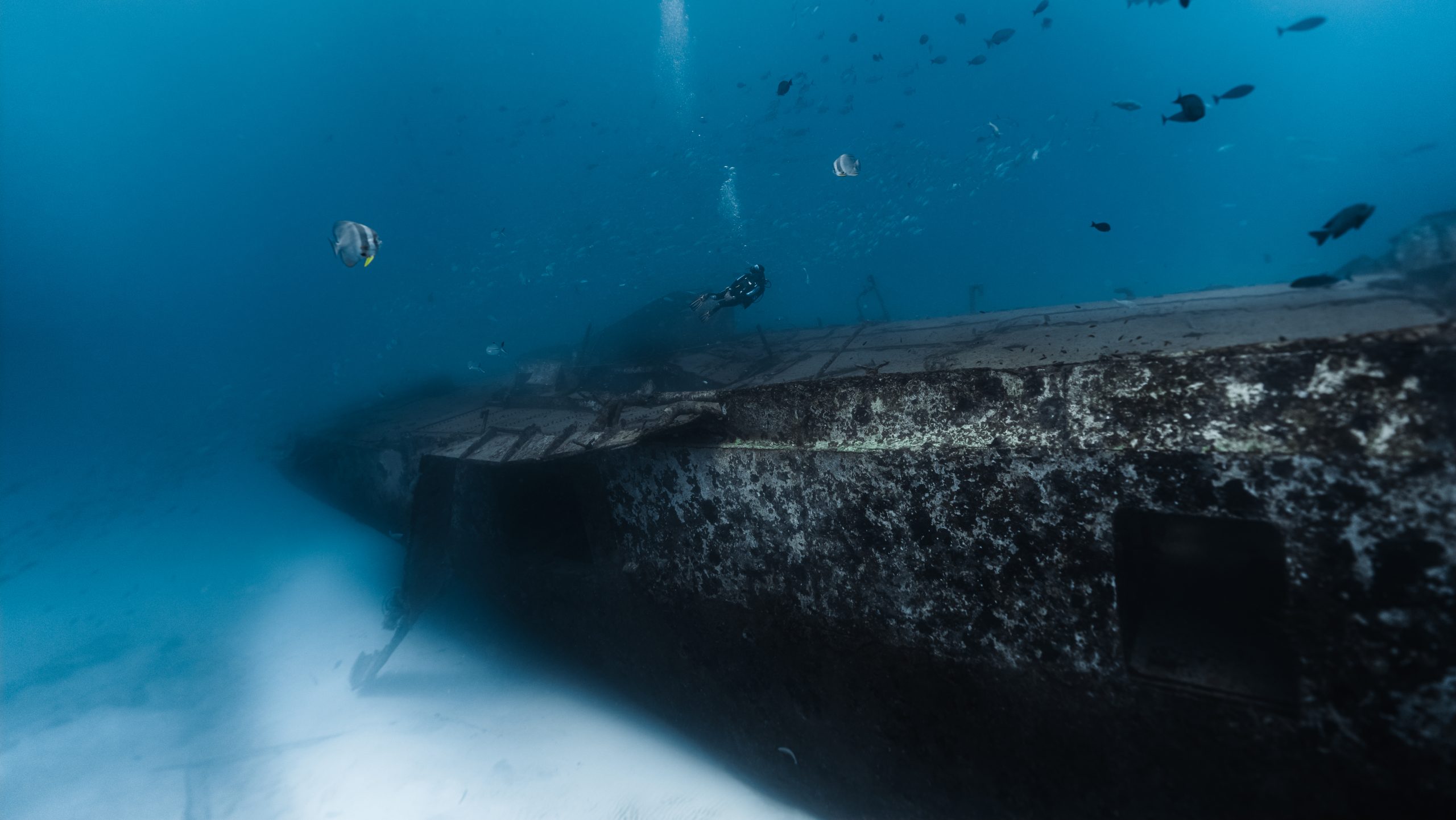
A 499-tonne ship that used to carry tuna across the Maldives is now resting on the seafloor in the hope of attracting more fish for some very different interactions.
The former tuna freighter has been scuttled in Noonu Atoll to become an artificial reef as part of a conservation project by Siyam World Maldives. At 66.63 metres, the mammoth vessel is longer than the Leaning Tower of Pisa is tall (on both its low and tall sides).
- This haunting shipwreck in North Carolina has its own 'shark ballroom'
- "At first, they are little more than bare surfaces in the ocean’s vast expanse.” Why do sunken ships make good artificial reefs?
Although the freighter is now safely on the seabed, its sinking didn't quite go to plan. Once the ship had been prepared for scuttling – and all the necessary paperwork sorted – it was transported to Noonu Atoll where Siyam World is based and sunk to become a new dive site.
Scuttling a ship involves more than just letting the water in and watching her sink. Holes must be made in the right place to make sure the ship takes on water in the right way and doesn’t list or flip over.
When ships are turned into reefs, it’s important that they land on the seafloor right-way-up because this is safer and more stable.
But this ship ended up upside down on the seafloor! As she was being sunk, trapped air made her flip over. She couldn’t be left on the seabed like this – where currents could make her more likely to roll or move – so the team had to find a way to fix the problem.
- This coral reef gets bombed every 62 minutes. And it’s changing the way the ocean sounds
- Sunken warships fill this eerie lagoon – and they're scattered with gas masks, skulls and bullet casings
Returning her to an upright position took weeks. The team had to use ropes and huge air bags to gently turn the 499-tonne cargo ship back over.
After correcting the mishap, the ship settled the right way around. Her bow is around 10 metres deep and her stern rests at about 24 metres, making it possible for open water and advanced scuba divers to visit.
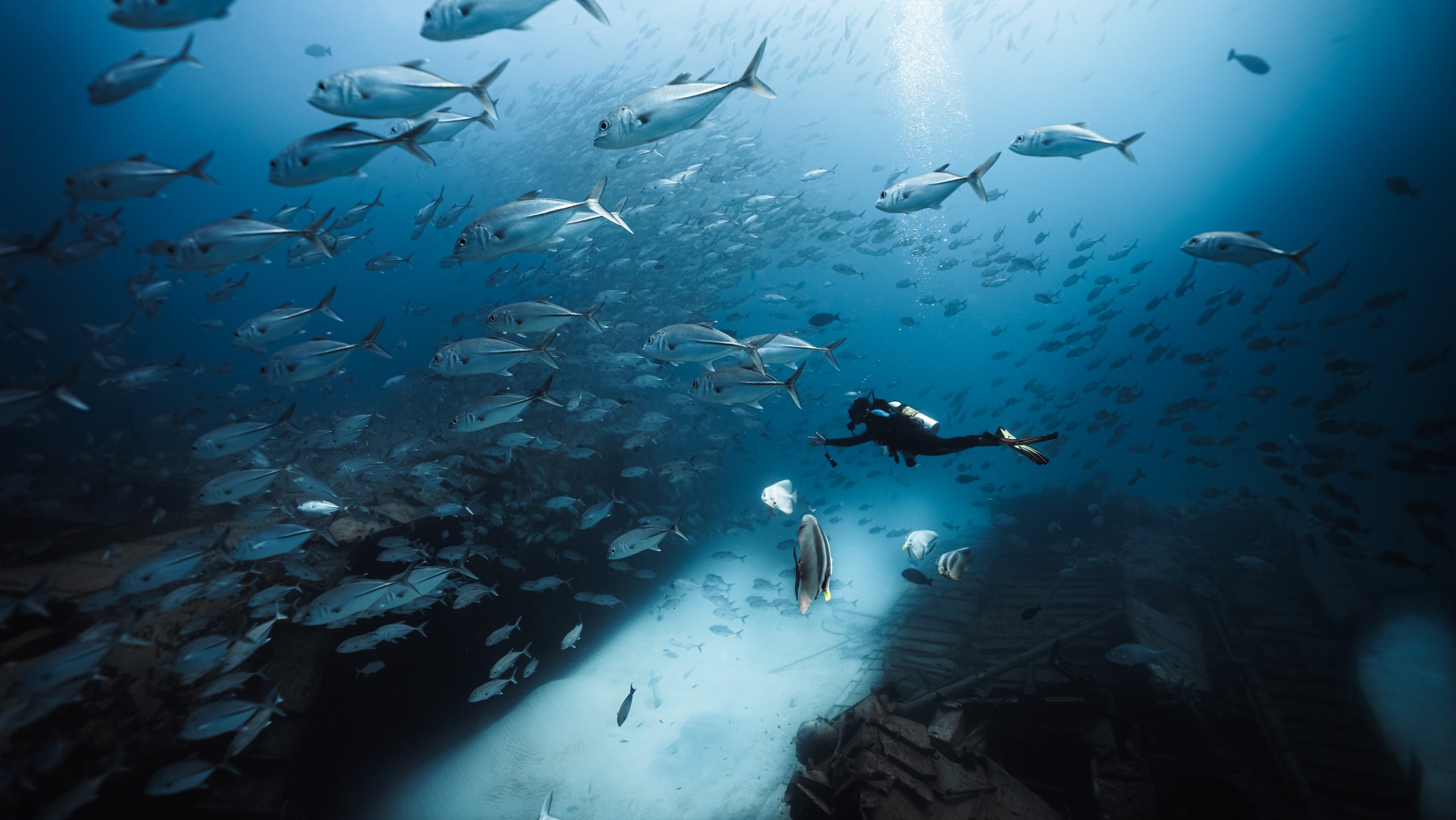
Artificial reefs typically take some time to settle into the environment and for organisms to start making the most of their structures. But the signs are already promising.
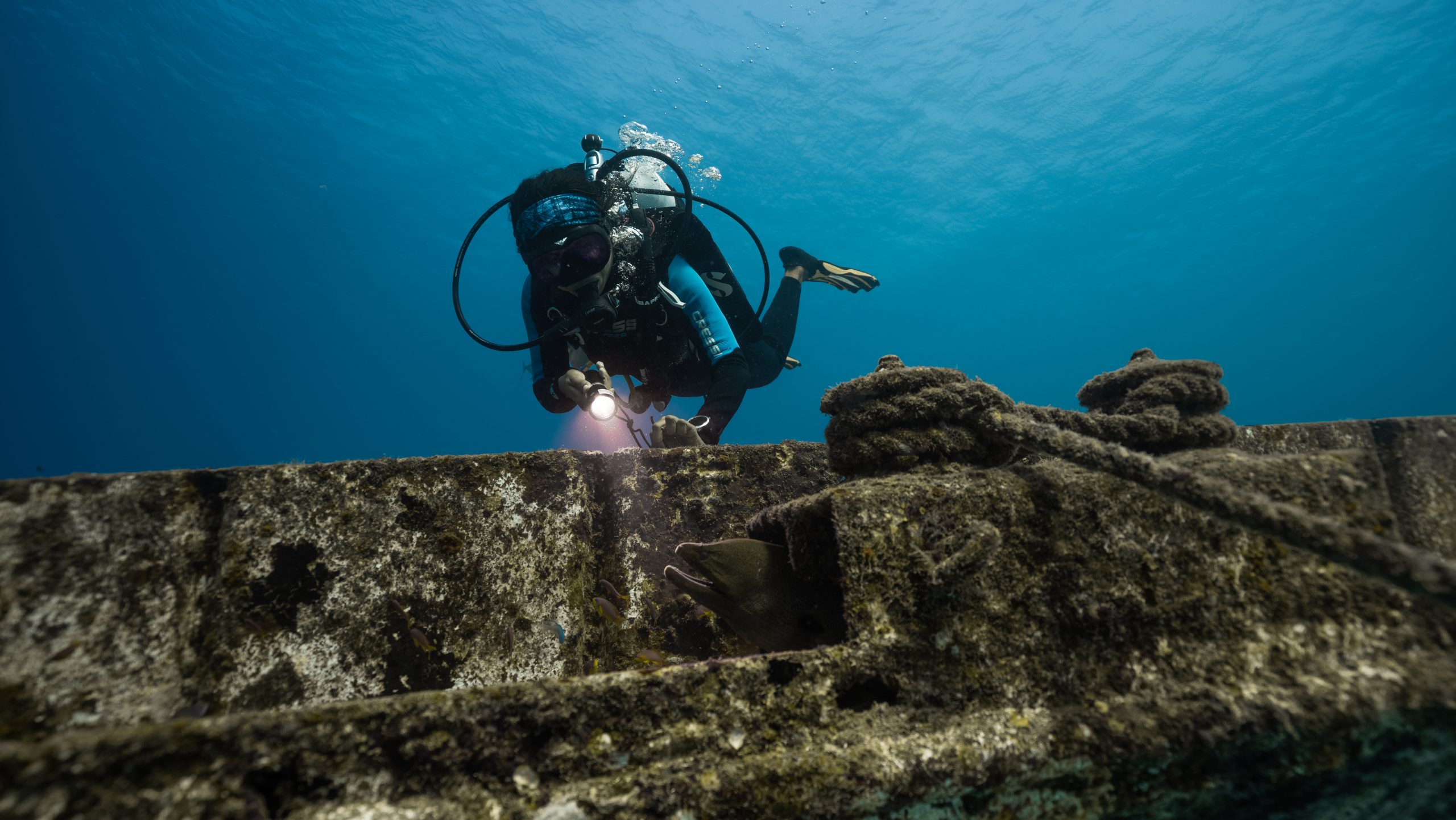
Since the ship was sunk in October 2024, divers have seen lots of marine animals visiting the wreck, from lemon sharks, nurse sharks and guitar sharks to eagle rays, stingrays, turtles to name just a few.
- In 1941, a massive WWII ship sank off the coast of Albania. Divers just went down there – and found a rare mammal living among the wreck
- When the Titanic sank 3,800m into the Atlantic Ocean, strange animals moved into the wreck
This is being helped along by coral planting experiences where guests will have the opportunity to add coral fragments onto the wreck to boost the new habitat growing there.
Sara Siyam, director of marketing at Sun Siyam Resorts describes the creation of the new dive site as “a long-term commitment to reef restoration”, saying “every guest who plants a coral fragment becomes part of a story that will continue growing long after they leave our shores.”
top image: Siyam World Maldives' 499-tonne freighter on the seafloor. Credit: Siyam World Maldives
Discover some more amazing artificial reef stories from around the world:
- When this WWII seaplane was discovered by a fisherman in 1994, dazzling animals were found hiding in the wreck
- This giant ship sank off the Egyptian coast in 1941. Now an animal that looks like a crocodile hides in its shadows
- 10 incredible, dramatic shipwrecks around the world that are just teeming with marine life
- Scuba divers went to an airplane graveyard in the Pacific and found souls hidden among the wrecks
- 80 years ago, a cargo ship struck a mine and sank to the bottom of the Mediterranean Sea. Then something staggering happened


