
In 1990, a young man called Ho Khanh was working in the forests of northern Vietnam’s Phong Nha–Kẻ Bàng National Park.
As part of a routine trip searching for agarwood, a sudden thunderstorm caused him to take shelter. During this, he accidentally discovered a small cave behind a rocky cliff. As he approached, he saw fog billowing from the entrance and could hear rushing water from within.
He turned back – and eventually forgot the cave’s exact location. It would remain undiscovered for at least another decade until he mentioned it to British cavers who were surveying the area. It was finally relocated and surveyed in 2009.
- "Stop, prevent your death! Go no further." 9 deadliest, most terrifying caves on the planet
- Camera traps film predators descending on cave filled with 40,000 bats. What happens next is staggering
The world’s largest natural cave
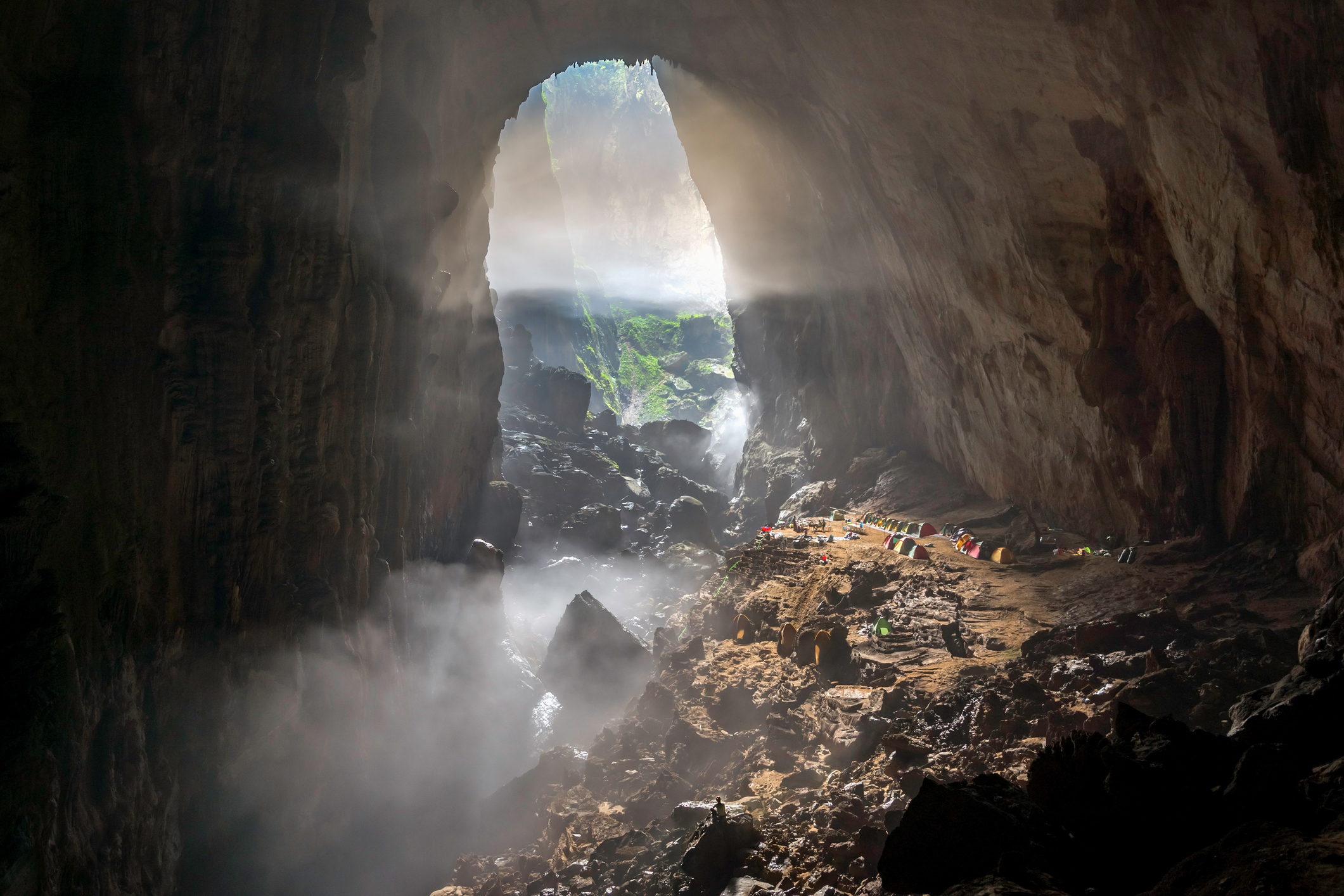
Hang Son Đoòng holds the Guinness World Records title for the largest natural cave in the world – specifically, for being the largest single cave passage. The cave measures 200 metres (655 feet) high, 150 metres (490 feet) wide and its length is at least 6.5 kilometres (4 miles).
The Hope and Vision cave branch is the widest chamber in the cave, and experts estimate that it’s tall enough to accommodate a skyscraper over 40 storeys tall and wide enough for a Boeing 747 to fly through.
Hang Son Đoòng ecology
A large underground river system flows through Hang Son Đoòng, creating a special ecosystem within the cave. Divers haven’t found the end of the river within the cave as they haven’t been able to obtain enough gas for the dive.
A stream, Rao Thuong, flows through the cave and this is where Hang Son Đoòng gets its name from. ‘Son’ translates to mountain, and Đoòng means ‘the valley where the Rao Thuong stream flows through’.
In the Garden of Edam (also known as Sinkhole 2), sunlight penetrates the cave through a doline, giving rise to a unique habitat.
This ancient underground forest has trees reaching up to 50 metres, and in other places moss and ferns thrive. In the Garden of Edam, cool, humid air blows out from the cave, creating cloud-like shrouds of mist within – sometimes making the descent into the cave hazy.
Cavers have seen flying squirrels and snakes within Hang Son Đoòng, and the odd monkey descends into the cave to forage. Large, unidentified birds suspected to be eagle owls swoop around the cave at night.
In the wider cave system, more than seven new species have been discovered, including frogs, fish, scorpions and cave swiftlets.
A film crew revealed this extraordinary environment for the BBC’s Planet Earth III, in the Extremes episode. The team worked and camped in the cave for 18 days – longer than anyone else had at the time.


