
Caves have fascinated, frightened and sheltered humans for thousands of years – and some of the largest on Earth are true marvels of the natural world.
Although the five longest caves in the world are found in the Americas and Asia, Europe isn’t far behind. The Optymistychna Cave has been described as the ‘Ukrainian underworld’ and is the eighth longest cave in the world.
- There’s a cave in Kentucky that’s 426 miles long, 118 metres deep – and fish-eating spiders lurk in it
- Scientists went into an ancient cave in New Zealand and found a 'lost world' hiding within
How big is the Optymistychna Cave?
It’s the longest cave in Europe – approximately 265 kilometres of passageways have been mapped, with new sections and extensions still occasionally found during mapping and research camps.
As well as being Europe’s longest cave, Optymistychna Cave is also the longest gypsum cave in the world. Most of the world’s great caves are found in limestone, but Optymistychna formed in gypsum, a very rare occurrence for large caves.
The entire cave lies under a two square kilometre area in a layer of gypsum less than 30 metres thick.
Where is the Optymistychna Cave?
The cave complex is located near Korolivka village in western Ukraine. It’s also quite close to Priest’s Grotto, the sixteenth-longest cave in the world, spanning for over 140 kilometres of explored passages. The two caves are not currently known to be connected, but they both belong to the gypsum giant cave system.
When was the Optymistychna Cave discovered?
The cave complex was discovered by members of the Lviv speleological club Cyclope in 1966. Since the discovery, more than 50 expeditions have explored the cave.
Does anything live in the Optymistychna Cave?
Fauna within the cave is extremely sparse, as with most caves in the world, due to the lack of light and food. Its primary permanent residents are bats, as well as microscopic fungi and invertebrates.
In 2025, scientists traced the pathogen Pseudogymnoascus destructans back to the Optymistychna Cave, as well as other caves in western Ukraine. The fungus causes white-nose syndrome in bats, which disrupts their hibernation and has led to millions of bats dying in North America. However, this mass mortality has not been observed in European bat populations., suggesting that they have evolved some resistance to the fungus.
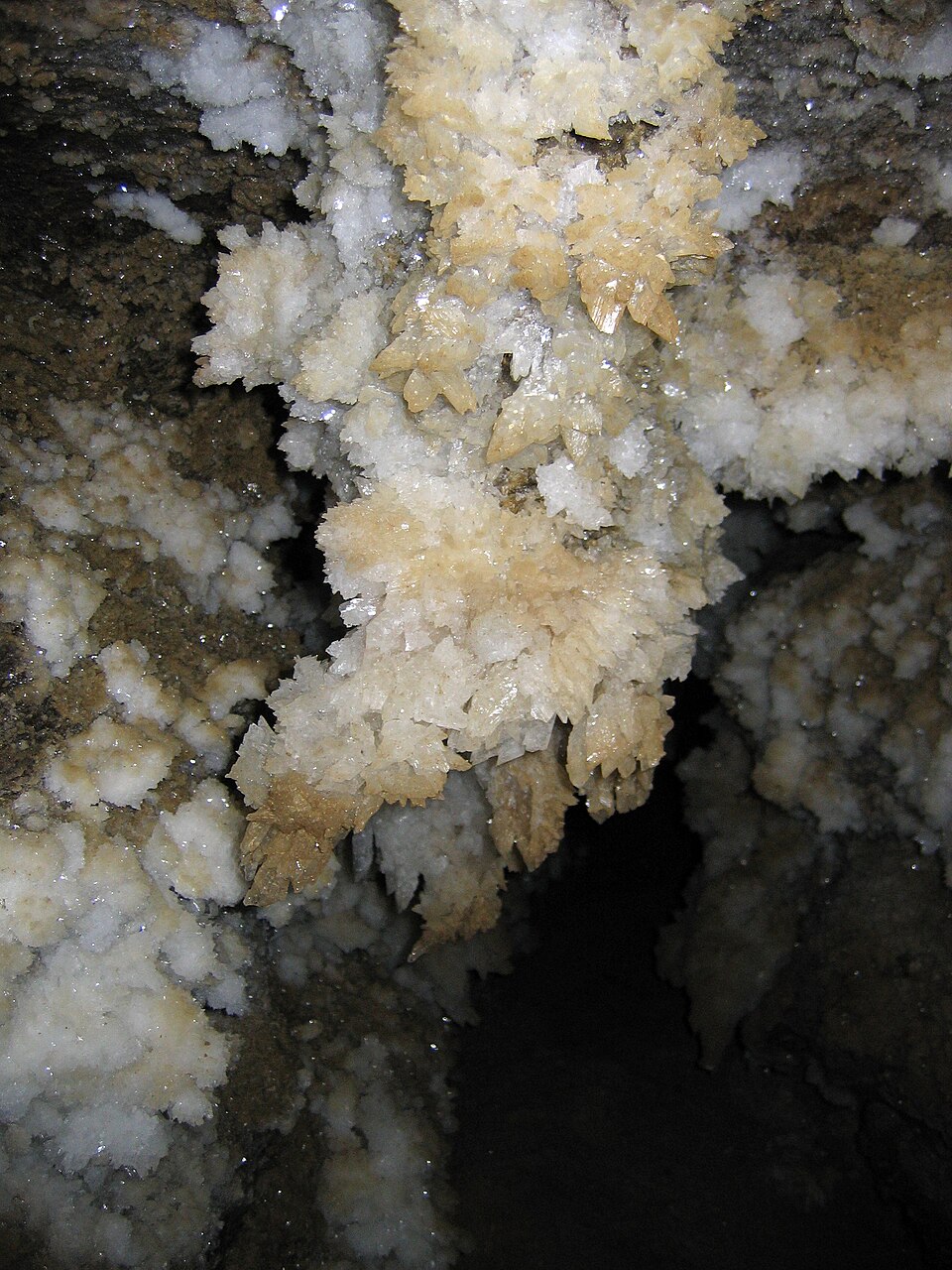
Top image: speleothems inside Optymistychna Cave. Credit: Rbrechko, CC BY-SA 4.0, via Wikimedia Commons


