The River Nile flows for 4,132 miles through the African continent, crossing 11 countries, through desert and Savannah, past ancient cities and temples. It is the longest river in the world – though there is debate about this, with some scientists arguing that the Amazon river in South America is longer.
From its source in Lake Victoria and the Rwenzoris – a mountain range bordering Uganda and the Congo – the White Nile winds its way through Uganda and into Sudan where it joins the Blue Nile flowing down from the Ethiopian mountains. From there, the river flows north through Egypt before emptying into the Mediterranean Sea.

- The alligator snapping turtle: the Mississippi's most curious looking creature
- 9 weirdest reptiles in the world
The Nile is home to many species of aquatic fauna and also supports hundreds of other terrestrial species that live along its banks, including wildebeest, zebras and hippos.
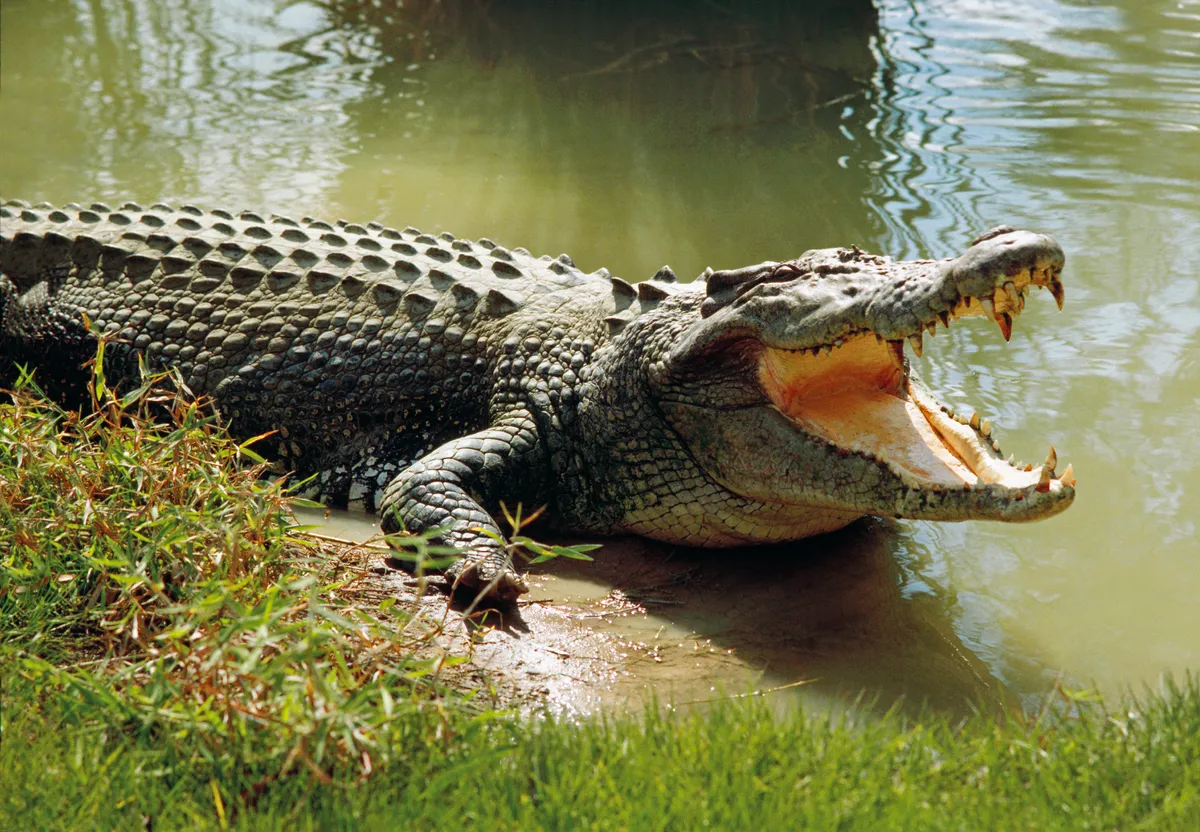
One creature that happily lies in wait to ambush these riverbank grazers is the Nile crocodile (Crocodylus niloticus) – Africa's largest crocodile.
This freshwater predator can grow up to six meters long and, in some cases, weigh more than half a tonne. They are incredibly patient ambushers, lying in wait in the water for hours or days, often with only their eyes and nostrils above the surface, waiting to pounce on unsuspecting prey.
Their extremely powerful jaws enable them to grab large animals, such as hippos, and drag them underwater. They have more than 60 teeth.
Despite their fearsome reputation, Nile crocodiles are unusually attentive parents. A female crocodile lays between 25 and 80 eggs in her nest and then incubates them for three months, only leaving briefly to cool down in the shade or take a quick swim.
This level of care is unusual for reptiles, as most lay their eggs and leave. The male crocodile usually stays close as well, helping to keep predators away.
Top image: Nile river at Jinja, Uganda. Credit: Bas Vermolen/Getty Images