At 823m, the Burj Khalifa in Dubai is the world's tallest building. Imagine putting seven of these breathtaking spire-like buildings end to end and you still would not reach 6009m, which is the deepest point of Yarlung Tsangpo Grand Canyon. Even at an average depth of 2268m, the canyon can still easily swallow two and a half Burj Khalifas (or five Empire State Buildings if you're dealing in dollars).
This mighty, steep-walled gorge runs west-east in Tibet for over 505km, some 60km longer and far deeper than the more famous Grand Canyon in the USA. It begins in the northern foothills of the Himalayas on the Tibetan plateau and cuts through the eastern edge of the mountain range.
- "Their venom is a highly potent neurotoxin, 15 times more toxic than a rattlesnake’s..." 10 most dangerous, deadliest animals in the Grand Canyon…
- These 50-million-year-old giants are taller than the Statue of Liberty – and there are thousands of them
But being highly inaccessible and containing a river (the Yarlung Tsangpo River) with the highest average elevation of any major river on Earth (4,000m), the Yarlung Tsangpo Grand Canyon is little explored and contains a unique, almost pristine ecosystem. This comprises tropical rainforests, broadleaved woodland, coniferous forests and even tundra.
Even now, after explorations by Chinese scientists, much of its steep wooded slopes are untouched. It is home to thousands of plant species, 230 birds species, hundreds of reptiles, amphibians and invertebrates.
Among the mammals, snow leopards and clouded leopards hunt musk deer while red pandas and Tibetan macaques make their homes in the trees. The rare takin, a stocky member of the sheep family that more closely resembles a musk-ox, is found at high altitudes here and traditionally hunted by indigenous forest tribes. And if that were not enough, the canyon is also home to the tallest tree ever discovered in Asia, a Himalayan cypress reaching 102.3m high.
- Scientists tracked these elusive ‘ghost of the forest’ wild cats for over 15 years – here is what they found out
- A 'vampire' deer, the grumpiest cat, a bearded vulture – meet Mongolia's strangest animals
Visitor numbers to the region are increasing and one of the big attractions in spring (March to May) is when thousands of peach trees bloom across the canyon as well as millions of azaleas. Since 2002, local communities have held the Nyinchi Peach Blossom Festival every year to showcase Tibetan culture.
Just how Yarlung Tsangpo Canyon was formed has challenged scientists. It was thought that it was largely created by the abrasive action of the river Yarlung Tsangpo cutting in the rock over millions of years.
However, studies reported in Science Journal, (November 2014), point towards immense tectonic movements about two millions to two and a half million years ago, which thrust the Himalayan range upwards and steepened the gorge: “The high erosion rates within the gorge are therefore a direct consequence of rapid rock uplift”.
Today the steeper plunges of the river are mediated by serpentine meanders that almost create islands within the river that can form their own unique wildlife communities. The most dramatic of these are the Guoguotang Great Bend and the Linduo Great Bend.
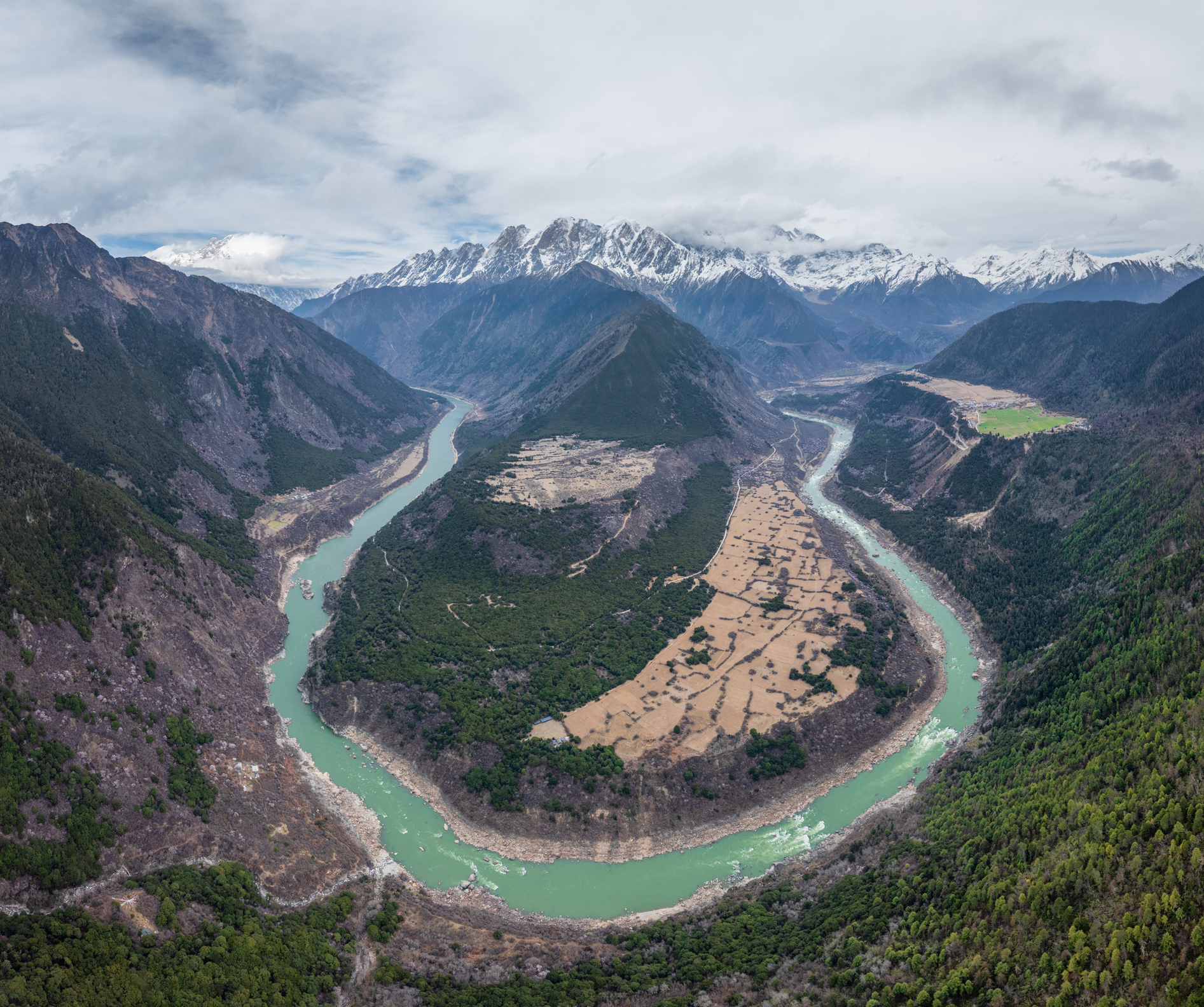
As the Yarlung Tsangpo river winds its ways from the Tibetan plateau and through the eastern Himalayas into India, it becomes the Siang River. Later, as it reaches the Assam Plains, it takes the more widely known name of Brahmaputra before being renamed the Jamuna when it reaches Bangladesh and flows into the Bay of Bengal. Wet and warm air from the India Ocean flows up the river system, helping create the rich forested ecosystems of the canyon.
While Yarlung Tsangpo Grand Canyon has been largely untouched by human activity and has a number of environmental protections, there are major concerns this almost pristine wilderness will be transformed by building of the Chinese Medog Hydropower Station at the Great Bend on the river.
Touted as the largest power plant in human history and a bastion of clean energy, construction of the dam and power station began in 2025 and it is due to open in 2033. But critics are concerned that it will irrevocably change the river's flow, create sediments downstream and disrupt or destroy much of the canyon's precious ecosystem.
Furthermore, India and Bangladesh have raised concerns about water security and the potential for the flow of this vital river to be controlled upstream.