
A project to document endangered mammals in the Amazon has resulted in an incredibly rare video of a baby giant armadillo in the wild. The camera trap that captured the footage was set up by Amazon Research Internacional in the Native Community of San Francisco in Loreto, in the Peruvian Amazon.
“Giant armadillos are amongst the most difficult animals to see on a camera-trap,” says conservationist Rosa Vásquez Espinoza, the founder of Amazon Research Internacional, in the latest episode of the BBC Wildlife podcast Wild Lives.
“People can spend over a year [with] hundreds of cameras to try to get a single clip. We’ve been able to do it in a short period, with very limited [cameras], based on the Indigenous knowledge with our Indigenous colleagues.”
The giant armadillo is the largest armadillo in the world, and its burrows are also used by numerous other species in the Amazon for shelter and feeding. They reproduce only every three years in very small quantities, and are increasingly threatened by rainforest fragmentation and hunting.
The footage of a baby giant armadillo highlights this part of the Amazon as a critical space for conservation. The region is already being actively protected through the monitoring of stingless bees and their nesting trees, meaning that these tiny pollinators also ensure the protection of larger animals such as the giant armadillo.
Amazon Research Internacional plans to use this new footage as evidence to spearhead the introduction of a local law in Loreto that calls for the protection of the giant armadillo and other larger mammals on the IUCN Red List. These mammals serve as key indicators of forest health in the Amazon. The organisation recently helped to introduce the same law in Satipo in the Junín province, located in the central Amazon rainforest of Peru.
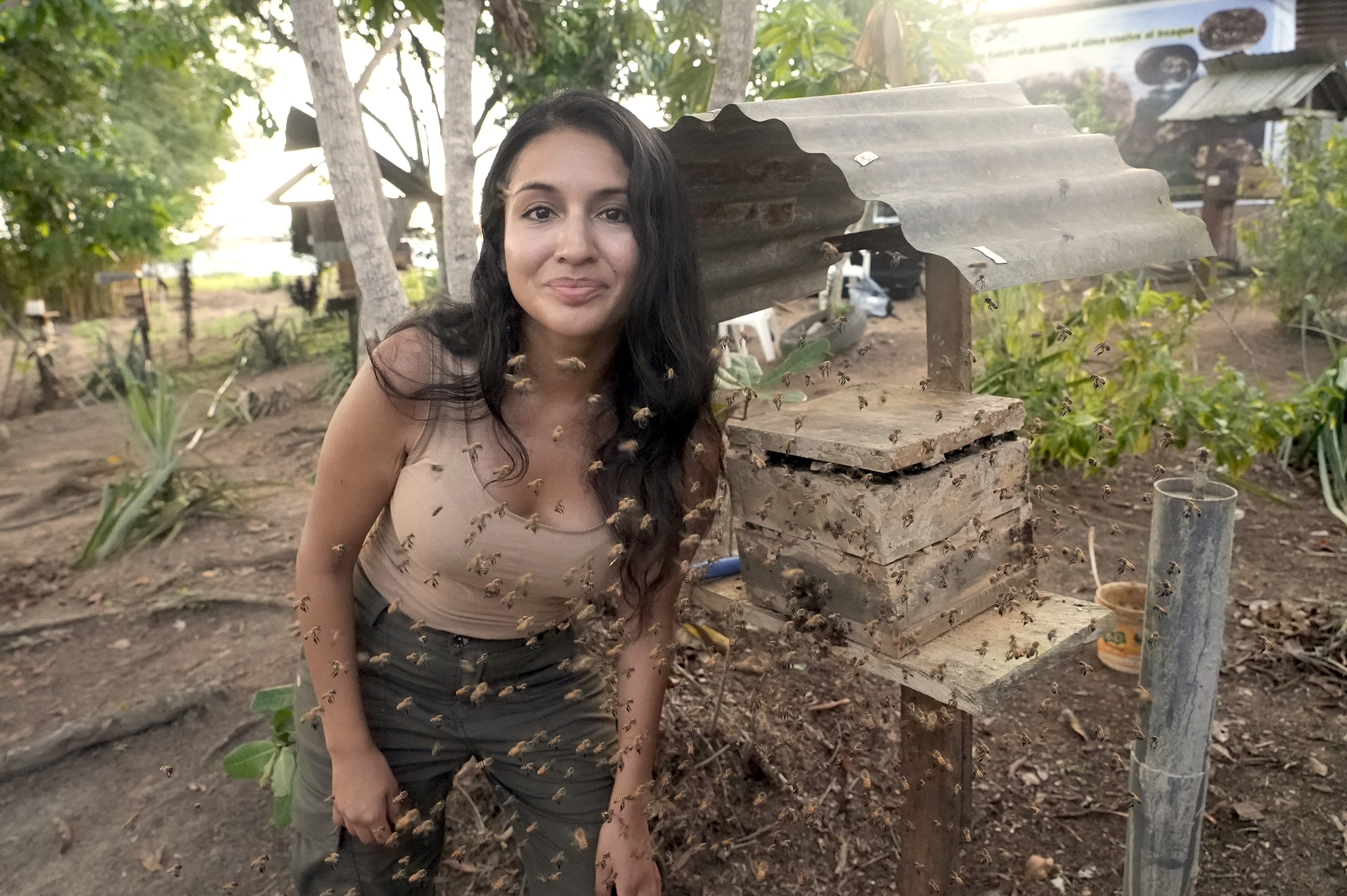
“Seeing a baby giant armadillo is not something we ever dreamed of, and it just happened to be there with his little baby little fingers and just being playful,” says Rosa. “It's so hopeful for us, seeing all this wildlife.”
You can hear the full conversation with Rosa in the latest episode of Wild Lives – listen below or search for Wild Lives wherever you get your podcasts.


