It feels like the red deer stag has been roaring for the entire night. Around 4am, I give in to its raspy bellows, not to mention the constant noise of the yurt canvas flapping and the stubborn cold, and head out for a walk. I stumble out into a gale and traipse across the meadow to the electric fence that encircles the campsite.
- What's the biggest national park in the world? And no, it isn't the one you think it is...
- 16 stunning photos that reveal the incredible beauty and power of the world’s oldest national park
Earlier that day, when we first arrived at the almost absurdly spectacular and idyllic mountain meadow of Travel Carpathia’s Poiana Tămaș wilderness camp, in the Făgăraș Mountains of Romania, the presence of an electric fence felt like overkill.
“Come on,” I said to myself, “it’s not Jurassic Park.” And while that stag can’t be more than a few hundred metres away, and the eyes of a 12-strong herd of European bison shine in the glare of my torchlight, there’s nothing with sharp teeth or claws to fear here.
There is the lynx whose scat we found deposited at the base of a tree on a track leading into the campsite and that was captured on a nearby camera-trap the night before.
But humans have nothing to fear from this reclusive feline, which is rarely bigger than a medium-sized dog and substantially less dangerous.
The 30 or so wolves that inhabit this corner of Romania might be more of a concern for anyone benighted in the forest. But we have seen no signs of them and, by all accounts, encounters with them are rare to virtually non-existent.
There are, though, an estimated 6,000–12,000 bears known to live in Romania, five of which we watched from a hide just a few days ago. And while European brown bears are not renowned as active predators, you probably don’t want to run into one during the inky blackness of a Carpathian night.
On reflection, I conclude, the electric fence isn’t so daft after all.

Europe’s Yellowstone
Bears, wolves, lynx, bison, red deer – that’s a Big Five to thrill any nature lover, and they are all here in this corner of the Carpathian range of mountains.
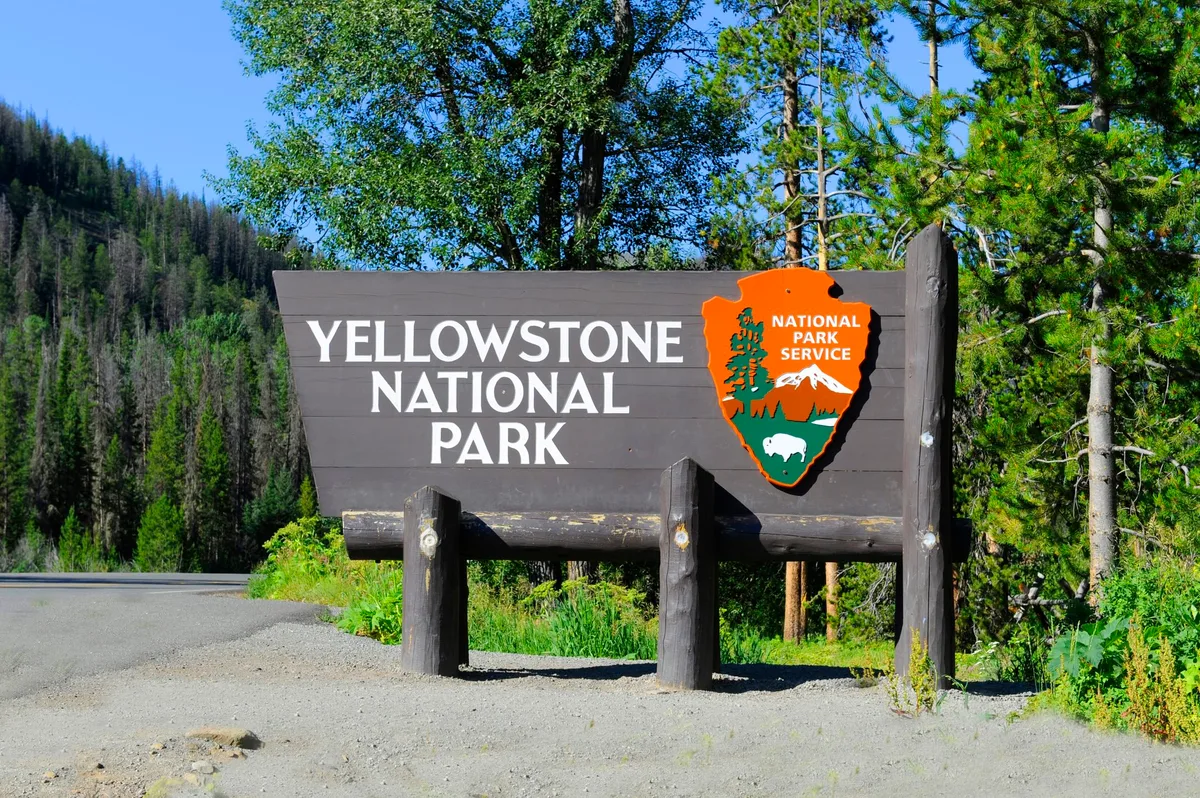
It’s one reason why two German conservationists, Christophe and Barbara Promberger, who have been beavering away here for 20 years, say the Făgăraș Mountains rival the world’s oldest and most well-known national park – Yellowstone – for spectacular wildlife.
And why they have been lobbying Romania’s national government to designate it as a national park.
“This is the largest wild area in Central Europe, with 200,000ha of unfragmented forest,” says Christophe.
For comparison, imagine a pristine, wildlife-rich forest the size of the Lake District. It’s not just the area, but the age and size of the trees that matters.
On a walk through the forest, Christophe leads us to a fir tree 62.5m high, reputedly the tallest tree that’s been measured in Central Europe, while a beech has been assessed at 55m.
“In this single, one-hectare plot,” indicates Christophe, “the volume of wood has been measured at 1,500m³.”
Again, for comparison, a managed forest would have 300–400m³ of wood. That astonishing level of carbon storage could eventually be sold as carbon credits, while the abundance of dead wood is critical for biodiversity.
We come across a fallen log that looks as if someone has attacked it with a hammer – in fact, it’s the work of a black woodpecker, a species dependent on old-growth forests. Moisture in dead wood evaporates and helps to keep the forest cool, while the Făgăraș Mountains are also responsible for producing 20 per cent of all Romania’s drinking water.
“If the Romanian government were to tax every 1,000 litres of water with half a leu [about 8p], they could fund compensation for protecting all the forests in the Carpathian Mountains and all the administration of national park services,” adds Christophe.
- What's the largest forest in the world?
- “I’m awoken by a rumble and look across the Danube to see smoke rising.” These predators are reclaiming their home in the middle of a warzone

Protecting the Făgăraș Mountains
Despite the extraordinary ecological and economic value of the Făgăraș Mountains, the area is under considerable threat from the logging industry. In the nearly 40 years since the fall of communist dictator Nicolae Ceaușescu on 25th December 1989, controls on both legal and illegal logging have loosened.
According to Christophe, official figures show that 300,000 trees more than 150 years old have been felled in the past three years alone.
“Mature mixed mountain forests can have anything between 150 and 500 old trees per hectare,” he says – which means the Făgăraș Mountains have lost 600–2,000ha of old-growth forest in no time.
“If this continues, there will be no more old trees in the Făgăraș Mountains in the next 10–20 years.”
And it’s not as if the Făgăraș Mountains don’t already have a high level of protection. Many parts are classified as Natura 2000 sites under the EU Habitats Directive.
A joint report by German and Romanian NGOs, EuroNatur and Agent Green, in 2024 accused the authorities of permitting the extraction of 5,000m³ of wood from protected, old-growth forest sites, with logging carried out on steep slopes that are prone to erosion.
Hiking to Travel Carpathia’s Comisu wildlife hide with guide Oana Harabagiu, we see for ourselves how even legal logging has broken the rules.
Romanian forestry has used a system of what’s called ‘selective clearcutting’, a management technique that involves taking out one block and then leaving another, leaving the forest resembling the squares on a chessboard.
“By law, they should replant, but they don’t always respect the laws,” says Oana. Though some young saplings have managed to get a toehold, Oana says the harsh conditions and strong winds at this altitude – around 1,000m – makes germination less likely. Without human intervention, a bare hillside is likely to remain that way for a long time.
Achieving national park status
The Prombergers never intended to become campaigners for a Romanian national park. They came here to research wolves, bears and lynx, and stayed because they loved it so much, starting a horse-riding business to make an income.
And as Barbara explains, the rich wildlife of the area isn’t just about large carnivores. From their base on the north side of the Făgăraș Mountains, there’s 80km of uninterrupted primeval forests and nature-rich grasslands.
“You can find all nine woodpecker species here,” she says. “There are 22 different species of orchid, and more than 700 butterflies.” (The whole of the UK has 59.)
Through the NGO they founded in 2009, Foundation Conservation Carpathia (FCC), the Prombergers have so far raised enough money to buy and protect some 28,000ha, but that’s a drop in the ocean compared with the 250,000ha of the Făgăraș Mountains that need enhanced protection to save them from the logger’s axe.
National park status isn’t just about stricter regulations but about marketing potential too, turning this relatively unknown part of Romania into an ecotourism destination to rival Yellowstone itself.
Even attracting a small proportion of the estimated five million visitors lured to the land of gushing geysers and grizzlies would be a triumph, but there are many hurdles to this ambition, as Siegmund Missall of EuroNatur explains.
“There are many players in the Făgăraș Mountains, including private forest owners and 40 municipalities that would be affected by the creation of a national park,” he says. “Every single municipality has to agree to the plan, so it’s a very difficult task.”
That said, there are many people within the country and the government, he believes, who would be in favour of the idea, but there’s another obstacle that creates inertia that is hard to overcome.
“In theory, the concept of making money through ecotourism is OK, but if they can get easy money from logging, why change course?” says Missal.
The main logging company is the state-owned Romsilva, which provides direct revenue for the government. “Whereas, if you go for the tourism pathway, it’s local people who make the money and then you have to tax them.”
Memorable megafauna
Still, there’s little doubt that the Făgăraș Mountains have what it takes in terms of memorable megafauna. Those hulking lawnmowers, European bison, for starters – Europe’s heaviest land animals and indistinguishable to the untrained eye from their American cousins – were extinct in the wild and down to just 54 known individuals in the 1920s.
They have now recovered thanks to captive breeding, having already been brought back to other parts of Europe, including Poland, Bulgaria and Portugal. There are now an estimated 100 free-ranging bison in the Făgăraș Mountains following the first reintroductions in 2019.
On our last evening, the bison emerge from forest cover to feed in the grassland meadow where we are camping for the night, the heavy bovine scent filling the air. Barely looking up from the rich forage, they meander right up to the electric fence, allowing us to observe from close range.
If anything makes me feel as if I’m in the real Yellowstone, it’s them.

And then there are the bears, which flourish across the Carpathians thanks to the autumn glut of beechmast, nuts, forest fruits and fungi. In the early spring and summer, they chow down mainly on grass, scavenge from deer or bison carcasses, and may predate the occasional calf.
We don’t see any in the Făgăraș Mountains themselves, but while staying a couple of nights at a large Romanian estate called Zabola, east of Brașov, we are driven half-an-hour into the forest on rutted tracks.
Once out of the vehicles, we see occasional piles of bear dung, some remarkably fresh, with undigested seeds signifying the bears’ importance to woodland regeneration. After 10 minutes of ambling along the rides, we reach a hide with a spectacular view over the Transylvanian plain.
Climbing down into the hide, which has been half-dug into the hillside, makes me feel as if I’m entering a nuclear bunker, but the only provisions are pieces of corn scattered on the small grassy plateau.
(A small amount of food is offered at this hide, but the supply is not constant, and not nearly enough to replace what the bears need to survive.)
It doesn’t take long for the first bear to arrive, moseying out of the woods in unassuming fashion and then padding about looking for corn kernels like someone who’s lost their contact lenses.
Bears come and go, five in total, plus a lone wild boar that clearly feels brave enough to take its share of the bounty. One bear takes a bath – for parasite control if not for sheer enjoyment – and it’s a spellbinding hour-and-a-half or so of almost non-stop action.
It ends with a young bear, whose body is so lean it looks half-wolf, running out like a gawky teenager. It moves as if in slow motion and yet with deceptive speed and grace.
“They seem to be slow-moving animals, like they’re in a cartoon,” says wildlife photographer Bence Máté, who helped set up the hide.
“But they have so much power, and can run at 40–50kph. There’s always a chance you might meet them on foot in the forest.”
There’s a part of me that would love nothing more than to meet one of Romania’s bears on a remote forest track in the Carpathians.
But having seen these muscle-bound ursids at close quarters, I’m also happy to sit in the safety of a hide – or even behind an electric fence.
Top image: Făgăraș Mountains. Credit: Daniel Mîrlea