Few plants strike fear into homeowners quite like Japanese knotweed.
Discover the notorious invader lurking at the bottom of a garden and thoughts can quickly turn to damaged foundations, unsellable homes and eye-watering removal bills.
But while Japanese knotweed is undoubtedly a formidable invasive species, scientists say some of its most frightening reputation has been exaggerated.
Japanese knotweed (Reynoutria japonica) is a fast-growing perennial originally from East Asia. It was brought to Europe from Japan and became popular with Victorian gardeners, who prized the exotic-looking plant because it rapidly produced impressive clumps with little attention.
That enthusiasm helped sow the seeds of today's problem.
Professor Dan Eastwood, Professor of Ecological Biosciences at Swansea University, has spent years studying the species and has helped lead one of the world's largest field trials into controlling it.
Asked whether the plant deserves its fearsome reputation, his answer is: "A bit of both."
"It is a real problem and can cause real issues for landowners and for biodiversity," he says. "As a country is it a problem and should it be managed? Yes. But if an individual homeowner finds a patch in their garden is it the end of the world? No."
He explained how the plant would not have such a widespread problem in the UK if it was not for the fact that it has been planted so widely.
Remarkably, the most common variety found in Britain doesn't even produce viable seed here. Instead, much of its spread happens when pieces of rhizome or plant are moved in contaminated soil, on machinery or along waterways.
So why is it so difficult to get rid of? The secret to knotweed's extraordinary resilience lies largely out of sight.
Beneath an established stand is an extensive network of underground stems called rhizomes – similar in principle to the piece of fresh ginger you might buy in a supermarket.
There can be many more tonnes of this material below ground than vegetation visible above it, with rhizomes recorded more than five metres deep. Even a viable fragment roughly the size of a thumbnail can potentially produce a new plant. Each year the plant transfers resources underground before its stems die back for winter. Those reserves then fuel its rapid return the following spring, allowing shoots to race upwards and shade out competing plants.
Trying simply to dig out a large established infestation can therefore become, as Dan Eastwood puts it, a "herculean effort".
Japanese knotweed growing through concrete is perhaps the most enduring knotweed horror story but one Dan says is "largely a myth".
Knotweed can exploit existing weaknesses, growing through cracks in concrete, pushing through tarmac and appearing between damaged brickwork. But Dan says reports of structural damage tend to involve properties that are poorly maintained or already have other structural problems.
That doesn't mean homeowners should ignore it. Left unchecked, knotweed can take over a garden, reduce its amenity value and potentially spread onto neighbouring land. But control doesn't necessarily require every last piece of the plant to be physically removed.
Research by Dan and his colleagues found correctly timed glyphosate treatment could achieve effective managed control, although follow-up treatments are needed. For an ordinary garden where building work isn't planned, suppressing the plant into long-term dormancy can be sufficient.
Physical removal can be dramatically more expensive and is generally needed in particular circumstances, such as developments where contaminated soil must be excavated.
Away from the property headlines lies another problem. Japanese knotweed's rapid spring growth produces tall, dense stands which can shade out other vegetation and reduce plant diversity. Large infestations can transform habitats and even make green spaces difficult for people to access.
Its ability to bounce back is extraordinary. Dan Eastwood says there are accounts of knotweed surviving around volcanic fumaroles within its native range, where hot gases can destroy growth above ground only for the plant to regenerate from its protected rhizomes.
Britain is far from alone in dealing with the impact of this invasive species. Dan explains how researchers have been contacted by people battling knotweed in Sweden, Norway, France, Belgium, the Netherlands and the US, where it is particularly troublesome along waterways in north-eastern states.
But Britain may simply be further along the invasion curve. The Victorians planted knotweed extensively, giving it a considerable head start, while some other countries are now confronting problems Britain encountered decades ago.
And even its relationship with its native home is more complicated than its name suggests. Knotweed is native to China, Japan and Korea and Dan Eastwood says it can behave invasively within parts of Japan too, particularly away from its native rocky habitats.
So what should you do if you find Japanese knotweed? The first rule is not to panic. Ignore the hysteria – your house will not fall down. But don't start attacking it with a mower or spade either.
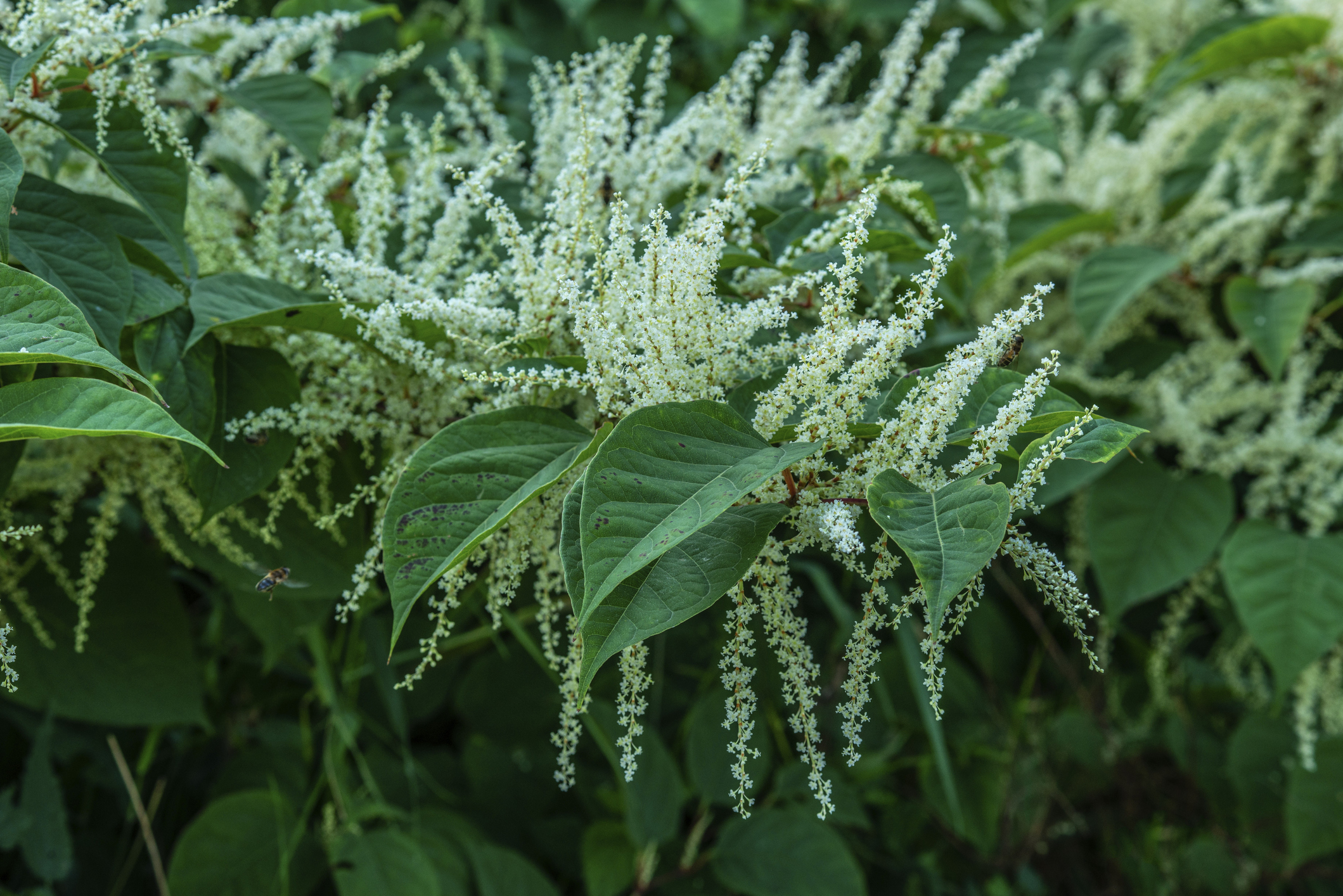
Homeowners are advised against attempting treatment themselves. Cases have occurred where mortgages have been declined following botched DIY attempts to tackle knotweed.
Cutting, mowing, strimming or pulling it up can make matters worse by producing fragments capable of establishing elsewhere. Digging is also risky because it is extremely easy to leave pieces of the extensive underground rhizome behind – or inadvertently spread them around the garden.
Nor should knotweed be put out with ordinary garden waste as disposing of the plant in this way is illegal.
Instead, seek professional advice.
Dan Eastwood advises the best solution depends on the circumstances. A homeowner with a small infestation faces a very different problem to Network Rail managing knotweed across huge stretches of infrastructure, or conservationists trying to protect a sensitive river catchment.