
A new giant waterlily species has been described after a five-year journey to document it – but it could already be Critically Endangered, experts warn.
Victoria colombiana (common name Colombian giant waterlily) has been formally described in a paper published in the journal Phytotaxa. Only three other known species belong to the genus Victoria, which all have pads measuring up to 2m across.
Its discovery began with a chance sighting on Instagram. Carlos Magdalena, botanical and scientific research horticulturalist at the Royal Botanic Gardens, Kew first spotted the plant five years ago in photos taken in Colombia’s Inírida region. The images were taken and shared by Jeremiah Harris, a plant nursery owner. At the time, Harris thought that the species was the more common Victoria amazonica.
However, Magdalena suspected that something wasn’t right as the known natural range of Victoria waterlilies doesn’t extend to the Inírida River, in Guainía, Colombia. He used satellite imagery to scan the river and the surrounding lakes until he saw several Victoria pads from a single plant. Harris also confirmed that the plants seen in the maps were the same shown to him by local guides.
Magdalena suspected that this could be a new species of Victoria, so he contacted Mauricio Bernal at the Jardín Botánico de Bogotá José Celestino Mutis in Colombia, who grows Victoria at the botanical garden.
Together they worked with Nilo Rodríguez, Jaime Hernández and Gustavo Melo (members of the indigenous reserves del río Atabapo, Caranacoa-Yurí-Laguna Morocoto and Puinave-Piapoco el Paujil) for nearly two years to organise a field trip to Inírida. Rodríguez described knowing about the waterlilies as a child but didn’t recall seeing many of them.
Into the rainforest
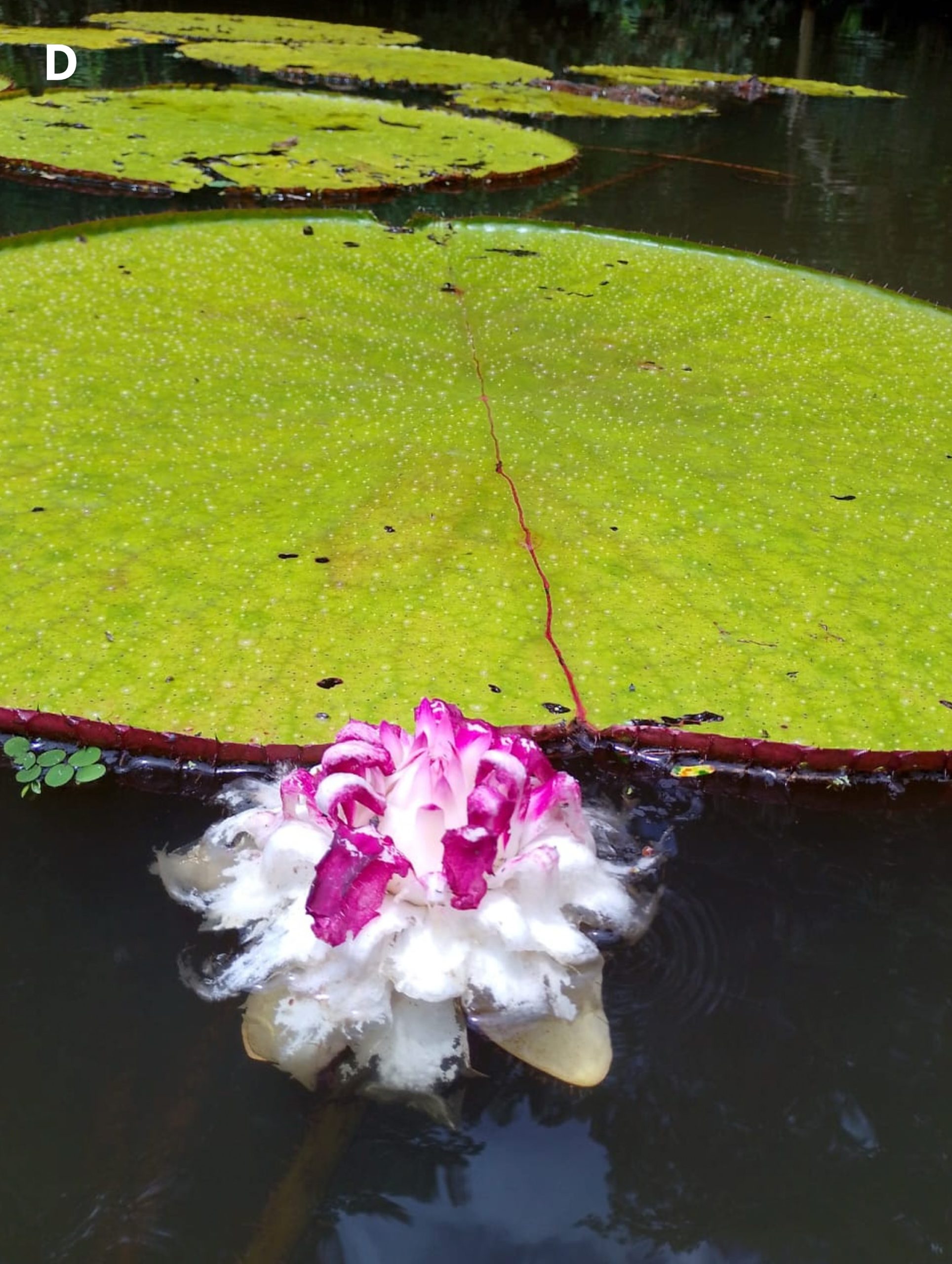
The team set off on a five-day expedition into Inírida’s rainforest. They managed to locate two individual specimens of the waterlily, but the plants weren’t in flower and were in poor condition. Botanists need to use the flower of plants to distinguish differences between species by comparing them to others – without the flower, identification is impossible.
But when their river guide Melo understood the team’s dilemma, they claimed to know exactly where to find more waterlilies. Melo is part of the indigenous Tucano community, which is famed for its navigational skills.
With only 10 hours left to make their return flight, the group set off at 1am, heading further from the airport and deeper into the flooded rainforest. Just before sunrise, they reached a small lake where they located five Victoria colombiana – including one that was in flower. The team documented a total of seven plants across two lakes before rushing back in time for their flight.
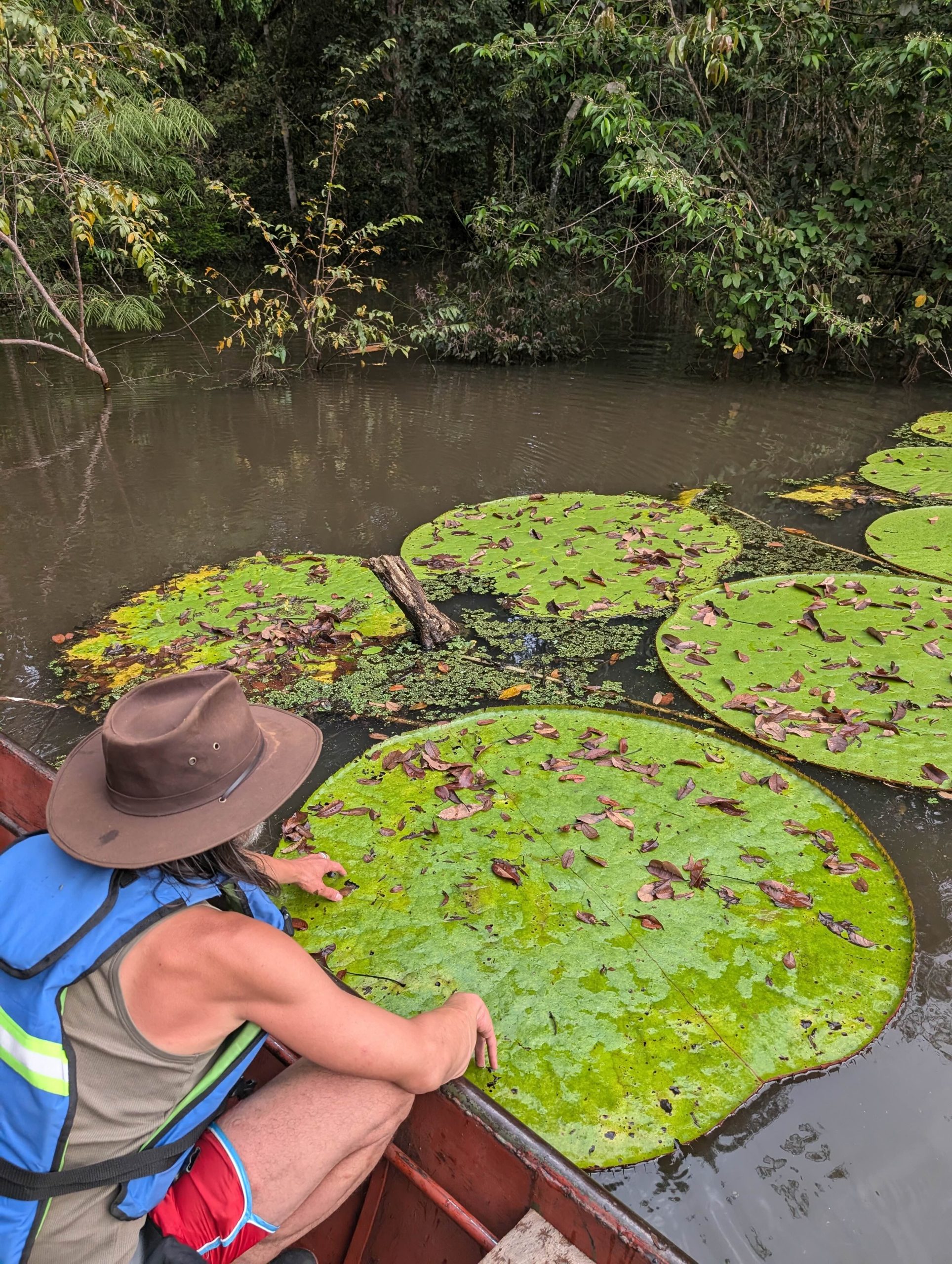
“This is one of those extraordinary stories where indigenous and horticultural knowledge with the help of social media and technology came together to uncover a truly extraordinary botanical achievement,” notes Magdalena.
“It’s also a reminder that nature is still full of surprises and wonder. Now that we know this waterlily exists, our responsibility is to understand it better and protect it. With so many plants in the wild threatened with extinction, we simply cannot wait any longer to take action.”
The specimens were deposited and mounted at the JBB Herbarium of the Jardín Botánico de Bogotá José Celestino Mutis in Colombia. The team then started taxonomical analysis, with the help of Maarten Christenhusz, a plant taxonomist working for the Botanical Society of Britain and Ireland.
“New species are found all the time, but few are as large, spectacular and emblematic as this one,” says Christenhusz. “This new giant waterlily can even be seen from space, which is a striking reminder of how much we still don’t know about life on our planet.”
Already at risk
Further analysis has revealed that there is a third lake that contains the new waterlily species. Comparing this with satellite imagery suggests that additional plants may become visible during the rainforest's drier seasons when water levels drop. This does, however, makes the plants trickier to reach, as it’s easier to navigate the forest by boat than on foot.
The team estimates that there are between 30-50 individual Victoria colombiana plants in the wild, indicating that the species is already at threat of extinction. They are currently working towards an official IUCN Red List assessment of Critically Endangered, which would help propel the conservation efforts that are already underway.
Top image: satellite image of a lagoon with a Victoria colombiana population, taken from the paper Discovery of a new species of Victoria (Nymphaeaceae) in the Orinoco watershed of Colombia. Credit: Magdalena, C. et al


