
A newly identified stem amphibian, named Gerrothorax maritimus, has changed scientists’ understanding of the group, suggesting a long-extinct lineage once found a way across the ecological barrier between land and sea – a feat no modern amphibians have managed.
There are more than 9,100 recognised species of amphibians alive today, including frogs, newts and salamanders, and caecilians – a less familiar family characterised by their strange, worm-like bodies. While some of these species can tolerate brackish waters (where freshwater and seawater mix), none are strictly marine.
This is largely down to their salt-intolerant skins, say scientists. Living amphibians (which all belong to the subclass Lissamphibia) breathe through their skin using cutaneous respiration, a process where oxygen and carbon dioxide moves across their thin, moist skin and into a dense network of tiny blood vessels lying just beneath the surface.
When placed in seawater, the high concentration of salt outside their bodies draws vital water outward through their skin, leading to dehydration. As water rushes out via osmosis, salt also leaks in, overwhelming their kidneys and disrupting normal cellular function. Just a few minutes in full-strength seawater can prove fatal for most modern amphibians.
It’s for this reason why scientists long thought amphibians never colonised the sea and adapted to fully marine lifestyles.
“Mammals, reptiles, and birds all have species that survive without food or freshwater from land; however, amphibians…lack such a member partly because of their salt-intolerant skins,” wrote Lipin Diao and colleagues in a recent study published in Nature Ecology & Evolution.
However, the recent discovery of a new, previously unknown species of Gerrothorax (a temnospondyl amphibian) from the Late Triassic of China has changed what scientists thought these animals were capable of.
- 10 Ice Age animals: extraordinary prehistoric beasts that thrived when the world was frozen
- The petrifying prehistoric beasts that would have terrified early man
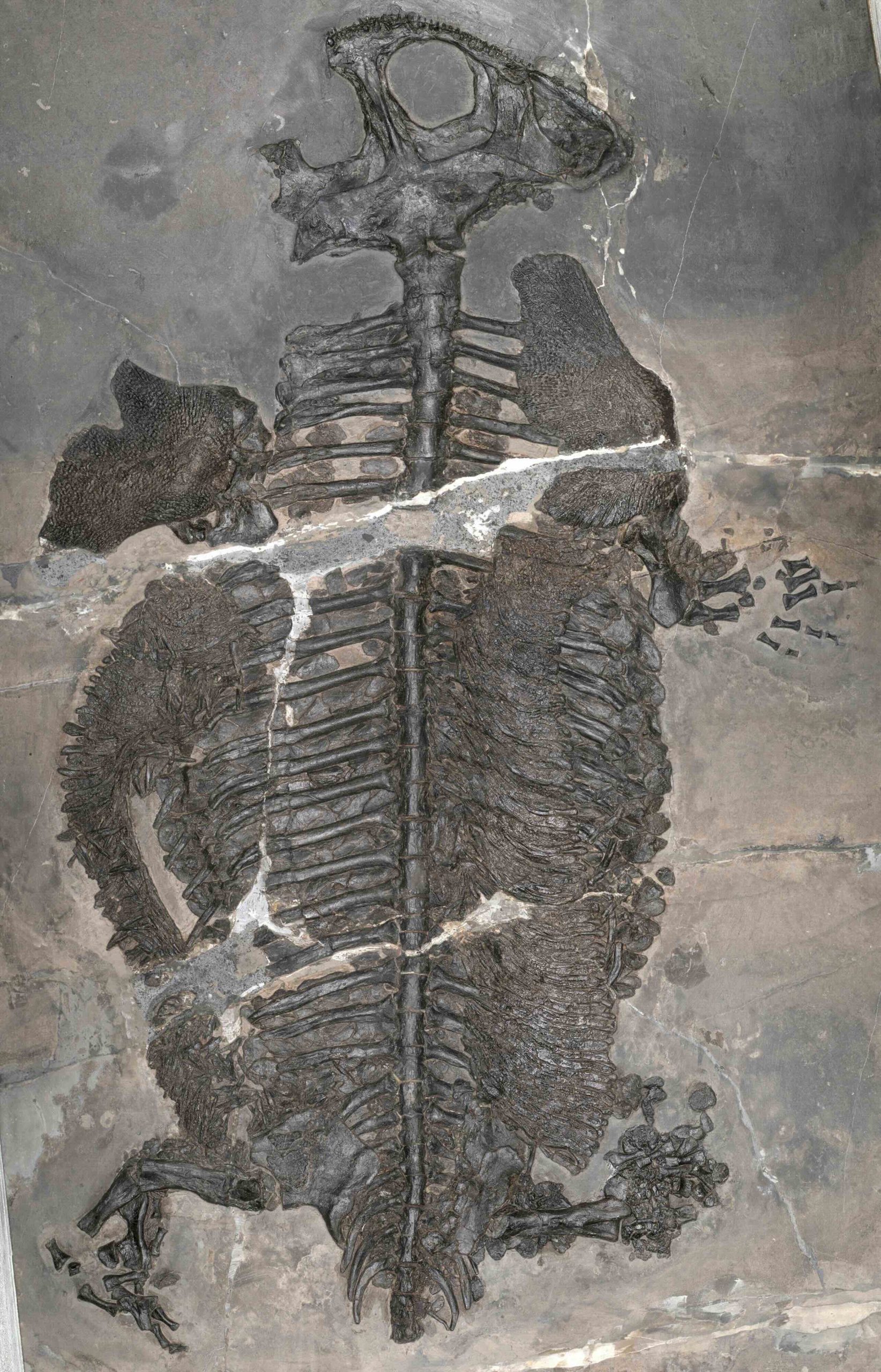
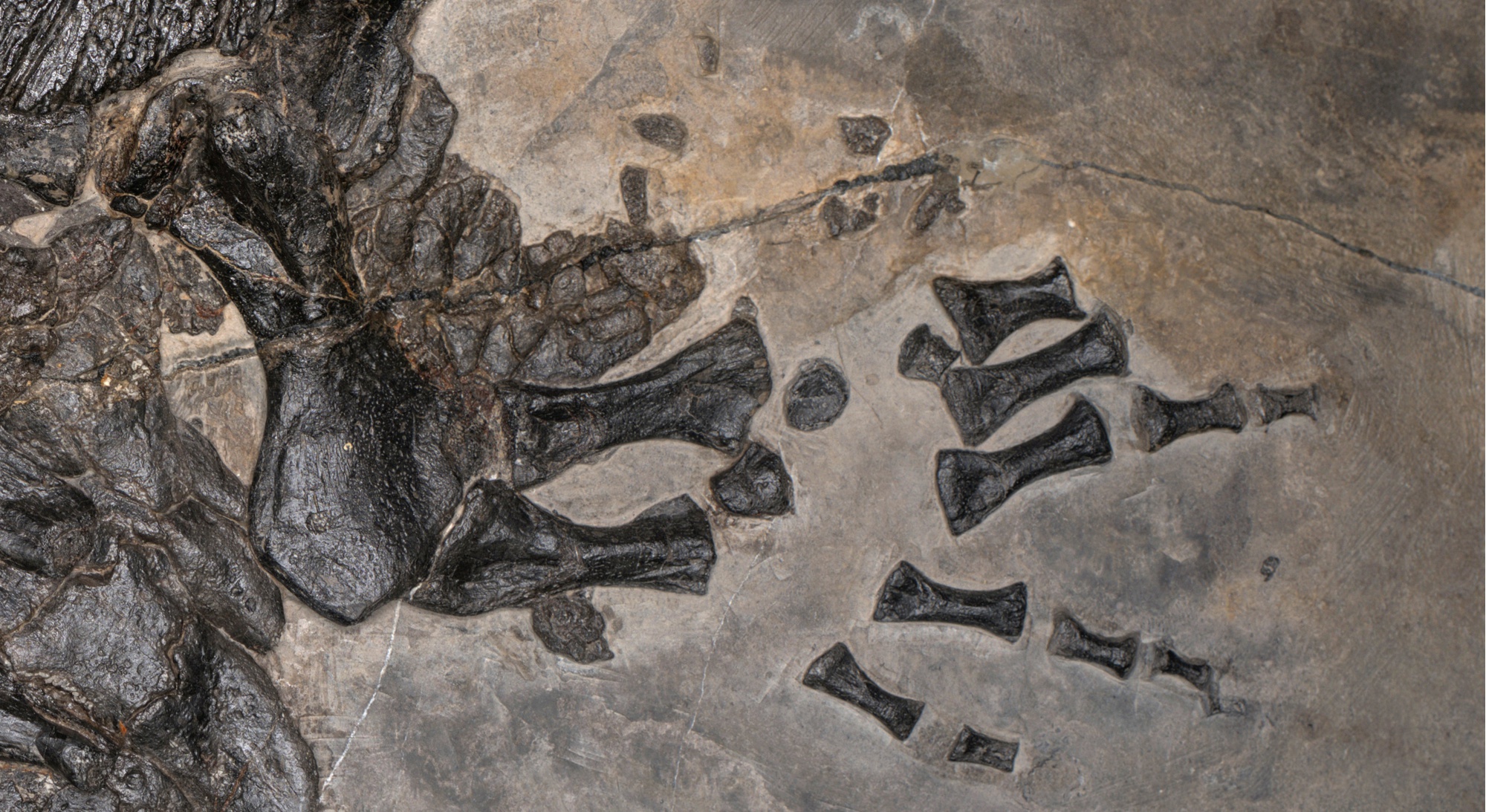
As part of their recent study, Diao and colleagues examined two nearly complete skeletons discovered in 237-million-year-old rocks in Guizhou Province, China. From these remarkably well-preserved skeletons, they were able to work out that they had flattened, heavily armoured bodies and - based on these unique features - represented a new species.
The larger of the two skeletons measures nearly 75cm in length, making it roughly the same size as a house cat. The other skeleton isn’t quite as large (approx. 48cm), but as it’s preserved in ventral view, it has revealed a lot about the armoured undersides of these animals.
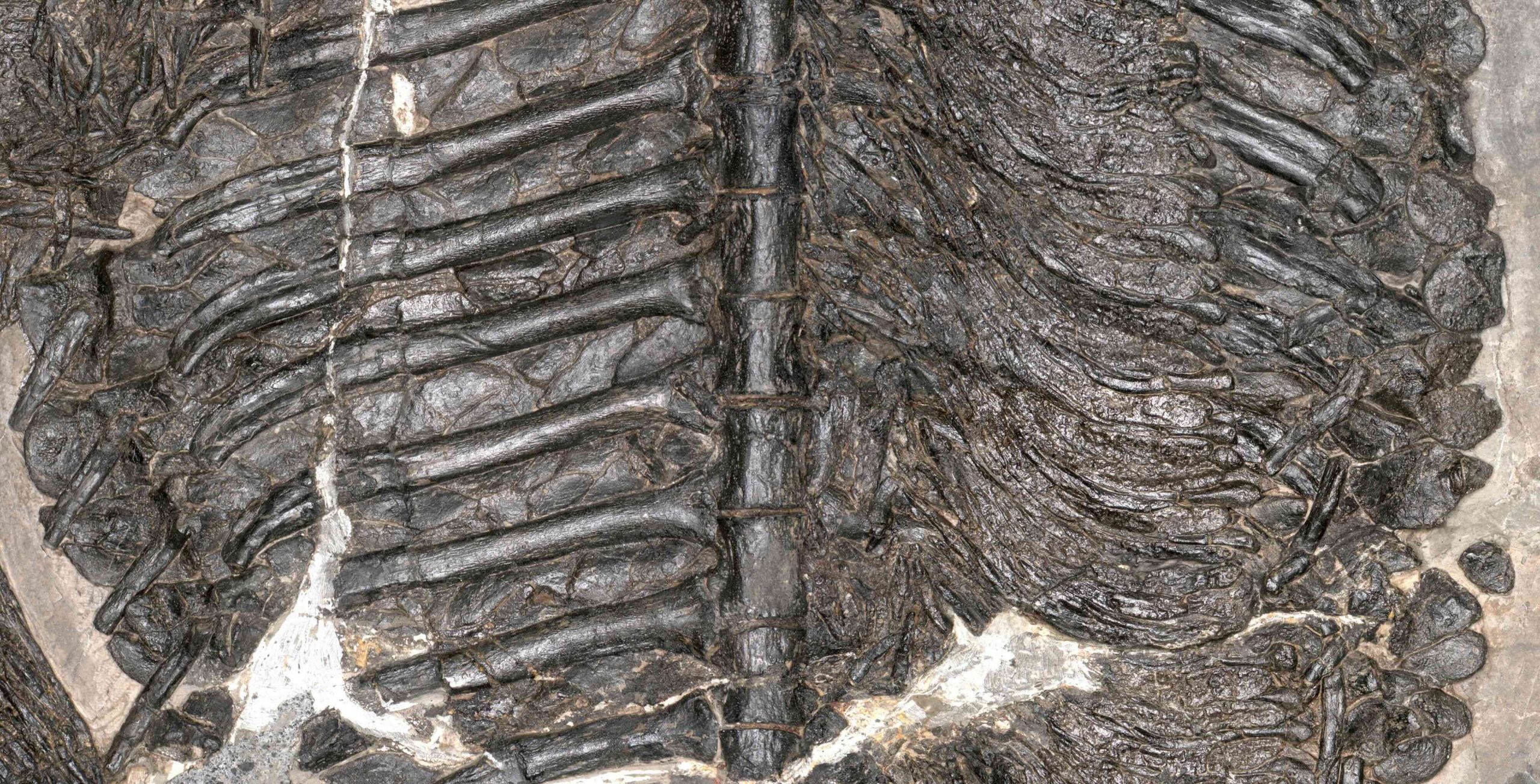
According to the authors of the recent study, the skeletons were found in rocks deposited, “at least 30km away from any islands.” This, combined with the fact that the skeletons are articulated and show little signs of having been transported, suggests that they lived (and ultimately died) near this location.
Fossils of fully marine reptiles, such as ichthyosaurs, have also been found in these rocks.
Analyses of chemical signatures locked inside the skeletons match those of seawater at the time, adding further weight to the idea that this particular species was well-adapted to life at sea. This supposed marine lifestyle prompted Diao and colleagues to name the species G.maritimus, which means ‘of the sea’ in Latin.
Unlike modern amphibians, stem amphibians such as G.maritimus had internal gills, which along with a more complex gut may have helped them better manage salt. The evolution of body armour in this group may have also limited osmotic exchanges through their skin, allowing them to live in saltier environments.
“[G.maritimus] descended from a lineage with complete body armour, which would limit skin-based water, gas or salt exchanges typical of amphibians and instead enforced the use of the gill and gut that can become more tolerant of salt - this probably prepared them for marine adaptation,” wrote Diao and colleagues.
- Dinosaur hunters make “chilling” discovery deep in Canadian badlands
- Expedition finds rare and exquisite trove of ancient animals deep in Grand Canyon
The large mouth of G.maritimus suggests it was most likely a bottom suction feeder, similar to modern wobbegongs. These strange sharks lie on the seafloor and wait for prey to swim past before they lunge forwards and suck the unsuspecting victim into their mouths. The lack of any soft tissues, however, mean that other aspects of G.maritimus’ physiology remain a mystery.
While fossils of other stem amphibians have been found in coastal deposits, G.maritimus is the first to have been found in a fully marine setting. This discovery expands our understanding of amphibian evolution and suggests they, like mammals, reptiles and birds, also colonised the sea - at least for a short time.
You can read more about the recent study, published in Nature Ecology & Evolution.
More wildlife stories from around the world
- Scientists went into an ancient cave in New Zealand and found a 'lost world' hiding within
- Soft tissue of 40,000-year-old Siberian mammoth offers astonishing glimpse into final moments of its life
- Mummified sabre-toothed cat cub found in Siberian permafrost stuns scientists
- Scientists resurrect 40,000-year-old organisms from Arctic ice – now they’re worried
Top image: Holotype of the new marine amphibian G.maritimus. The specimen is exposed belly-side up. Credit: Ryosuke Motani


