Along Mexico’s Caribbean coast, green turtle hatchlings are making their way to the open ocean in one of the world’s greatest wildlife spectacles. But there’s a problem.
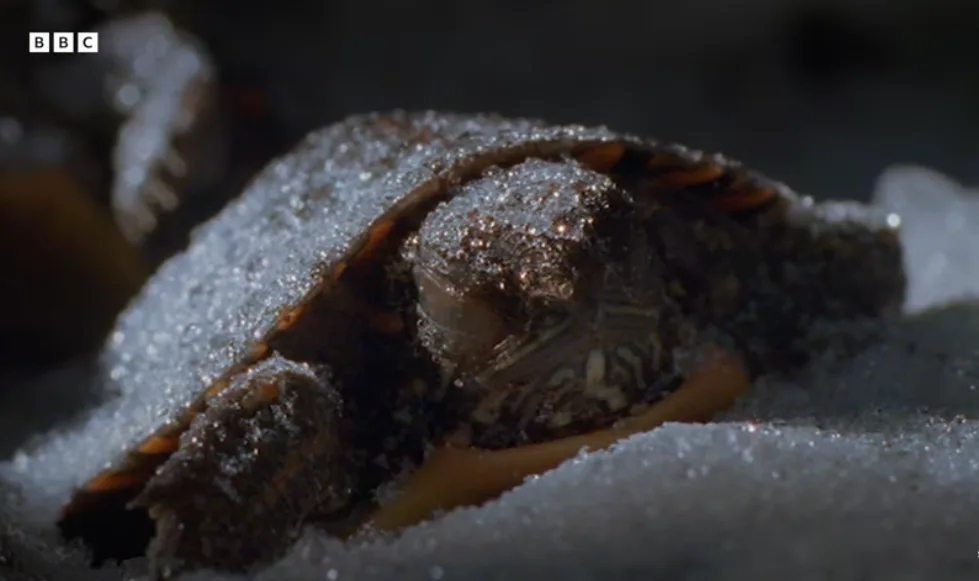
In a sequence filmed for the BBC’s Blue Planet III, the turtles face an enormous pile of rotting seaweed. And they must cross it to reach the water.
As David Attenborough narrates, “a journey that should take two minutes can now take over ten times as long.” Hatching and moving to the sea en masse is vital for the turtles to avoid falling prey to predators such as seabirds, foxes and wild dogs. But now, they must face “deep rolling crevasses” of sargassum seaweed.
In the ocean, sargassum provides an important habitat for turtles and other marine creatures. But when it washes ashore, it blocks turtle nesting grounds, buries coastlines and costs local communities millions of pounds to clear up.
In 2025, over 45 tonnes of sargassum washed up on the beach where the Blue Planet III team were filming. Scientists aren’t entirely sure why more sargassum is washing ashore but theories include changes in ocean currents and winds, nutrient availability and major oceanographic events.
Faced with this wall of sargassum, the turtles “stand little chance.” But luckily for these turtles, conservationists step in to help them reach the ocean, where they will spend the rest of their lives.
Top image: a green turtle (Chelonia mydas) hatchling navigates through a sargassum mound that has landed on a beach in Mexico. Credit: BBC Studios / Harry Gunning